History is the preservation a nation’s past for the sake of its future
By Kirill Privalov
«We are not in exile – we are on a mission.» This aphorism is attributed to just about everyone! According to some sources, St John (Maximovitch) of Shanghai and San Francisco found these encouraging words for hundreds of thousands of Russian refugees scattered across all continents. Others attribute it to Ivan Bunin, though the first Russian Nobel laureate in literature never actually said anything of the kind…
Everyone who repeats this phrase and appreciates the conciseness of its wording can be fully understood – it is put clearly, resonantly and vividly. A successful aphorism eventually acquires a multitude of authors all at once. However, this phrase most likely belongs to the famous writer Zinaida Gippius, who spent a significant part of her life in the French émigré environment. At any rate, this is what Nina Berberova maintained – unlike Gippius, who did not establish her literary reputation in her native Russia, but exclusively in emigration.
I am inclined to believe Nina Nikolaevna, a wonderful journalist and fiction writer, and once my colleague at the Russian Mind magazine. I first heard her quote Zinaida Gippius in the late 1980s in Paris. At that time, I happened to interview Berberova for Literaturnaya Gazeta.
We met on Rue des Vignes (“Vine Street” in the prestigious 16th arrondissement of Paris), at the home of Alexandra Petrovna Boutan, a Parisian descendant of Alexander Pushkin’s publisher Pyotr Pletnyov and a friend of Berberova, who frequently visited Paris from America, where she had moved after the Second World War and taught at Princeton University. The interview was soon published and titled by me in the style of Berberova’s memoirs, The Italics Are Mine – Not Only Italics.
Berberova spoke then about her first husband, the outstanding writer Vladislav Khodasevich, about Maxim Gorky, whom she visited in Italy, about the mores of Russian Paris on the eve of the Second World War, about her work at Pavel Milyukov’s Posledniye Novosti newspaper, and about the masonic circle of Alexander Kerensky, with whom her second husband, the journalist and artist Nikolai Makeyev, was associated…
Nina Nikolaevna also mentioned that Gippius’ saying: «We are not in exile – we are on a mission», was later repeatedly popularised by Zinaida Nikolaevna’s husband Dmitry Merezhkovsky. And she added, speaking of the great Russian writer: «And he himself was the best embodiment of this mission. All that remains now is for Russia to ‘read’ it correctly.»
Today it seems to me that Russia did this rightly, albeit belatedly. We never stop marvelling at what a sharp prophet and profound sage this man was, whose work in the Soviet Union was aggressively forgotten and under an unexpressed partial ban.
«One of the deepest characteristics of the Russian spirit is that it is very difficult to move us, but once we have moved, we go to extremes in everything – in good and evil, in truth and falsehood, and in wisdom and madness,» Merezhkovsky wrote in 1906.
«Sometimes Misunderstanding Is Worse Than Any Kind of Hatred…»
«A small knowledge gives people pride, a great one gives humility: just as empty ears of corn lift their arrogant heads to the sky, while those full of grain bow them low to the earth» (Resurrected Gods. Leonardo da Vinci, 1900).
This man spoke with The Resurrected Gods…, built the Coming Temple, and witnessed the Birth of the gods. In his works, a Christian-exacerbated perception of existence sometimes takes the form of allegory.
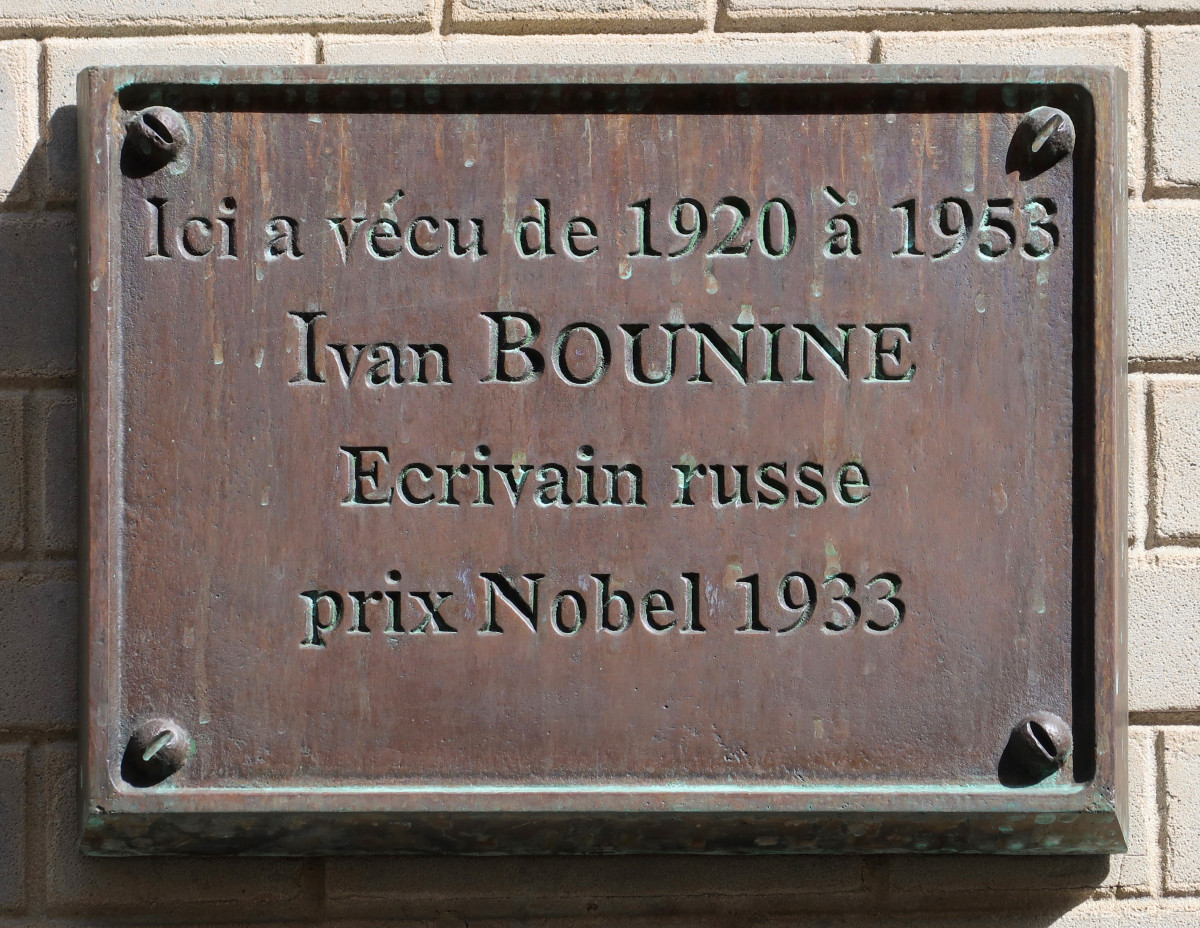
Ivan Bunin once remarked that on a journey (especially if it is long), a person is naturally observant. Thanks to this observation, sharpened by emigrant wanderings across Europe, Merezhkovsky preserved for us, his descendants, a sense not only of an era, but of all Russian history. Moreover – of world history from its Biblical beginnings. He made the word flesh, and it lives among us. The beautiful Russian word preserved by Merezhkovsky. As the poet Andrei Bely wrote about the Paris flat of Merezhkovsky and Gippius, in it «they truly created culture, and the words spoken in this flat were ‘hauled away’ by agile wordmongers. Around Merezhkovsky, an entire export of new trends formed without any mention of the source everyone drew from. Everybody once studied here, catching his words.»
If, however, a word is born too quickly, like a light breath, it risks turning into a dangerous handicap, as psychologists say, becoming for the author – paradoxical as it may seem – a flaw, sometimes even a sin. Perhaps an involuntary one, provoked, but no less vexing and painful for that. Hence, it seems to me, the belated regrets of Dmitry Merezhkovsky, who vainly sought a compromise between the unattainable «absolute good» and the «darkness» of the human heart, regarding his individual statements on Soviet Russia. This sounded with special sharpness in 1941, when his contempt for Bolshevism in a speech on German radio turned into something resembling a panegyric to Nazism. Admittedly, the writer quickly realised his mistake, for back in the 1930s he had spoken of the «powder keg of fascism.» And he concluded his speech with passionate lines about Russia… But, as the French say, “it’s already done”. For many people in the Russian Parisian milieu, Dmitry Merezhkovsky became a pariah right till his death in late 1941. Zinaida Gippius too was subjected to ostracism in the Russian Parisian milieu as Merezhkovsky’s intellectual partner and wife for half a century …
However, did everything happen this way in real life? Was it real? I’m not sure. A well-known axiom: historical misconceptions are more long-lived than historical facts.
But let’s return to Nina Berberova and our meeting.
«One of the leaders of the French Jacobins, Georges Jacques Danton, when offered to emigrate to avoid perishing under the guillotine’s blade, stated that you cannot carry away your Motherland on the soles of your boots,» Nina Nikolaevna said. “From the perspective of Cartesian logic, so dear to the French, this is probably true. But it is pure, simplistic materialism. In the West, many prominent people have lost their souls while caring for the shell. As for Russians, action does not necessarily need hope, and persistence is by no means always accompanied by a thirst for victory. To understand a book, you must not just read it, but live through it. To understand Russians, you must live among them for some time. Only after this can you understand why Russians react so painfully and acutely to any attempts to break their way of life or distort their language. They see this as an assault on their history, culture, and, ultimately, their form of existence.
“I remember a story about how Dovid Knut, a rather good and well-known poet in Russian emigration, once came to see Vladislav Khodasevich. He brought some new poems and left them at Khodasevich’s. The manuscript was so utterly indigestible that it was not even fit to be returned. Yet, Khodasevich read it and, when they met, started ripping the poetry apart: ‘It’s grammatically incorrect here… And besides, words like this don’t even exist.’ To which Knut replied: ‘But this is how they speak in our Chisinau!’ Khodasevich flared up: ‘This is how they speak in your Bessarabia, but they don’t speak like this in Russian!’»
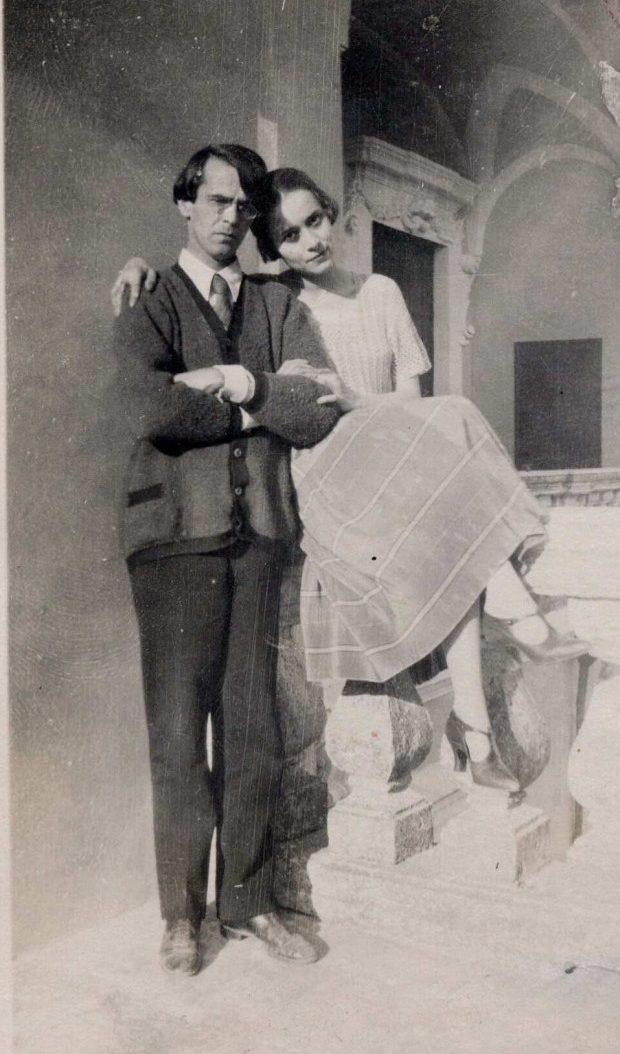
This is entirely true: the preservation of a nation is impossible without careful preservation of its language. And the guarantor of its protection is Russian literature. In all of its guises – whether «domestic» or emigre – it makes no difference. I cannot help but recall a press conference by the poet and memoirist Irina Odoevtseva, who had just returned to St Petersburg – still called Leningrad by Soviet inertia – after half a century of life in Paris. The Silver Age grand dame spoke at the Leningrad Central House of Writers; due to a fractured femoral neck, she could move only in a wheelchair, stubbornly referred to Gorbachev’s perestroika as a «reshuffling” and uttered a timeless phrase: «There is no emigre literature; there is only one great Russian literature that you and I serve.»
This is the kind of national idea we get. The preservation… How can one not recall Alexander Solzhenitsyn here: «I generally treat the term ‘national idea’ with caution, because it is abused. At one point, Yeltsin once proposed formulating a national idea in barely a week’s time. What came of this? <…> I would propose a national idea that was set forth over 250 years ago by the statesman Ivan Shuvalov under Empress Elizabeth Petrovna. He suggested that Elizabeth be guided by the preservation of the people as the supreme law. What an idea! The preservation of the people as the main task.»
Shuvalov’s famed «preservation of the people» was, above all, the patronage of literature, education, science, and art. It was aid extended to talented Russians. Shuvalov, who twice declined the title of count («I can say that I was born without boundless vanity, without a desire for wealth, honours and high rank,» he said), supported the writer and playwright Alexander Sumarokov, protected Mikhail Lomonosov from the academicians of the pro-German orientation, and became the first president of the Russian Academy of Arts…
And most importantly – at least for me, a graduate of Lomonosov Moscow State University – Shuvalov, together with Lomonosov, drafted the project to establish the Moscow University and convinced Empress Elizabeth Petrovna to sign the decree on its foundation in 1755. And when? Exactly on the birthday of his mother, the minor landed gentlewoman Tatiana Ratislavskaya: 12 January. This is the origin of Tatiana’s Day, the main holiday for Russian students.
Shuvalov’s «reforms» were not laws and decrees, but institutional projects: he created cultural institutions, set standards for education and the support of talent, and shaped an environment in which Russian culture could develop both independently and in dialogue with Europe. Shuvalov gifted the Academy of Arts an enormous collection of paintings from his private «museum», which later became the foundation of the world-famous Hermitage Museum collection. Ivan Shuvalov lived, as he himself put it, «for the sake of the successful dissemination of knowledge.»
FirstWe Are Russians, and Only Then Slavs
«It is as though the Russian temperament knows no middle ground!» Fyodor Chaliapin exclaimed from the bottom of his heart.
Having passed through the ordeals of the twentieth century and taken on the perturbations of the twenty-first century, Russia has arrived at an understanding what the country’s best minds realised in the early nineteenth century.
As Pyotr Vyazemsky – Pushkin’s friend, a brilliant poet and an authority under Alexander I, Nicholas I and Alexander II – proclaimed: «Our most fundamental misconception is that we consider ourselves more Slavic than Russian.»
What does this mean for us? Only one thing: if our predecessors were able to build a great country, our task, at a minimum, is not to squander what have been accumulated and to preserve it for future generations, once and for all abandoning the utopian idea of universal brotherhood, even if it is an all–Slavic one. Let’s focus on preserving our national wealth! We are not lacking in talent. For talent is nothing other than the ability to do that which no one has taught us. Russia, as time shows, is taught neither by the experience of other nations nor, at times, even by its own. Such is the uncomfortable truth. With us, everything is always anew, including our bumps and bruises. And we are not lacking in old scars.
«That old generation that once left Russia is no longer with us. I, for example, represent the second generation of emigres, but there are already the third and fourth generations,» said Alexander Alexandrovich Trubetskoy, a member of the Editorial Board of the Russian Mind magazine, who passed away last year. “The most amazing thing, I believe, is that the first generation of Russians truly managed to pass on to many of their descendants the memory of Russia, its significance, and also the concept of the ‘Russian idea’. That very concept of the Russian idea that Ivan Ilyin and Nikolai Berdyaev wrote about and that Vladimir Solovyov began to write about <…> As descendants of the departed Russian emigration, we received their ‘message’ with such power that we clearly perceive ourselves as bearers of this Russian idea; we have the understanding that it must be defended, that it must be promoted and explained in France and in Europe generally, where people are now gradually forgetting God…»
Time turns even a tiny midge, accidentally trapped in viscous resin, into amber history forever. And the history of a vast country is shaped by the biographies of its people, meaning each and every one of us. Voltaire was wrong when he claimed that «history is a lie agreed upon.» No! History is the preservation of a nation’s past for the sake of its future. In essence, our living history is our very Motherland with all her wealth, including intellectual and cultural.
«Can we ever forget the Motherland?” Ivan Bunin asked. “Can a person forget the Motherland? It is in the soul. I am a very Russian man. It doesn’t fade with the years.»