The Diplomat Alexander Udaltsov on Time, His Loved Ones, and Himself
The interview was conducted by Vladimir Sukhomlinov
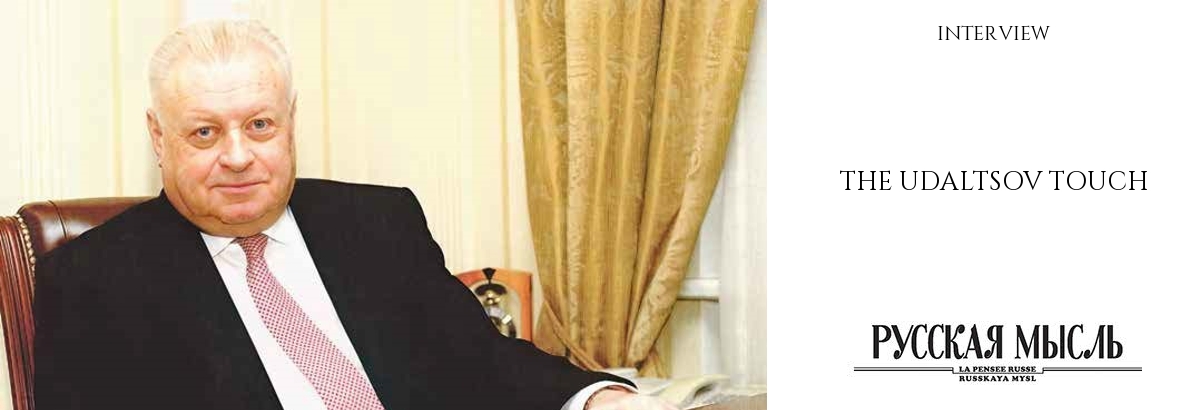
Much is known about this man and prominent public figure, but it is always better to learn more firsthand.
Alexander Ivanovich, you are a well-known diplomat. However, you entered the diplomatic service in 1973 after graduating from the Department of History at Moscow State University. This is a rather atypical path, as the children of diplomats usually go through MGIMO (Russian State Institute of International Relations). How did it come about?
It is hardly surprising. The Ministry of Foreign Affairs recruits graduates not only from MGIMO, but also from other universities and cities. This is crucial: the diplomatic service should not confine itself strictly to its own educational system. Furthermore, by many rankings, Moscow State University is the leader among Russian higher education institutions. As for me, I graduated from the Department of History (the Subdepartment of History of Southern and Western Slavs), which later proved highly useful in my diplomatic career – particularly in Czechoslovakia, and subsequently in the Czech Republic and Slovakia. In 1985, I graduated from the Diplomatic Academy of the USSR Ministry of Foreign Affairs – not to mention the dozen different courses I completed while working at the Ministry, including those for departing ambassadors, as well as language and regional studies programmes.
From my own experience, I can say with certainty that a thorough knowledge of history is the ultimate guide that helps find the optimal path to any goal. Today, such a historical navigator is needed more than ever by people of various professions, especially those occupying the highest rungs of the hierarchical ladder.
You worked for a long time in the Ministry of Foreign Affairs: first Soviet, then Russian. For five years, till 2011, you served as the Ambassador Extraordinary and Plenipotentiary of the Russian Federation to Latvia, followed by a posting as Ambassador to Slovakia, and for over seven years, till mid-October 2020, you headed our mission in Lithuania. Over this period, you must have developed an understanding of what matters most in the work of a diplomat, especially one holding the rank of ambassador. What are the boundaries of his courage and independence?
People answer this question differently. The most important thing in this line of work is to be a true diplomat and live up to this responsible and highly significant mission. There are numerous criteria for evaluating performance, particularly that of ambassadors, and I believe they should expand given the increasingly complex international environment, bilateral relations with a number of countries, and so forth. In this context, I believe an important role should be played by relevant inspections of the work of Russian foreign missions, as well as other forms of analysis.
Sometimes, when asked this question, people might answer that the most important thing for a diplomat is to know the host country: its history, culture, traditions, and, of course, the language. This is correct. However, in my view, it is even more critical that every Russian diplomat and ambassador first and foremost knows his own country inside out, including its real needs, which must be the priority in the work of foreign missions. And of course, one must not get carried away by lobbying for the interests of host countries, even friendly ones. A balance of interests is the best path for developing bilateral relations. This balance may be delayed in time, asymmetric, or prioritised for the partner at a certain stage, but it must exist nonetheless.
The limits of independence are generally defined; to a certain extent, they are enshrined in the 2016 Law On the Ambassador Extraordinary and Plenipotentiary of the Russian Federation, as well as in directives and other documents regulating the activities of foreign missions and their heads. As for courage, its boundaries are nowhere prescribed, and therefore must be guided chiefly by common sense. Seriously speaking, an ambassador’s courage should be welcomed when it is calculated, actionable, and not just an emotional outburst. By the way, an ambassador has a unique opportunity to convey his courage in dispatches to the country’s leadership.
To clarify my previous question: the countries you served in may not be considered major global powers. However, time shows that even a small country (or a slightly more prominent one like the Ukraine or Lithuania) can suddenly play a role that seems far above its weight. Am I right to look at it this way? And what can a diplomat’s role be in such situations, given that there have also been notable failures?
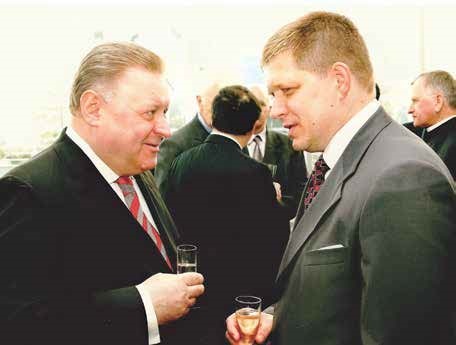
History shows that individual countries can trigger, or even provoke, a major conflict, even on a global scale. Take, for example, the 1962 Cuban Missile crisis or the 1968 events in Czechoslovakia. Incidentally, it was the year I graduated from the Soviet secondary school at the USSR Embassy in the Czechoslovak Socialist Republic, as my father was serving as the Minister-Counsellor at our diplomatic mission at the time, so I witnessed the beginning of the Prague Spring firsthand.
As it happened, both conflicts arose from the USSR’s confrontation: with the US in the first instance, and with NATO and the «collective West» in the second. The West was actively fuelling the Prague Spring, seeking to dismantle the socialist system there. This scenario failed to materialise because on 21 August 1968 troops from the USSR and five Warsaw Pact member states (totalling about 500,000 personnel) entered Czechoslovakia. NATO, as it turned out, was caught off guard and missed the manoeuvre entirely.
The role of an ambassador in critical situations is immense. In the vast majority of cases, Soviet and Russian envoys rose to the occasion; some later became prominent political figures, even ascending to the position of General Secretary of the CPSU (the Communist Party of the Soviet Union) Central Committee. Here, I am referring to Yuri Andropov, who served as Soviet Ambassador to Budapest during the height of the 1956 crisis.
I am not sure which specific failures you mean. They have occurred only on the rarest of occasions, and not just among ambassadors, but among leaders at all levels. On the whole, drawing from over fifty years of diplomatic service, I can confidently state that the majority of Soviet and Russian diplomats – and ambassadors in particular – have always been distinguished by their high level of professionalism, intellect, strong communication skills, and goodwill.
You are currently the Executive Director of the Foundation for the Support and Protection of the Rights of Compatriots Living Abroad, an organisation of unique importance. It recently celebrated its fifteenth anniversary. I have often heard words of gratitude directed at you from people you have quite literally saved. However, you face no shortage of challenges. Which of them are the most acute?
Before discussing the challenges, I would like to briefly outline what the Foundation has achieved over the past fifteen years. A great deal has been done. Today, the Foundation is an active and highly sought-after instrument for implementing state policy regarding our compatriots living outside the country. It is worth noting that there are about 30 million such Russians globally!
The Foundation’s Board of Trustees is headed by the Russian Minister of Foreign Affairs Sergei Lavrov, and the Ministry of Foreign Affairs itself is our main partner. The primary objective is to provide on-the-ground support to people and protect them from persecution. A support system is in place comprising fifty-three legal aid centres across thirty countries, which compatriots refer to as a «legal emergency service». When necessary, we fund legal counsel: our lawyers are currently involved in forty-three court cases and, as a rule, successfully.
We also fund the operation of information portals, websites, and legal columns in Russian-language media, which attracts approximately 270 million visits a year. The Foundation finances the publication of books, textbooks, legal reference guides, and periodicals. I consider our joint project with Literaturnaya Gazeta to publish special issues of the Russian Mind magazine to be highly successful; these are published in both Russian and English and distributed abroad free of charge. Over recent years, fourteen issues have been released on various topics, including the history of the Great Patriotic War, the life and work of Fyodor Tyutchev and Emmanuel Kant, and the history of relations between Russia and the USA, among others.
We recently opened a branch of our Foundation in Kaliningrad, bringing us geographically closer to the countries where the authorities have begun forcing out Russian-speaking residents. While providing consultations remains our core priority, the branch will also engage in informational, outreach, and exhibition work, serving as a welcoming meeting point for people, including those from neighbouring countries.
Now, regarding the challenges. The primary issue is the escalation of the Russophobic policies and practices across most EU nations and several others. This has led to a deterioration in the situation of our compatriots, a violation of their rights, and intensified persecution for expressing sympathies towards Russia. A key component of this archaic approach is the EU’s sanctions against our Foundation; it was recently included for the third time in their twentieth anti-Russian sanctions package. Brussels’ objective behind these restrictions is clear: to intimidate our people, discredit the Foundation, and isolate it.
However, this remains unachieved, as evidenced by the growing number of appeals from our compatriots to the Foundation and its centres. To be frank, the sanctions have taught us a great deal. We have become more proactive, more professional, and more cautious. And we will continue to learn.
There are certain “in-house” issues which I am sure can and must be resolved. Here are just a couple of them. Firstly, the never-ending stream of people wishing to lead the Foundation, which, frankly, complicates matters and fails to take into account the status and advantages of a non-governmental organisation, which our NGO is. Secondly, another crucial issue is financial. A paradoxical situation has arisen: the year before last, President Vladimir Putin supported an appeal by Sergei Lavrov, resulting in a doubling of the Foundation’s core funding. However, the Ministry of Finance flatly refused even a minor salary increase for the NGO’s staff, whose wages have not been raised for fifteen years. As a result, our main backbone remains pensioners (estimable and experienced individuals), while attracting younger, highly professional staff poses a major challenge. And there are only twenty-five of us in total!
No doubt your family and its traditions played a huge part in helping you. As the saying goes, We are all products of our childhood. I know this holds a special meaning for you personally. Could you share a few pages from the Udaltsov family history?
Every family history has its unique features, and the Udaltsov saga is no exception. Let me begin with my grandfather, Ivan Dmitrievich Udaltsov – a revolutionary, educator, prominent scholar, and statesman. As a student at Moscow State University, he became involved in revolutionary activities, joining the RSDLP(b) (Russian Social Democratic Labour Party) in 1905 and becoming the secretary of the university’s social democratic faction. In 1907, my grandfather was arrested and held in Butyrka Prison for six months. By order of the Minister of Internal Affairs, he was subsequently sentenced to a two-year exile in the Vologda governorate. However, as he was a hereditary nobleman, this was commuted to banishment abroad. For two years, I. D. Udaltsov lived in Germany, France, and Switzerland. He continued his studies at Leipzig University and joined the work of the Social Democratic Organisation of Russian Emigres, which led to his arrest and several months of imprisonment in a Dresden jail. On his return to Russia, he was barred from resuming his university studies due to being flagged as politically unreliable. It was only in 1912 that he sat his exams externally, received his degree from Moscow University, and went on to serve for a year in a grenadier regiment.
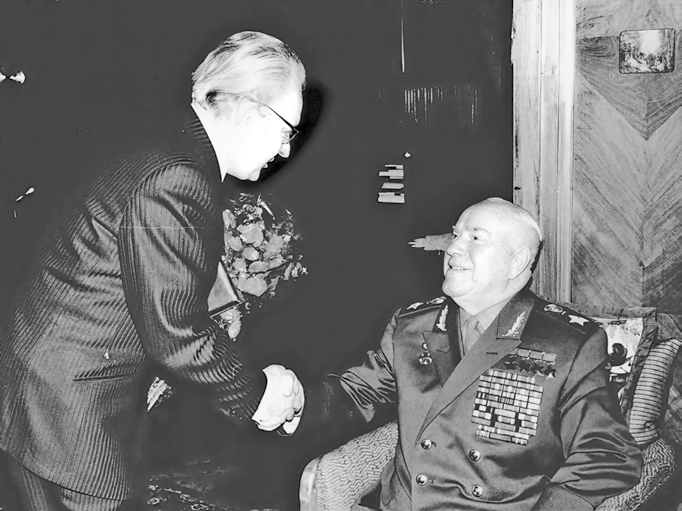
In August 1914, with the outbreak of the First World War, he was conscripted into the active army, where he was also heavily involved in political work. Following his demobilisation in 1918, Ivan Dmitrievich worked in the Mossoviet (Moscow City Soviet), the Narkompros (People’s Commissariat for Education), and the Socialist Academy of Social Sciences. In 1921, he returned to Moscow State University, launching a brilliant teaching and academic career. It is difficult to chronicle all its milestones: at various times, he served as dean of six departments, occasionally managing several simultaneously. Between 1928 and 1930, he was the rector of Moscow State University. In 1943, my grandfather took charge of the Department of International Relations, which a year later, on his initiative, was reorganised into the Institute of International Relations – known today as MGIMO University under the Ministry of Foreign Affairs of Russia. He became the first director of this institution, which is a leading higher education establishment not only in our country, but, I believe, well beyond its borders, responsible for training personnel for the diplomatic front.
My father, Ivan Ivanovich Udaltsov, also had a remarkable life. After graduating with first-class honours from the History Department of Moscow State University, he was conscripted as a private into military service in 1940. By the time he completed his service in 1945, he was a captain and had taken part in the Victory Parade on Red Square. Towards the end of the war, my father served as a liaison officer to the 1st Czechoslovak Army Corps. Formed in the USSR, the corps was commanded by the legendary General Ludvik Svoboda, who went on to become President of Czechoslovakia in the late 1960s. During those later years, my father worked as Minister-Counsellor at the Soviet Embassy in Prague, and he shared a particularly close and friendly relationship with the head of state.
After the war (another family trait, it seems), my father went into academia. However, in 1950, he was invited to work in the apparatus of the CPSU Central Committee, where he rose to the rank of Deputy Head of the General Department, which dealt with socialist countries. He later became Director of the Institute of Slavonic Studies of the USSR Academy of Sciences, but returned to the Central Committee as First Deputy Head of the Ideological Department. In 1965, he volunteered for a posting to Czechoslovakia, becoming the second-in-command at our embassy. He was still serving there during the 1968 events in Czechoslovakia.
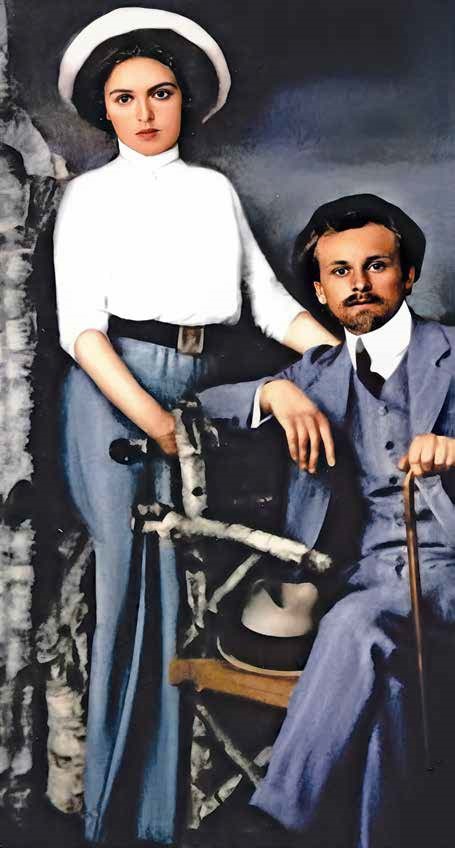
the grandparents of A. I. Udaltsov. Freiberg, Germany, 1910
Then came another major milestone in his career: in 1970, he was appointed Chairman of the Board of the Novosti Press Agency, known today as the Rossiya Segodnya (Russia Today) International Information Agency. The significance of Novosti to the USSR at the time can hardly be overstated – the agency served as the de facto monopoly tool for foreign policy propaganda, while formally maintaining a non-governmental status that granted it carte blanche to introduce carefully measured innovations in the field. Within its walls worked thousands of top-tier professionals, including journalists, photographers, broadcasters, and editors. To give just a couple of figures: the agency published sixty newspapers and magazines, which were distributed in forty-five languages with a combined circulation of 4.3 million copies.
Under my father’s leadership, a whole series of interesting projects was brought to fruition, such as the publication of the two-volume memoirs of Marshal Georgy Zhukov. At that time, he was also a deputy of the Supreme Soviet of the USSR and a candidate member of the Central Committee of the Communist Party.
His final posting was to the Soviet Embassy in Greece, where he was appointed Ambassador in 1976 and where, according to his colleagues, he made his distinctive “Udaltsov” contribution.
Following his retirement, Ivan Ivanovich returned to academic research at the Institute of Slavonic Studies, where he defended his doctoral thesis on the history of Czechoslovakia in 1984.
It is a great pleasure to note that in March 2018, the Rossiya Segodnya International Information Agency hosted a gala evening to mark the centenary of I. I. Udaltsov. Sergei Lavrov sent a message of greeting to the attendees, which read, in part: «Ivan Ivanovich was distinguished by his brilliant professionalism, single-mindedness, vast erudition, great capacity for work, and an ability to swiftly find effective solutions to problems of any complexity, as well as by his selflessness. He was a true intellectual and a patriot of his country, a well-read and highly educated man who always showed genuine care for his subordinates.»
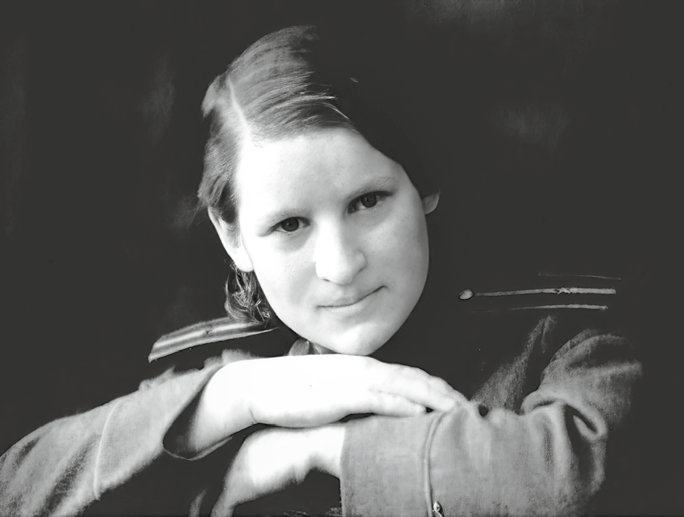
I must note with particular affection that my mother, Agniya Sergeyevna, was a truly remarkable woman. She raised three children, the eldest of whom – my sister – was born in early 1942. Despite this, our mother went to the front and completed her service with the rank of Lieutenant of the Medical Service. To quote from the official commendation for her award of the Order of the Red Star: «During the battles for the city of Berlin, amidst an air raid and bombing on 25 April 1945, Comrade Udaltsova, though wounded herself, dressed the wounds of twelve injured soldiers and officers of the brigade headquarters. Following her injury, Comrade Udaltsova remained on duty.» This was not Agniya Sergeyevna’s only combat decoration.
Alexander Ivanovich, quite a few young people dream of a career in diplomacy. What is most important when assessing whether you are cut out for it, and what qualities are absolutely essential to succeed?
Choosing a profession is, without a doubt, significantly influenced by self-assessment. If your choice is guided by your own evaluation rather than the insistent recommendations of parents or the advice of friends, it speaks volumes about your maturity. The most important thing is the genuine desire to pursue what truly moves you. Then you have it, it will not be difficult to better prepare yourself for a career in diplomacy, and to adjust your lifestyle, education, and hobbies accordingly.
To represent your country with dignity, you must, of course, be highly educated, speak foreign languages, and communicate flawlessly in both writing and speech. You must also be physically fit and hold a driving licence. The list could go on, but you should remember that you can only become a true diplomat by absorbing everything useful, learning from the experience of others, and constantly striving for self-improvement. I am seventy-five years old, and while my experience is extensive, I still consider myself a learner. In our turbulent times, there is simply no other way.