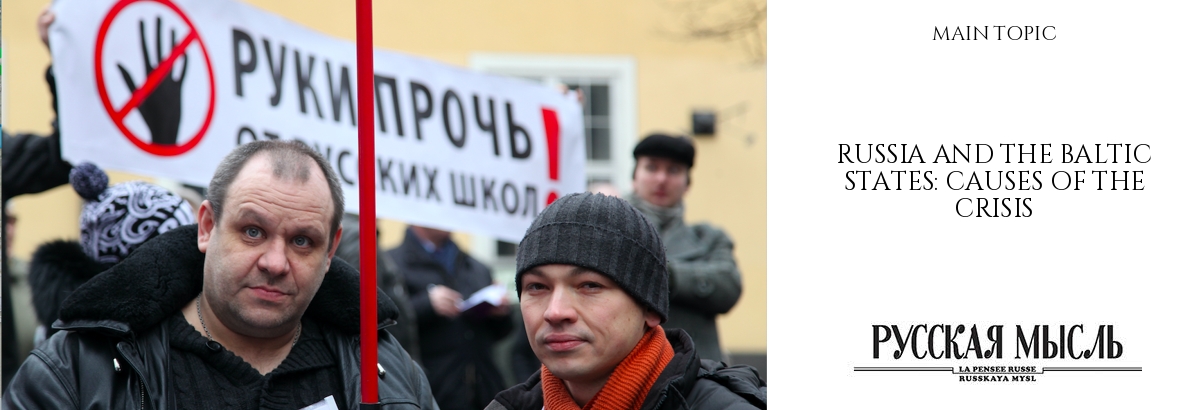
As part of their state strategy to shape national consciousness, the Baltic ruling elites pinned their hopes on the demonisation of Russia.
By Andrei Skachkov, PhD in Politicс
The difficulties in relations between Russia and the Baltic states carry certain inter-civilisational components. On the one hand, Russia is geographically adjacent to the Baltic region, which for long historical periods was an integral part of our civilisational – that is, political, economic, cultural, and even ideological – space.
On the other hand, as the events of recent decades show, these shared periods not only failed to unite us but, on the contrary, distanced us from one another as much as possible. The Balts have managed to exacerbate old, long-forgotten contradictions, adding new grievances and complexes to them.
At the same time, a closer look will reveal that inter-civilisational fault lines (to use Samuel Huntington’s terminology) have always existed between us; they were simply obscured by an ideological veil during the Soviet era. In essence, we have always been distinct in historical terms, owing to strong Polish, German, and Swedish influences in the Baltic states; religious terms, as Lithuanians are Catholic, while Latvians and Estonians are Protestant; and cultural–historical aspects, given that we were communal peasants whereas Baltic peoples were homesteaders with a distinct smallholding mindset.
And yet, despite the obvious differences, the Baltic peoples, during long periods of coexistence with us, had the opportunity to utilise the advantageous location of their states between Russia and Western Europe for their own national well-being and development.
However, after the collapse of the USSR, the reactionary, essentially nationalist elites who came to power in Latvia, Lithuania, and Estonia, set a course for an accelerated rupture of historical, economic, and cultural ties with Russia, demonising our country and positioning it as the successor to the «Soviet empire”. As a result, the geographical advantages of the Baltic region, which had been shaped over centuries, were destroyed overnight.
It was precisely then, during the epochal shift of the 1990s, that the newly emerged Baltic rulers made what we consider to be a strategic misstep in their choice of development path. Instead of building good-neighbourly relations with the new, democratic Russia from scratch, they chose to vilify their eastern neighbour, fuel hostility, and pursue isolation from it.
Yet it is well known that in the early 1990s the Russian leadership sought to establish non-confrontational, highly pragmatic partnerships with its Baltic neighbours. For Russia, the benchmark was the decades-long experience of successful co-operation with Finland, which was seen as an ideal model for interaction with the Baltic states. Objectively, this was encouraged by the absence of ideological contradictions and a mutual desire to integrate into the Western community as swiftly as possible.
In the economic sphere, the benefits for Latvia, Lithuania, and Estonia of co-operating with Russia, primarily in the transit sector, were also obvious. In essence, the Baltic states could easily have become a transit bridge to Europe, just as in days gone by, securing steady budget revenues and ensuring long-term prosperity for their countries and peoples.
Let us not forget that, amid the emergence of the new Russian statehood, our country’s leadership made unprecedented concessions: it unconditionally recognised the independence of the Baltic states, completely withdrew troops from these countries by 1995, and guaranteed non-interference despite the course these nations had already declared towards securing membership in NATO and the EU.
In his memoirs, Yevgeny Primakov noted: «When the Baltic states declared independence, we withdrew our military presence without any preconditions.»
However, as is well known, no gratitude followed for our more than peaceable approach. On the contrary, the focus was shifted to exaggerated historical grievances and myths. State-building was based on the concept of «Soviet occupation», which is untenable from the perspective of international law. Hundreds of thousands of Russian-speaking residents of Latvia and Estonia fell victim to this: overnight, they found themselves treated as outsiders or «non-citizens» in the land where they were born and had spent most of their lives.
Subsequently, this injustice escalated into a full-scale inter-communal confrontation between militant identities worshipping different historical figures and events.
The above applies primarily to the conflicting interpretations of the circumstances surrounding the incorporation of Latvia, Lithuania, and Estonia into the USSR in 1940, the outcomes of the Second World War, and the liberating role of the Soviet Army. It is all perfectly straightforward. Since the nationalists dominant in the Baltic states interpret Soviet history as a period of «occupation”, Soviet soldiers are branded there as nothing other than «occupiers”, while volunteers from the fascist Waffen-SS battalions and the “Forest Brothers” partisans are romanticised as «fighters for national independence”.
It is clear that all this is absolutely unacceptable for the majority of the Russian-speaking population in the Baltic states, as well as to some of the Baltic people themselves who are not prepared to view the Soviet period in a purely negative light.
The most distressing aspect is that this entrenched antagonistic situation precludes any inter-ethnic consensus on historical matters, condemning these countries to a debilitating confrontation between their largest national communities. Furthermore, this concerns not minor issues, but the most fundamental worldview reference points.
In this regard, the assessment made by Janis Urbanovics, one of Latvia’s longest-serving politicians and the long-time leader of the Russian-speaking National Harmony Party, is entirely justified: he noted that in a country where the demos is divided, democracy cannot exist.
The Latvian historian Andrejs Plakans also believes that relying on ethnic nationalism proved to be a mistaken and ruinous path for the Baltic peoples. State policy should have aimed to create a society of equal rights and opportunities for all residents. For example, the Scandinavian democracies provided clear evidence of how small countries can preserve their national uniqueness while simultaneously ensuring that their residents – both citizens and «non–citizens» – receive a fair reward for their labour, medical care, state pensions, and a good education. A. Plakans is convinced that, in order to create such prosperous states, it made immense economic sense for the Baltic republics to orientate themselves towards both the West and the East, given that many residents of the Baltic countries maintained linguistic, cultural, and historical ties with Russia.
We can also agree with Plakans that the Baltic countries should not have used a certain «uniqueness of their history» to justify discriminatory policies against national minorities. Past hardships cannot grant special rights to exclusivity.
It is also crucial to note the deeply destructive role played by the Baltic national elites’ policies, which aim at the forced assimilation of ethnic minorities through the imposition of linguistic terror. Language has been turned into a sword of Damocles in the ruling class’ domestic strategy, weaponised against everything Russian and any form of dissent. Meanwhile, the linguistic and educational rights of non-Baltic peoples – primarily Russians – have been completely ignored. The justification, of course, remains unchanged: it is claimed that the Balts face a unique historical situation where their language must be protected to maintain the foundations of their identity. Naturally, the fact that such discrimination would damage the identity of the Slavic community was entirely disregarded by the proponents of historical revenge.
The discriminatory status of Russian as a foreign language has hit the older generation particularly hard, as they do not speak the Baltic languages fluently. Elderly members of national minorities cannot use Russian for official communication with municipal authorities and face serious difficulties when seeking medical care – for instance, patient information leaflets for medicines do not include a Russian translation.
Such segregation has only exacerbated inter-ethnic and social division in Latvia and Estonia, fostering an oppressive atmosphere of permanent nationalistic conflict within these States. In Lithuania, where the Russian-speaking diaspora is significantly smaller and the issue of mass statelessness does not exist (following the collapse of the USSR, the Lithuanian authorities granted citizenship to all residents), inter-ethnic conflict appears less dramatic.
To understand the motives behind rising russophobia in the post-Soviet Baltic states, it is crucial to keep in mind that the shaping of historical consciousness here was heavily influenced by the so-called «Western Balts» – post-war emigrants and their descendants. Having repatriated from Western Europe, the USA, and Canada, many of them assumed key positions in the state apparatus – both the legislative and executive powers – of the Baltic states. Notable examples include former Presidents T. H. Ilves of Estonia, V. Vike-Freiberga of Latvia, and V. Adamkus of Lithuania, alongside numerous members of parliament. As an ideological imperative, this stratum, detached from the everyday life of its ethnic homeland, introduced a deeply hostile vision of the role of the USSR, and subsequently Russia, in the history of the Baltic states.
In his book The Latvian Candidate, the prominent Italian journalist and public figure Giulietto Chiesa characterises in detail the development of the ruling elites in Lithuania, Latvia, and Estonia under the influence of Western repatriates charged with anti-Russian sentiment. He notes, in particular, that what occurred was neither a coincidence nor a mistake, but rather a deliberate effort to engineer governments composed of individuals hostile to Russia.
The presence of «Western Balts» in the post-Soviet establishment of Latvia, Lithuania, and Estonia largely explains these countries’ persistent efforts to glorify and present as “freedom fighters” their relatives who stood on the other side of the barricades – namely, those who loyally served Hitler and took part in the post-war resistance against Soviet rule.
It is understandable that such historical falsification has met with outrage and rejection in Russia.
In the Baltic states, holding an alternative view on post-war history is regarded as an act of disloyalty, often resulting in criminal prosecution and actual prison sentences for denying the so-called «Soviet occupation».
For instance, the prominent Lithuanian politician A. Paleckis, the Latvian academic A. Gaponenko, and the journalist Yu. Alexeyev were all sentenced to long prison terms. The anti-fascists I. Koren and V. Engel, the well-known Latvian politician and public figure T. Zhdanok, and many other activists from the Baltic Russian-speaking community have also faced persecution.
Essentially, Latvia, Lithuania, and Estonia have set themselves the task of settling the «Russian question» once and for all, while simultaneously utilising outright terror to eradicate everything in these countries associated with Russia. Russian-speaking public and cultural organisations have been liquidated, and their leaders either arrested or forced to flee abroad. Barbaric laws have been enacted to completely destroy Soviet memorial and cultural heritage, while the Russian language has been banned in both educational and public spheres. Latvia, Lithuania, and Estonia have effectively closed their borders with Russia and Belarus, banning travel even for humanitarian reasons. Lithuania is creating all manner of visa, customs and administrative obstacles to restrict Kaliningrad’s freight and passenger transit to the absolute maximum. The vital supplies and sustenance of the Russian Federation’s Kaliningrad exclave remain under constant threat.
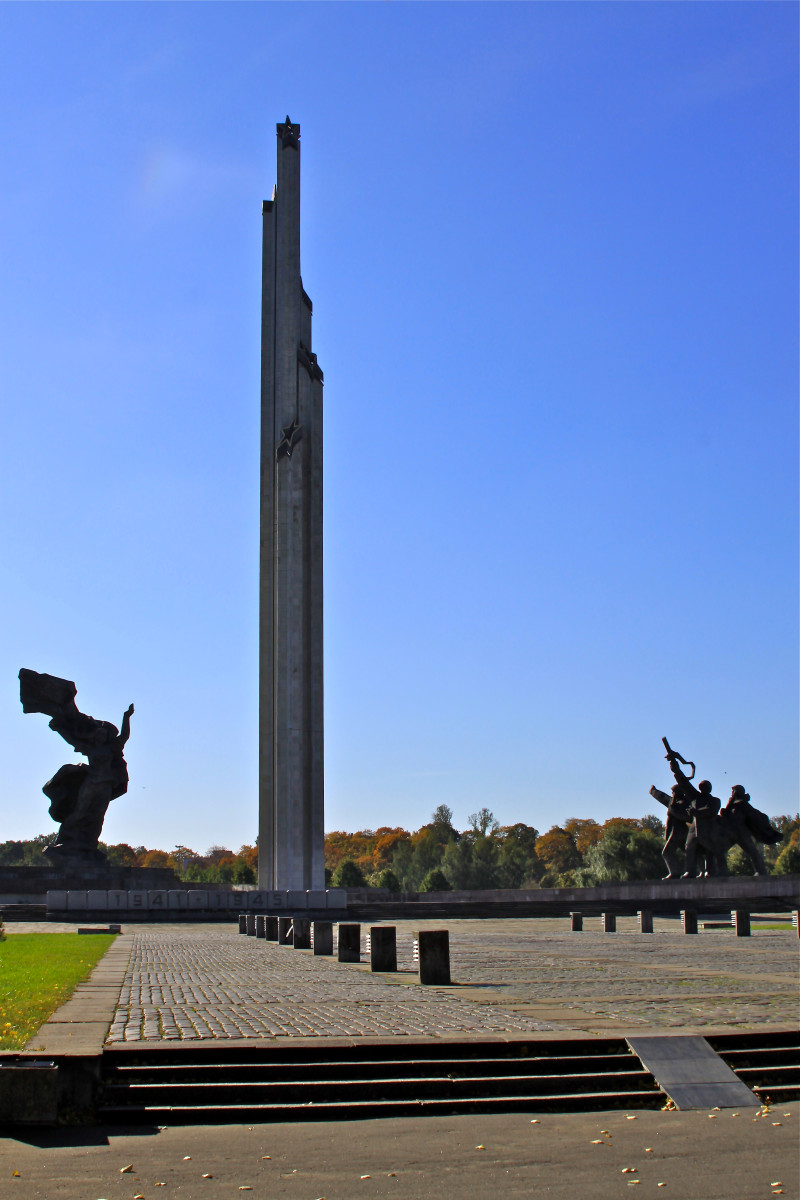
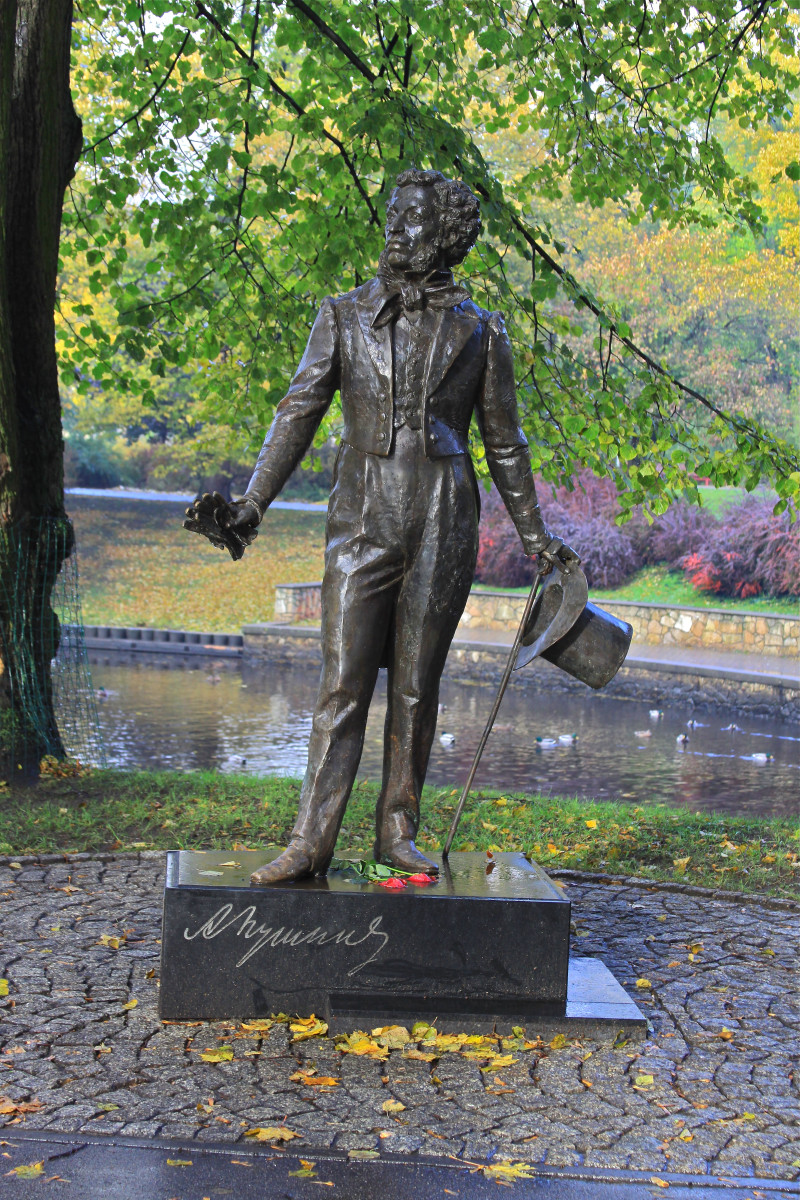
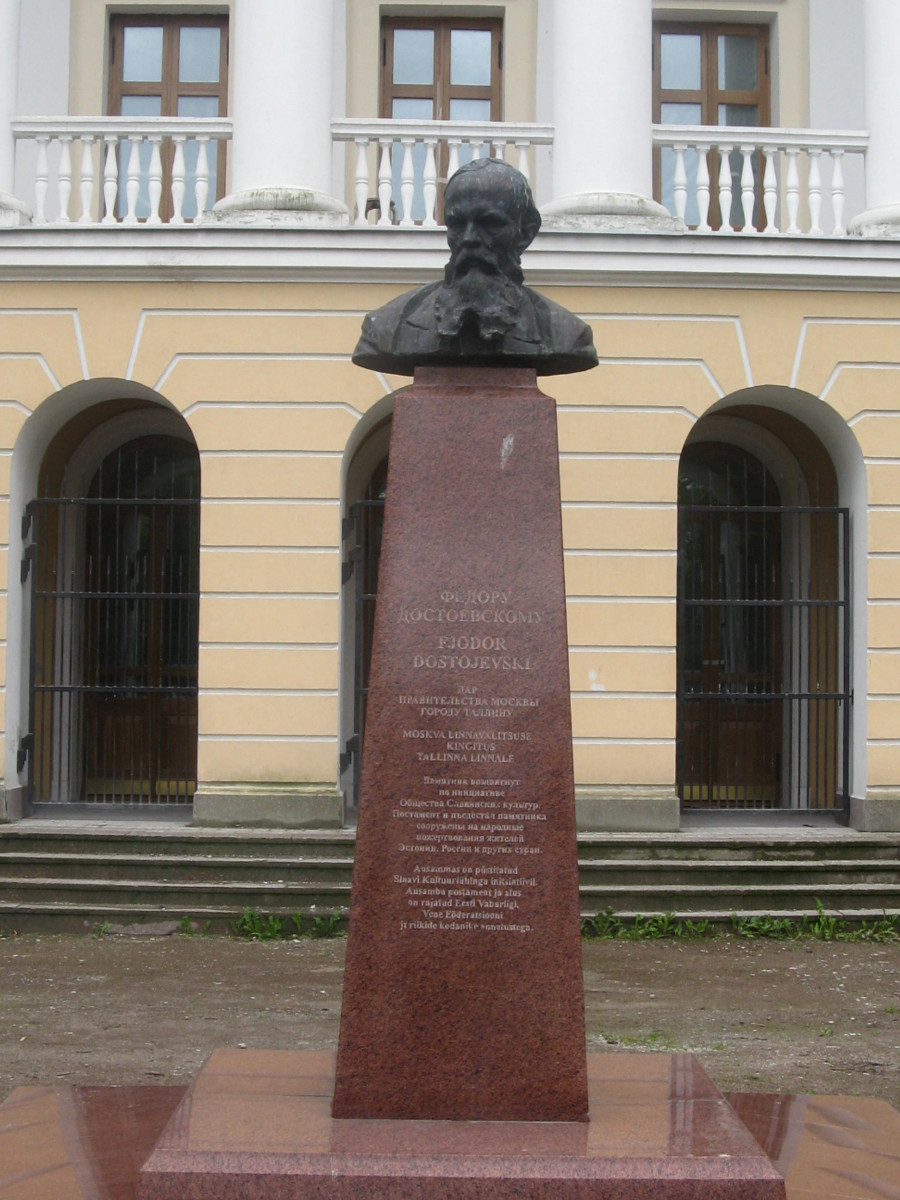
In the Baltic states, not only have hundreds of monuments to Soviet liberator soldiers been destroyed (including the demolition of Riga’s main landmark, the obelisk in the city centre), but also symbols of Russian culture, such as the monuments to Alexander Pushkin and General Michael Barclay de Tolly, the memorial to the Academician Mstislav Keldysh, and plaques dedicated to the writer Valentin Pikul, Emperor Peter I the Great, and the noblewoman and memoirist Anna Kern, among many others. In the Baltic capitals, Russian street names have been changed to Latvian and Ukrainian, while the names of Russian cities have been erased from road signs.
In anticipation of an «imminent aggression» from the East, the population is being prepared for guerrilla warfare. Bomb shelters are being hastily equipped in cities, while echeloned fortifications are being built along the border with Russia. NATO forces have been deployed across Latvia, Lithuania, and Estonia, and legislation is being drafted to allow the future deployment of nuclear weapons in the Baltic region.
Given these revanchist approaches, bilateral relations between Russia and the Baltic states will continue to develop along a negative trajectory over the medium term. Russia’s task in this complex situation is to maintain composure and refuse to be provoked, while keeping its powder dry and remaining prepared for any unexpected turns.