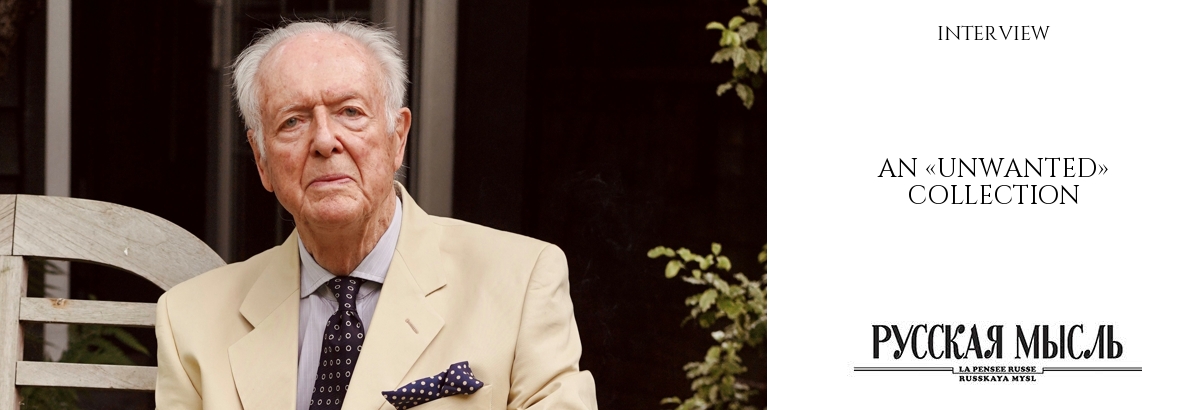
Prince Nikita Dmitrievich Lobanov-Rostovsky has shared the story of one of his collections.
The interview was conducted by Irina Din (Khokholeva) and Maria Afitsinskaya-Lvova
The Victoria and Albert Museum in London houses a remarkable collection of Russian posters from the 1920s, purchased from Prince Nikita Dmitrievich Lobanov-Rostovsky, a collector, philanthropist and art historian. In a talk with the Mir Muzeya (“Museum World”) magazine the collector has spoken about how it came to pass and why he parted with the posters. There is not just a history of his collection in this talk about the Constructivists and Soviet customs, coincidences and people, but also a metaphor of time.
Irina Din: Nikita Dmitrievich, why did you take an interest in Russian revolutionary posters?
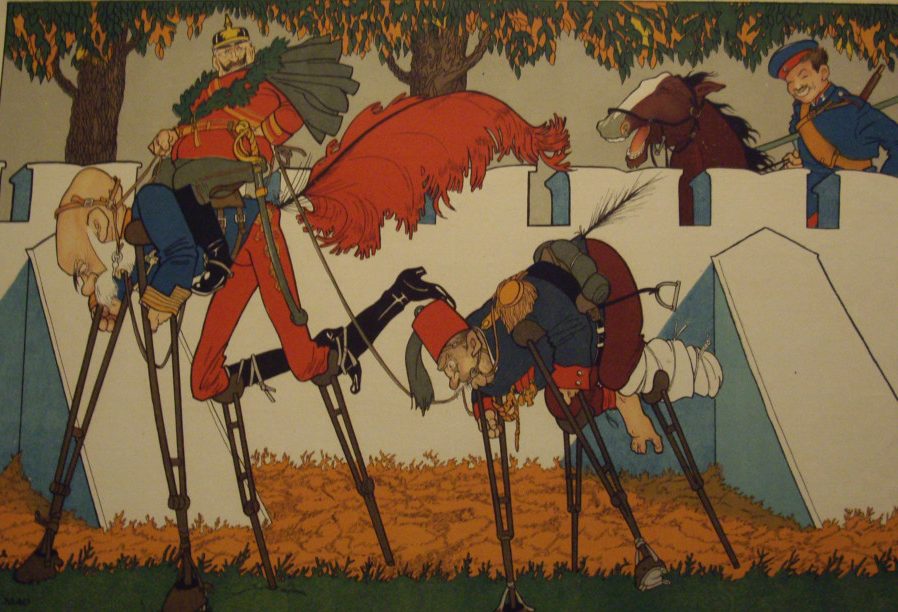
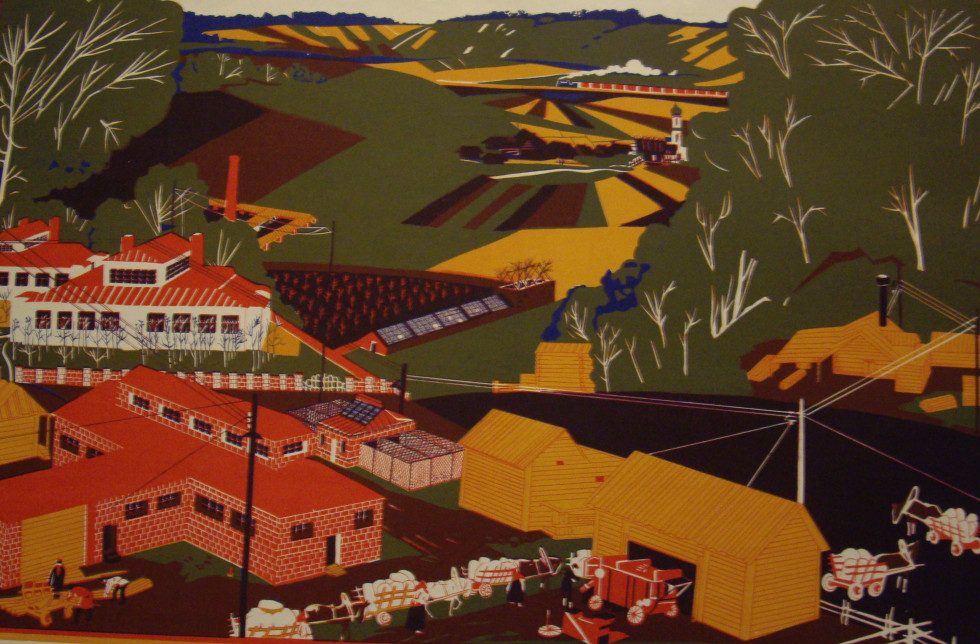
Nikita Lobanov-Rostovsky: Because it was the Russian revolutionary poster that became the leading trend in Europe in the 1920s. Just as half a century earlier Toulouse-Lautrec in France had transformed the poster concept into a concise and expressive form, so El Lissitzky and the Constructivists reduced the complexity of the poster, making it very clear and functional. Their aim was simple: to ensure the proletariat (working class) understood the new ideology. Posters from the 1920s are a significant page in the history of Russian art.
Few people know that the Victoria and Albert Museum in London has an extensive collection of such posters. And, of course, there are world–famous ones among them – for example, Lissitzky’s Beat the Whites with the Red Wedge. The story of how these posters ended up in the V&A is very revealing.
I.D.: Please tell us how you acquired your collection. Was it a one-time purchase or long-term collecting?
N.L.R.: On the advice of the American art critic John Bolt I met the Russian Jewish intellectual Viktor Kholodkov in search of theatrical sketches. He was a mathematician, but he also worked part-time selling books, paintings, and posters. He had two flats in Moscow: he lived in one of them, and the other was cluttered with all sorts of things. He told me about his posters. About twenty posters out of his collection of 500 seemed interesting to me. But Kholodkov categorically refused to sell them individually. So I had to buy all of them.
500 posters is a huge volume. Some of them were half the size of this table (pointing to the table about two and a half metres long). It was in 1989. Imagine how 500 posters could be taken out of the Soviet Union!
I.D.: And how was it done? They were considered a cultural asset.
N.L.R.: Emigrating to the USA on a Jewish line, Kholodkov took these posters and plenty of books out of the country. How did he do it? Very simply. He found a carrier that transported containers between the Soviet Union and Italy. Cars often returned to Italy empty. Kholodkov made arrangements with drivers, bought up trunks all over Moscow, filled them with books and posters, and lorries took them to Milan.
It was a small and not very honest business of lorry drivers. Permits to transport goods were issued for bribes, which were so small at that time that it was rumoured that even an elephant could be taken out if you knew the right drivers and customs officers. So everything went smoothly, and I got the whole batch straight away. In the Soviet Union customs documents did not describe the contents of goods that were being removed from the country.
The ban on taking out almost everything is a typical approach of all underdeveloped countries, where customs is one of the country’s main sources of income. This legacy survived even after the collapse of the USSR. For example, if you come to the Ukraine with anything that is over fifty years old, it is seized.
Unfortunately, I was in a similar situation too. A friend of mine was flying to Moscow, and I asked him to take a suitcase with books for the museum in Rostov Veliky. But for work reasons he had to stop in Kiev on the way, where the suitcase was seized at customs. Among the books was an old (about 150 years old), but not a rare edition by Goethe. This example demonstrates this psychology: in the Soviet Union bringing anything old into or out of the country was almost impossible.
I.D.: Why were you interested precisely in those twenty posters?
Because they are world-class. I have already mentioned Lissitzky’s Beat the Whites with the Red Wedge. There are just a handful of genuine copies of this poster, but there are lots of fake ones. For instance, over the past fifty years at the Lenin Library (now the Russian State Library) I have been denied access to photograph any original under the guise of endless «restoration”. The fact is that the originals, both at the Lenin Library and the V&A, have typographic marks that forgers do not reproduce. They can be used to distinguish a cheap fake from a real masterpiece.
When I received the posters, I didn’t really need many of them, but the cost of the twenty that I was interested in exceeded the price of all the others.
By a happy coincidence, I was acquainted with the curator of posters at the Victoria and Albert Museum. They bought the whole batch from me in four or five stages. Even a letter has survived in which they were surprised: «Why are you selling the posters at such a low price and parting with them so easily?» I would have donated the posters to the museum, but I know from experience that gifts are often treated carelessly. And if they have been paid for, the demand from the keepers is stricter.
I sold a number of particularly valuable posters to the biggest collector in the world, the American Merrill C. Berman. He was a broker, traded pork belly futures at the Chicago Mercantile Exchange and amassed the most extensive collection of posters in the world. This explains how those Soviet posters ended up in London, and some of them in Chicago. I still keep a folder with confirmations of the transfer of the posters to the museum.
Maria Afitsinskaya-Lvova: You usually donated your collections to Russian museums. Why did you decide to leave this collection of revolutionary posters in Europe, at the V&A?
N.L.R.: It just happened this way. Because those posters had never been in my area of interests. I had got them almost for nothing and, in essence, they had been a random purchase. And frankly, I wanted to get rid of the unwanted stuff as soon as possible, handing the collection to safe hands. After all, I couldn’t take everything back… At that time, the V&A already had a significant collection of posters, and I had contacts there.
I.D.: Which posters did you decide to keep for yourself?
N.L.R.: I kept the theatrical ones, as they were relevant to my collection. As I have already said, their cost exceeded the price of the other 480 posters. So I parted with them without regret. The theatrical ones are now part of my collection.