A conversation between Neonilla Pasichnyk and Alexander Kotchoubey
Spending time with Alexander Andreievich Kotchoubey always brings new discoveries. We have been friends since 2013, when we met in Kyiv, where Alexander Andreievich attended a church sponsored evening gathering dedicated to traditional family values. There is no need to remind the reader that Alexander is a direct descendant of Pushkin’s Kotchoubey, described as “rich and famous.” On his 55th birthday, Alexander, with his characteristic storytelling skill, shared with us fascinating details of his family history. The most incredible thing turned out to be that the granddaughter of the Russian Empire’s Minister of Foreign Affairs, Elena Constantinovna Soldatenkov (née HSH Princess Gortchacow), and her daughter, who lived at the famous Villa Gortchacow in Sorrento, are relatives of the Kotchoubey family!
Alexander Andreievich, thank you for agreeing to share your family’s story with us.
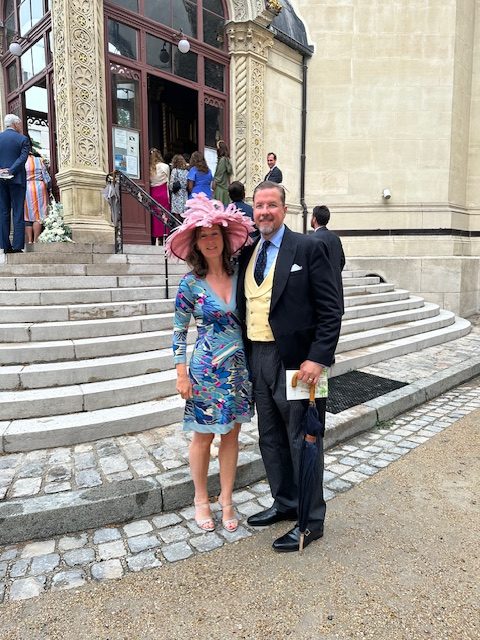
Let us jump right into the story of my mother’s family and Sorrento. Much of the past – including the Gortchacow’s connection to Sorrento – has been lost in our family’s memory. Chance and curiosity helped me piece together traces of the past, which, in turn, contributed to a broader understanding of my family’s historical journey. Quite by chance, while my wife Anna and I were traveling along the Amalfi Coast, I booked a room in Sorrento at a hotel called the Parco dei Principi. We sensed an aristocratic undertone in the hotel’s name, possibly evoking the Italian and Russian nobility. You can imagine our surprise, when it turned out that I had not only booked a room in a hotel with a beautiful garden but as it turned out, on the hotel grounds stood a villa that had belonged to my family for nearly eighty years.
What an amazing discovery! The Kotchoubey’s have traveled far and wide – not only in Russia, Europe, and the United States, but also on other continents – the members of this large family have set foot everywhere!
I don’t know where to begin this story, given that the most skilled writers and archivists have already written extensively about Sorrento itself and the Gortchacow villa –something I, of course, learned later on from Renata De Lorenzo’s study of the family of Elena Gortchacow-Soldatenkov, and the very good Russian translation by Mikhail Talalay.
But there’s not a word about the Kotchoubey family…
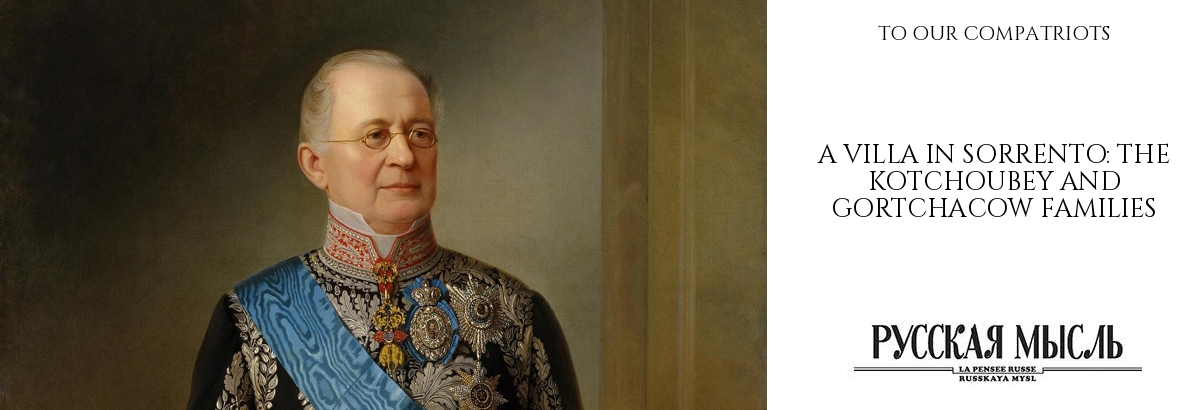
I will therefore begin with my great-great-grandfather, HSH Prince Constantin Alexandrovich Gortchacow (1841–1926), son of the last Chancellor and Minister of Foreign Affairs, HSH Prince Alexander Mikhailovich Gortchacow (1798–1883) and his wife, HSH Princess Maria Alexandrovna, née Princess Urusova (1801–1853). Readers are well aware that the Chancellor was a classmate of Alexander Sergeyevich Pushkin at the Tsarskoye Selo Lyceum. Among the most remarkable stories associated with their friendship, it is worth recalling, is that the Chancellor was not only the poet’s last surviving classmate, but he was the one who hid the manuscript of the poem “The Monk” in his archives. He always considered these mischievous lines unworthy of Pushkin’s pen. Until the manuscript was discovered in 1883 or 1884, the literary world considered the poem lost.
Is it possible that the future Chancellor Gortchacow was involved in the seizure of the correspondence between Pushkin and the Duke of Serracapriole, followed by the transfer of part of the poet’s archive to Italy? In any case, because of the humorous lines written by the 14-year-old Pushkin in the poem “The Monk” (“…napping at Gortchacow’s during supper”), the manuscript could have been not only hidden away but also destroyed. Thank God that this did not happen. Pushkin’s character was modeled after Saint John of Novgorod! Perhaps we should return to the Gortcacows.
The story of the Chancellor and his sons deserves a separate account in its own right. For example, his son, HSH Prince Constantin Alexandrovich, married a wealthy heiress, HSH Princess Maria Mikhailovna Sturdza, the daughter of the last ruling prince of the Principality of Moldavia. By the time of her daughter’s wedding in 1868, my great-great-great-grandmother, Princess Smaranda Sturdza (née Princess Vogorides), did not yet own the villa in Sorrento.
Her son-in-law, HSH Prince Gortchacow, was wealthy in his own right and had managed to amass himself a considerable fortune in Russia. One of his businesses was a winery in Crimea, which held the exclusive right to supply church wine to all dioceses of the Russian Orthodox Church.
HSH Prince Constantin Alexandrovich Gorchakov was incredibly handsome, which aroused great admiration among women but caused the prince no small amount of trouble throughout his life. By 1883, the family already had five children. It was then that his father died. The Chancellor left a considerable fortune to his two sons.
This magnificent estate in Sorrento once belonged to the family of Count Paolo Leopoldo Bourbon of Syracuse, a cousin of the King of Naples. The estate was named Villa Siracusa after its owner. The coat of arms above the main entrance, which has survived to this day, features an eagle on the left – this is the coat of arms of the city of Chernigov. It should be noted that Chernigov is now located in Ukraine, but during the reign of the Rurik dynasty, it was part of the unified state of Kievan Rus’. The descendants of the Rurikids, specifically the Olgovich branch, the Gortchacow princes, use the Chernigov coat of arms as their heraldic emblem. On the right, visitors see a bull’s head – this is part of the coat of arms of the Moldavian Sturdza hospodars.
You and your wife discovered the coat of arms and were able to determine that the villa belonged to the Gortchacows!
The estate, of course, was not yet known as the Villa Gortchacow when my great-great-great-grandparents, HSH Prince Mikhail Sturza and his wife Smaranda, learned of its sale.
Princess Smaranda Sturdza (née Princess Vogorides) was a very wealthy woman who had acquired a magnificent city mansion in Paris (the largest private plot of land in the city at the time), and it was likely her money that enabled the Sturdza couple to purchase the villa in Sorrento in the 1870s. Only after their deaths in 1884 and 1885 did their only surviving child, Princess Maria Mikhailovna Gortchacow (1849–1905), settle at the Villa Gortchacow following her divorce from Prince Constantin Alexandrovich Gortchacow.
Princess Maria Mikhailovna completely restored this stunning villa and must have hosted extraordinary guests at equally extraordinary soirées or lavish balls, as was customary in the Russian Empire. Let us not forget that the couple belonged to two influential and powerful families. Both were extremely wealthy, even though they divorced in 1886. No matter how painful the divorce may have been, the estate remained in the hands of the Gortchacow family and, of course, was primarily used by HSH Princess Maria Mikhailovna. As a wealthy divorced woman, the princess spent her final years traveling between her numerous estates in Paris, Switzerland, and Italy.
Each of the Gortchacow’s children eventually inherited property outside the Russian Empire. Since their youngest daughter, Elena Constantinovna, moved to Italy with her husband, Vassili Vassilievich Soldatenkov, one can assume that the couple made use of the villa in Sorrento.
And what is the relationship between your mother and the owner of the villa in Sorrento?
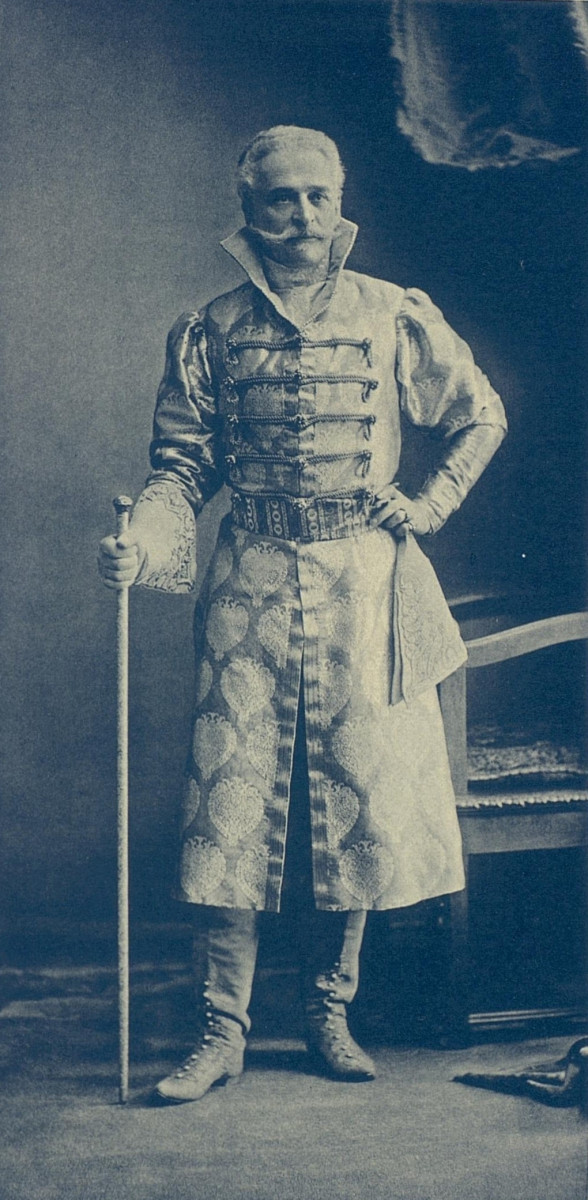
My mother was Daria Constantinovna Kotchoubey, née HSH Princess Gortchacow. HSH Princess Elena Constantinovna Gorchakova, the granddaughter of the distinguished Foreign Minister of the Russian Empire who owned the villa in Sorrento, was my mother’s great-aunt. It should be noted that the villa’s owner’s husband, Vassili Vassilievich Soldatenkov, was the son of a prominent Moscow merchant who had recently been granted a noble title. He served in the Russian diplomatic mission in Rome. Like his wife, he attended the Imperial Ball of 1903 in a rather remarkable falconer’s costume. A year after their wedding, which took place in 1901, the couple had a daughter, Elena Vassilievna. A few years after their marriage, they separated, and by 1913, the divorce was finalized. Soldatenkov was known as a real playboy; he was passionate about auto racing, played chess, and, of course, chased after beautiful women. It was rumored that his mistress was Lina Cavalieri (1874–1944). Among the admirers of the opera diva was Prince Alexander Vladimirovich Baryatinsky – of course, before he married in exile the HSH Princess Ekaterina Yurievsky, the daughter of Tsar Alexander II from a morganatic marriage.
The Baryatinsky family has preserved the memory that the Italian opera singer and the Russian prince remained friends until his death in Florence in 1910. What became of the Gortchacow’s villa afterward?
While the Soldatenkovs’ divorce proceedings were underway, rumors began to circulate about Elena Constantinovna’s – how shall I put it? – alleged preference for exclusively female company. The implication is clear to the informed reader. By the irony of fate, Elena Constantinovna ended up with the villa in Sorrento… Later, a companion who practiced the art of pottery moved into her villa. Elena Constantinovna was surely a skilled ceramacist herself.
Incidentally, Mikhail Talalay’s own article, the Villa Gorchakoff in Sorrento: An Exotic Hub of Russian Life, mentions that this companion was the artist Nadezhda Lyubavina. In 1922, she married an Indian man (a participant in the national liberation movement), for whom she worked as a translator. In 1924, she left Russia with her mother and husband, traveling via Constantinople to Milan; she visited Gorky in Naples and painted his portrait. So what became of Gortchacow-Soldatenkov?
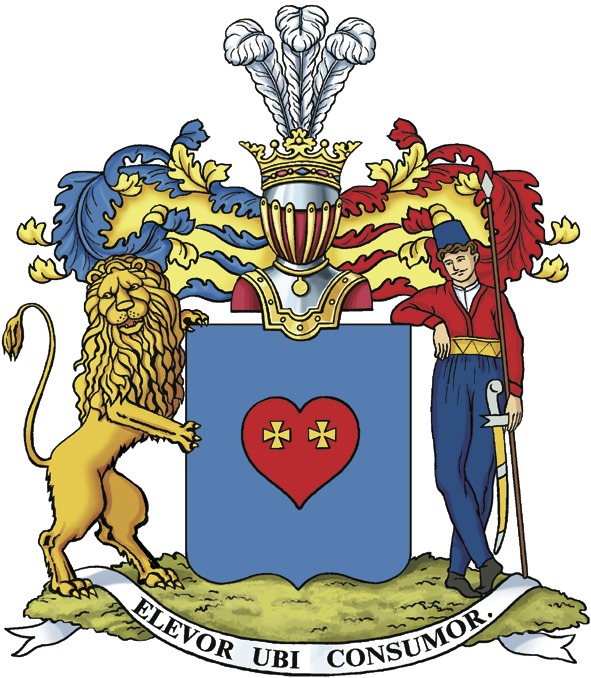
Like her brothers and sisters, Princess Gortchacow inherited a considerable fortune, but the stock market crash of 1929, the war, and ill-advised investments left her almost penniless. After World War II ended, she was forced to sell and leave the villa. Elena Constantinovna died in 1948 and was buried in Rome.
Her former husband, Soldatenkov, achieved his greatest success in 1911 at a rather prestigious race, driving a Mercedes PS. He finished in third place, while the winner was the Italian Giovanni Ernesto Cheirano. His main contribution to the theory of chess openings is associated with one of the variations of the Queen’s Gambit, which was even named after Soldatenkov.
Alexander Andreievich, please tell us more about your mother’s parents, the Gortchacowa. Why has Villa Gortchacow been lost from the Kotchoubey family’s memory?
My grandfather, HSH Prince Constantin Alexandrovich Gorchakov, lived in Milan with his wife, HSH Princess Maria Alexandrovna (née Wyrouboff, 1912–2000), after 1964. After retiring, they spent part of the year in Porto Ercole. There, my grandfather met the daughter of Vassili Vassilievich Soldatenkov with his second wife. My grandfather certainly kept in touch with his cousin Elena Vassilievna Gargiulo (née Soldatenkova) but my grandfather never bothered to tell the family about any of these acquaintances. This leads me to believe that the presence of the Gortchacows in Sorrento in the first half of the 20th century went largely unnoticed by my grandfather and his brother, who had both grown up in Lausanne, Switzerland. I believe that the early death of their father, HSH Prince Alexander Constantinovich, in 1916, may explain the lack of ties with the wider Gortchacow family.
What are the origins of your family’s close ties with Italy?
My father and his sister were born in Florence in the 1930s, but I would like to begin with a poem written in 1863 by Prince Piotr Andreievich Wiazemsky and dedicated to his friend, my great-great-grandfather Nikolai Arkadyevich Kotchoubey (1827–1865), who died in the city of “Serenissima” (as my friends and I like to refer to the old Venetian Republic among ourselves):
To Nikolai Arkadievich Kotchoubey
Venice is a delight, but she needs the sun,
And she needs a crown of diamonds and gold,
So that all that is lovely in her, all that is southern there,
May shine without clouds or sunset,
But the sorceress needs the stars and the moon,
So that in the bright twilight, in the clear night
A silver belt, a pearl necklace
Shine with the adornment of a bride’s beauty.
And in an everyday dress beneath a gray mist,
Beneath a weeping sky, in rain-laden melancholy,
Her charm fails to work as her talisman,
And the queen looks like an unbearable old woman.
You don’t know what to do in this hopeless sorrow.
There are clouds, here gloomy waves roam,
And the wet sky, and the murky sea
Cast a gloom over thought and feeling.
Under this gloom, with a yawn from the heart,
Like another Robinson in a lagoon prison,
You sit face to face with eternal Friday,
And count seven sickening Fridays in a week.
Here you will recall what Zavadovsky aptly said,
Degrading the sea beauty to the level of prose:
“It is impossible to live here; the city is such
That to run to the shop – you must get into a boat.”
October 27, 1863, Venice
This poem has always haunted me but here is another happy coincidence. My wife and I came to Venice for our friends’ wedding anniversary and booked a room at a hotel on the Zattare. We were walking along the sidewalk by the canal and stopped just five minutes from the hotel to read the memorial to the great poet Joseph Brodsky. And suddenly I remembered that the Kotchoubey family had a palazzo in Venice, which now has new owners. I looked up the address on my phone and was surprised to find that it was just a few meters from where we were standing. This was the place where my great-great-grandfather died in 1865. The grounds were surrounded by a wall, and I could make out only a few details through one of the gates. Nevertheless, I found the place where he died. His widow, Elena Sergeievna Kotchoubey (née Princess Wolkonsky), had come to Venice from her late husband’s estate, Voronki (now in modern day Ukraine) together with Alessandro Poggio. The Italian Poggio was a Decembrist and a loyal friend of her parents – Princess Maria Nikolaievna Wolkonsky (née Raevsky) and Major General Sergei Grigorievich Wolkonsky, who was born a prince but was stripped of his title by the Emperor as punishment for participating in the Decembrist uprising.
Did Italians in Russia marry members of the Kotchoubey family?
The Poggio family, who had arrived from Piedmont, had by 1865 become Russian, and their lineage was forever intertwined with the Wolkonsky and Kotchoubey families, as members of the family were buried together in the crypt on the Kotchoubey estate, Voronki. Years later, the widow Elena Sergeievna remarried, this time to a local landowner, Alexander Alekseievich Rakhmanov. They had two daughters, the half-sisters of my great-grandfather Mikhail Nikolaievich Kotchoubey – Maria Alexandrovna and Elena Alexandrovna. The elder sister married Colonel Alexander Ivanovich Giuliani, a Russian nobleman of Italian descent from St. Petersburg. In the years leading up to the revolution, Italy felt like a second home to them: Elena Sergeievna and her brother, Prince Mikhail Sergeievich Wolkonsky, often traveled to Italy, as did members of their families. They were connected through the Poggio family in Florence and through the Russian community in Rome. My great-grandfather accompanied his mother on these trips, and many years later, when his son, my grandfather Sergei Mikhailovich, settled in Florence in the early 1930s, a local photographer who had a studio in the city gave him photographs of Mikhail Nikolaievich taken half a century earlier.
Now it is clear why, following the 1917 revolution in the Russian Empire, the Kotchoubey family ended up in Italy.
The Revolution led many family members to Italy, where they spent the final years of their lives. These included the Giuliani’s and their sons, Elena Rakhmanova, the Wolkonsky’s, and even the Kotchoubey family. My grandfather, Sergei Mikhailovich, who fought in the White Army’s OSVAG under General Denikin’s command, had no plans to move to Italy. My grandfather studied in Kyiv at the 2nd Kiev Gymnasium (judging by a photograph where he is wearing a school uniform), and then continued his education and graduated from the Nikolaev Cadet Corps in St. Petersburg. When the Civil War began, he immediately joined his two brothers who were fighting in the cavalry, while his fourth brother continued studying law at the University of Kiev. The Kotchoubey brothers left Sevastopol in November 1920, but only three of them managed to reach Bulgaria, where they settled for a time. After ten years in Bulgaria and the start of tours with Ataman Platov’s Don Cossack Choir under the direction of Nikolai Kostryukov, my grandfather decided to leave Sofia and his first wife to study bel canto in Florence. His family lived there, and it was the center of opera education in Europe. He met my grandmother, Irina Georgievna Gabritchevsky, and they were married in the Greek Orthodox Cathedral of St. George in Venice. In that very cathedral where, in 1865, prayers for the repose of Nikolai Arkadievich were likely recited.
So how did the Kotchoubey family end up in the U.S.?
My father grew up in Florence and has vivid memories of the war years, especially the Allied bombing in 1944 of the Campo di Marte neighbourhood, where they lived. Bodies lay everywhere… It was a harrowing memory that has stayed with our entire family. Around that time, my father fell seriously ill and needed to be hospitalized. Prince Emmanuel Vladimirovich Galitzine (1918–2002), personal assistant to Vice Marshal of the Royal Air Force, Sir William Dickson, was sent to Italy to a base in Florence. Connections with Russia were put to use, and Galitzine arranged for my six-year-old father to be treated at the British hospital. My father still remembers how Prince Galitzine visited him in the hospital and read him fairy tales.
As the war intensified, my grandmother volunteered for the American Red Cross. But the friendship that changed the course of our family’s life was the one with my grandfather’s distant relative, Sonia Clark (née Tomara). As background, her ancestor was Stepan Vassilievich Tomara (1719–?), who was married to Anna Vassilievna Kotchoubey (1722–1800). Sonia Tomara was the second wife of American judge William Clark, who in 1949 became president of the Supreme Court of Appeals of the Allied Forces in Nuremberg, Germany. He remained in that position until 1954.
By 1953, the economic outlook for my Kotchoubey grandparents was bleak, and the general elections in Italy, scheduled for June, were creating uncertainty, especially in Florence, which was a stronghold of the opposition Communist and Socialist parties. My grandfather had had too many problems with the communists, and he was relieved to accept the Clarks’ offer to pay for passage on the Andrea Doria to help the Kotchoubeys emigrate to the United States. They emigrated in March 1953.
This is by no means an exhaustive account of the Kotchoubey family’s ties to Italy, but rather a narrative spanning several generations that helps readers understand the relationship between a Russian family and southern Italy.