A person’s value is determined solely by the results of their creative labour, their talent, and the beauty of their thought
By GEORGY OSTROVSKY
The origins of the “Light” (First Creative Association Light) International Creative Association for the support of creative people with disabilities were established in the 1980s in the Far North, in the isolated taiga settlement of Marakan.
In the conditions of harsh winters and a severe shortage of visual information, reading became the key factor of development for the future founder of the project, Olga de Lacroix. An evidence of this early research habit is still preserved in the family archives – a certificate awarded to the “Most well-read resident of the settlement”. It was then that a deep conviction was formed: a book is valuable when it is filled with visual images.
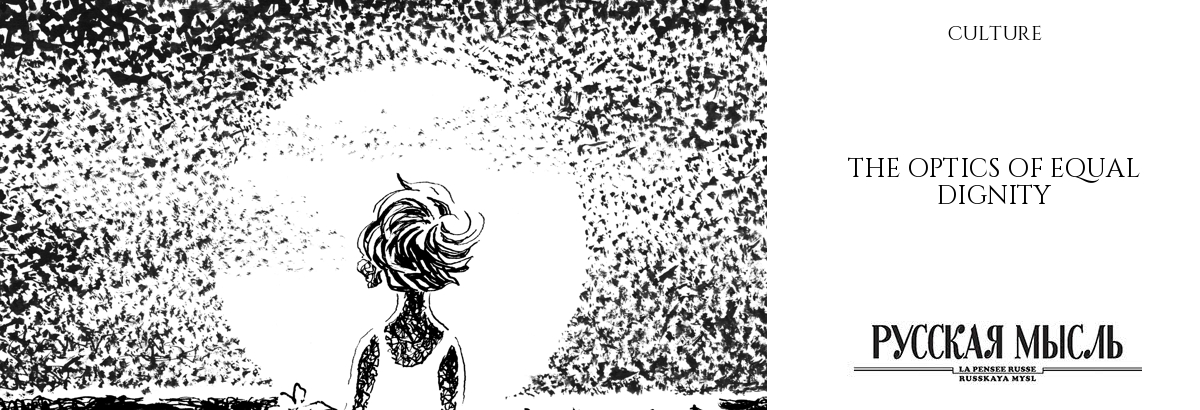
During the same period, a copy of the Yunost (“Youth”) magazine fell into the young girl’s hands, featuring Lyudmila Kiseleva’s black-and-white graphic artwork titled “Where Childhood Goes”: a minimalist silhouette of a child at the water’s edge against the rising sun. This clipped magazine page accompanied Olga de Lacroix through decades, becoming in 2019 the visual foundation of the publishing branch of the “Light” association.
Lyudmila Kiseleva herself, born with a severe form of muscular atrophy, defied her fate to become an accomplished artist, journalist, and writer. She was a member of three creative Unions and a recipient of the Order “For Merit to the Fatherland”, 2nd Class. Despite being bedridden, she initiated the restoration of an ancient church in Borovsk in honour of the Exaltation of the Life-Giving Cross and established a private children’s home for abandoned orphans. It was she who personally blessed Olga de Lacroix for her service to art.
The “Light” project was born organically, responding to the real demands of life. Its practical launch was marked by the autobiographical book The Grass that Broke Through the Asphalt by the writer Tamara Cheremnova. Tamara, who lived for several decades in closed residential institutions due to a severe form of cerebral palsy (CP), managed to establish herself as a professional author and was subsequently included in the international BBC 100 Women list. Confronted with the fact that Tamara’s copyrights were grossly violated, Olga de Lacroix could not remain indifferent and stood up in defence of the writer, initiating the publication of a collection of her fairy tales to restore the author’s creative subjectivity. A regional television feature on this initiative sparked an overwhelming, avalanche-like response across the country, and manuscripts from all regions began pouring into the organizers. It turned out that the intellectual potential locked within four walls was not an isolated case, but a colossal hidden layer of culture. Assistance to a single individual evolved into a large-scale international civil initiative, developing on a voluntary basis. The published books of the project are non-commercial and are donated free of charge to library funds.
As previously detailed in the pages of La Pensée Russe (May–June 2026 issue), this charitable movement has united an international task force of 30 professional artists from eight countries, including France, the USA, and Germany. World-class masters are involved in this creative process, including Yulia Gukova, a member of the UNESCO International Association of Artists, Elena Kuznetsova, an art historian and expert of the Paris Louvre, and Igor Oleynikov, the only recipient of the Hans Christian Andersen Gold Medal in Russia.
Each publication has turned into an art event, successfully synthesizing three essential functions: artistic-aesthetic, social, and educational. Over the course of its development, the project has been honoured with 12 prestigious international and professional awards, including diplomas from the Association of Book Publishers (ASKI) and the “Image of the Book” international competition. The editions have entered the collections of the Russian State Children’s Library and the Alexander Solzhenitsyn House of Russia Abroad, while public presentations were held on Red Square and in the Mariinsky Palace. The audio versions of the texts were narrated by titans of cinematography – Vasily Livanov, a Member of the Most Excellent Order of the British Empire (MBE), Inna Churikova, and the Oscar-winning director Vladimir Menshov.
The inner perfectionism of the “Light” project’s organizers initially excluded the creation of books out of pity or condescension. If works are presented to the public, they must be of high quality, and every illustration becomes an independent work of art. A brief biography of the author, adapted for children’s perception, is mandatorily placed before each literary text. This step fulfils a direct educational function, providing the child with objective information about the surrounding world. Most barriers and inhibitions regarding inclusion among adults are formed in childhood due to a deficit of correct knowledge on how to interact with a person with special health needs. As a result, society often rejects such individuals. The “Light” project completely abandons medical terminology, offering the format of play, co-creation, and shared reading.
On the first title page, the young reader encounters, above all, the professional and social status of a human being. The books feature authors who have accomplished themselves as practicing psychologists, keepers of books, professional fashion models, academic philosophers, composers, design engineers, and multiple winners of television intellectual quiz shows. The book transmits a fundamental thesis to the child: ”We are all different, but we are just like you. It is simply that someone needs strong glasses, someone needs a wheelchair, and someone needs a helping hand at a crosswalk. Adults are often mistaken in thinking that people with disabilities are incapable of leading an independent and fulfilling life. Everyone possesses individual talents and potential.” Such an approach dismantles the practice of false pity, forming in the new generation an organic perception of human diversity.
For an author in forced isolation, it is often psychologically difficult to step out before a massive audience with a solo book. The format of a collective anthology serves as a protection for new talents, providing a reliable shoulder of companions and a powerful launching pad. The grateful reaction of the audience has demonstrated that the project has uncovered authors of such a scale that their work has already outgrown the boundaries of collective editions. The writings of these individuals open up a special optics to society, free from conventional stereotypes. People with disabilities see the world finer, deeper, and clearer, and through their tales, they are ready to share this unique vision with humanity.
A stellar example of such superiority is the destiny of Vladimir Bukhtiyarov. Having lost his sight in his youth, Bukhtiyarov demonstrated a phenomenal strength of intellect: he became a master of sports in chess and a permanent participant in the Svoya Igra (“Jeopardy!”) television show, defeating sighted grandmasters. A member of the Union of Writers of Russia, a researcher, and a poet, and the author of a series of fundamental books, he served for many years as the editor-in-chief of the all-Russian magazine Nasha Zhizn (“Our Life”). His career is an example of high professional service.
Alongside opens up the path of Alexander Kononov. He states that he extracts benefits from his illness for the continuous strengthening of his mind and spirit. Living with a diagnosis of CP, Kononov graduated with honors from the History and Archives Institute of the Russian State University for the Humanities (RSUH) with a degree in “Historian-Archivist”, defended his thesis, and became the author of the scientific collection The Individual with a Disability and Russia: A Cultural Anthropological Szek and a laureate of the authoritative A. Tvardovsky literary competition.
Maria Bubnova contributes her own unique voice. Having completely lost her hearing at the age of one and a half, Bubnova mastered speech through the highly complex system of Emilia Leonhard, graduated from university with a degree in “History”, and raised five children. She is a recognized publicist, the author of books on the rehabilitation of the hard of hearing and deaf, and a finalist of the Malaya Rodina (“Little Homeland”) All-Russian book competition in the “School Waltz” category.
The destiny of Sergey Karpeev from Kazan reveals yet another facet of overcoming – the power of devastating self-irony. A member of the Union of Writers of Russia and the author of the children’s poetry book The Sun Was Going to Bed, Karpeev passed through a specialized residential institution and developed a unique, ironic literary style. In his texts, he courageously and humorously refers to his illness as an “unpleasant auntie named Illness”, completely removing the fear surrounding the theme of inclusion for the children’s audience.
The continuity of generations and the future of the project are embodied by the story of the young Anna Plesovskikh. Published in thick literary journals, she became a laureate of the Glagolitsa International Independent Literary Award in the “Essays” category and the recipient of a special prize from the Russian State Children’s Library. At the regional competition “Youth Elite”, Anna was awarded the title of “Student of the Year”. Anna is a multiple winner and laureate of prestigious academic olympiads in philology, literature, and journalism, conducted by leading universities of Russia. She graduated from school with honours, receiving state medals of the highest category for academic excellence.
New names from the “Light” universe join this same educational line-up. Among them are: Maria Fatkina, a professional fashion model who breaks the stereotypes of the glossy industry; Lyubov Malofeeva, a university researcher with a degree with honours and an Honoured Worker of Culture, who has dedicated many years to the preservation of book collections; Natasha Belyaeva, a postgraduate philosopher researching culture and anthropology in the space of a clean slate, and many others.
Each of these human destinies proves the effectiveness of the “Light” project model, which elevates an individual from the status of an object of charity to the status of an active creator of enduring cultural values.
At the current stage, the experience of the “Light” International Association opens up new perspectives for integration into the European cultural space. The synthesis of international graphics, sound synaesthesia, and inclusive book publishing pursues one global goal: the creation of a healthy social environment where a person’s value is determined exclusively by the results of their creative labour, their talent, and the beauty of thought.