
The history of Soviet-Middle Eastern relations is a complex system of interactions, where the Soviet ideology often came into conflict with its economic interests
By Denis Fedorov
In the second half of the twentieth century the Middle East became a theatre not only of regional conflicts, but also of a global confrontation between two superpowers. For the Soviet Union this region was both a crucial arena of expanding its global influence and a test of its foreign policy strategy.
The history of the Soviet Union’s relations with the Middle Eastern countries is not just a diplomatic chronicle. It is largely characterised by the state of tension and drama, in which ideology, economic interests, military strategy and the destinies of the Middle Eastern nations are intertwined.
Being an opponent of imperialism and a supporter of national liberation movements, the USSR sought to build mutually beneficial relations with newly independent states following the collapse of the colonial system.
At the same time, it was not only about the Soviet ideological influence, but also about its economic, military and political interests: access to strategic resources (primarily oil), military-political presence near the southern borders of the USSR, limiting American influence in the region and strengthening its own status as a superpower.
The combination of all these factors determined the specifics of Soviet policy.
Soviet-Iranian Relations
Soviet Russia was the first to recognise the independence of Persia (Iran), renouncing royal debts and concessions and concluding the Treaty of Friendship with the country on 26 February 1921. A landmark in the strengthening of Soviet-Iranian relations was the Treaty of Guarantee and Neutrality, signed on 1 October 1927 in Moscow. It obliged the parties not to participate, either actually or formally, in political or military alliances directed against the security of the other party and to observe neutrality in case one of the parties was attacked by a third country.
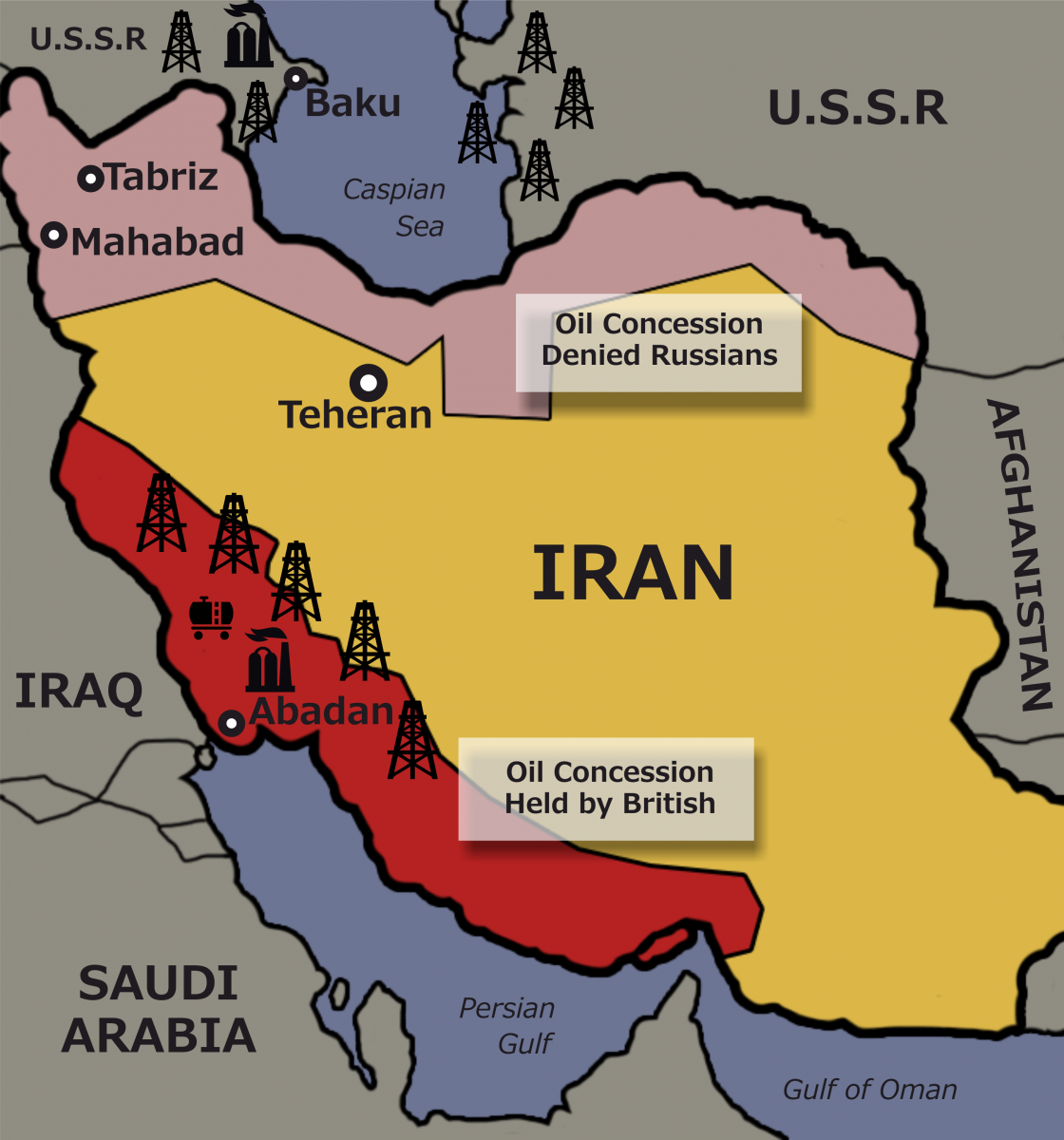
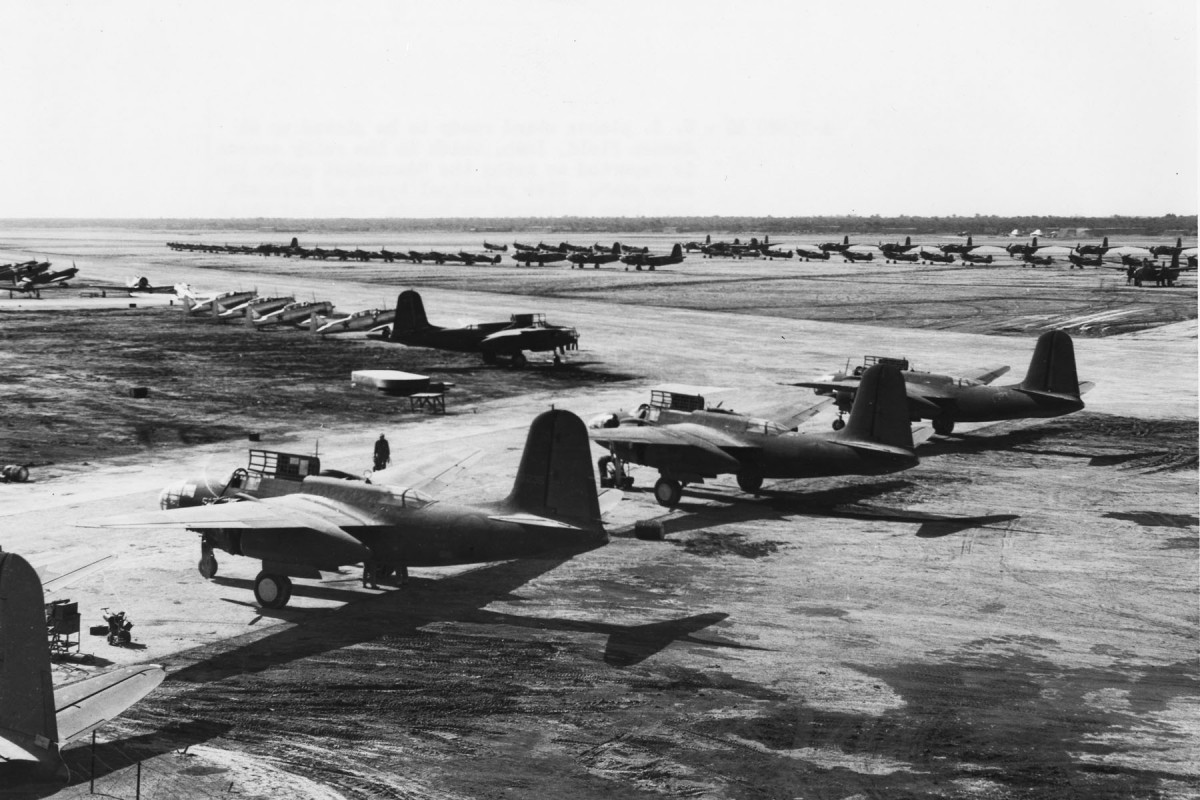
During the Second World War the Soviet Union collaborated in Iran with its Allies in the anti-Hitler coalition, the UK and the USA, which supplied Western weapons and military aid to the USSR under Lend-Lease (the «Persian Corridor»). To attain these goals and protect oil fields from Germany, Operation Countenance, a joint invasion of Iran by the USSR and the UK, was carried out in 1941 (25 August-17 September).
The operation was rapid and with minimal losses. The Iranian Army offered only weak resistance. As a result, Shah Reza Pahlavi abdicated, power passed to Crown Prince Mohammad Reza Pahlavi, and Iran came under Allied control, becoming the second most important conduit for Allied Lend-Lease aid. In addition, the success of Operation Countenance prevented the possibility of an Axis attack on the USSR through Transcaucasia.
After the end of the war the Soviet Union tried to secure its foothold in Iran politically and economically, but the Western powers did not allow it to do so.
During this period, it became obvious that the Middle East would eventually become one of the Cold War fronts. It became an arena for global confrontation, as it had enormous strategic importance, primarily because of its oil resources and vital transport corridors.
The Islamic Revolution in Iran of 1978–1979 was a watershed that dramatically changed the balance of power in the region. The fall of the pro-Western regime of Shah Mohammad Reza Pahlavi and the rise to power of Islamic forces created a new political reality.
However, the weakening of the US position did not lead to an increase in influence for the USSR. The new regime of Ayatollah Ruhollah Khomeini, who ruled the country from 1979 to 1989 and adopted a strict independent pro-Islamic foreign policy, was equally hostile to both socialist-oriented countries and the Western world.
The 1950s and 1960s: Bet on Arab Nationalism
In 1947 the USSR supported the creation of Israel, hoping that it could take an anti-British position and believing the assurances of the founders of the Jewish state that it would be built on the principles of socialism. However, by the early 1950s it had become clear that Israel had shifted its orientation towards the West. Then the USSR abruptly changed its policy in the interests of the Arab countries.
The active USSR policy in the region began in the 1950s. As part of its strategy Moscow bet heavily on Arab countries, which, having freed themselves from colonial rule, were looking for an alternative to Western influence.
The Soviet Union offered them what the West did not give them: economic aid, industrial projects, arms transfers, and political backing for anti-colonial regimes.
Economic cooperation included supplying heavy machinery, equipment and the development of trade, while the Middle Eastern countries exported oil, natural gas and raw materials to the USSR.
Egypt: The Height of Soviet Influence
Egypt became a particularly important partner of the USSR, with which diplomatic relations were established back in 1943, and in the 1950s and 1960s the country became the main ally of the USSR in the Arab world.
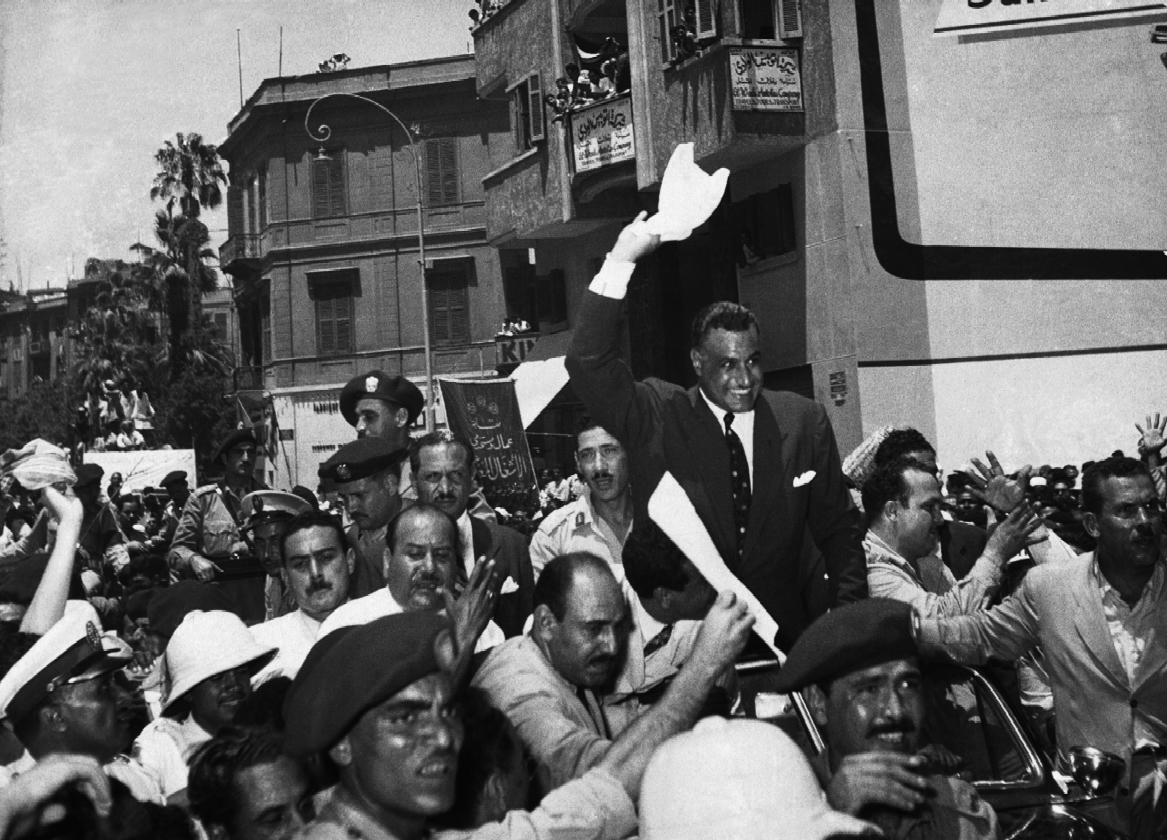
The most successful was the Soviet Union’s cooperation with Egypt under President Gamal Abdel Nasser, who ruled from 1956 to 1970.
А charismatic Egyptian leader sought to free the country from Western influence and modernise its economy. The Soviet Union offered Nasser exactly what he needed: loans, technology, weapons, and political support.
After the nationalisation of the Suez Canal in 1956 and the crisis surrounding it, the USSR strongly supported Egypt, which dramatically strengthened Moscow’s position in the Arab world. Their cooperation became systematic: The USSR was the main supplier of weapons to Egypt. Thousands of Soviet specialists worked in the country, and major infrastructure projects were implemented.
The most important symbol of this cooperation was the Aswan High Dam, built with Soviet financial and technical assistance. It was one of the flagship infrastructure projects of the Soviet «soft power» – it demonstrated the great potential of the socialist model of development.
However, under Mohammed Anwar al-Sadat, President of Egypt from 1970 to 1981, the country was reoriented towards the West. In 1974-1975 Sadat expelled Soviet military advisers and shifted Egypt’s foreign policy focus towards the USA.
Arab-Israeli Wars: Tests of Strength
Soviet policy in the Middle East was fundamentally determined by its attitude towards the Arab-Israeli conflict.
The defeat of the Arab armies during the Six-Day War (from 5 to 10 June 1967) between Israel and the neighbouring states of Egypt, Syria, Jordan and Iraq was severe and unexpected.
However, the Yom Kippur War (6-25 October 1973) between a coalition of Arab states and Israel became a partial revenge, which was made possible by massive active military assistance from the USSR.
In 1973 the Soviet Union carried out a large-scale “air bridge”, supplying its allies with equipment and weapons. The USA responded with similar actions in support of Israel. The world was on the verge of a direct military confrontation of the two superpowers – it was one of the most dangerous moments of the Cold War.
Socialist South Yemen
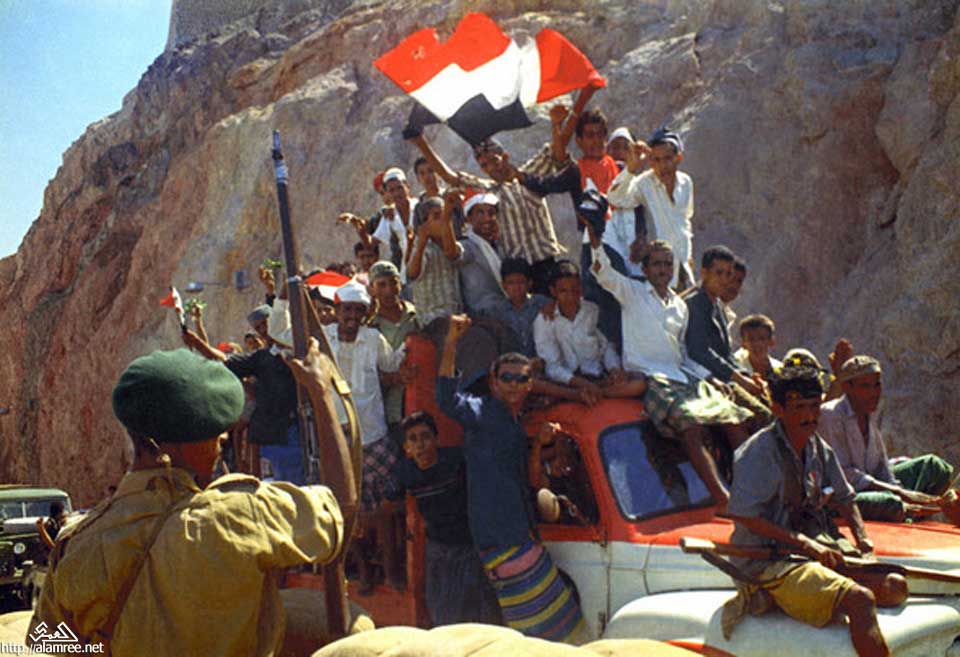
The Soviet Union had a special relationship with South Yemen, or the People’s Democratic Republic of Yemen (PDRY), the only State in the region to officially adopt a socialist path of development after gaining independence from the UK in 1967.
Between the 1960s and 1990 the USSR actively supported South Yemen by providing significant military, economic, and technical assistance.
The Soviet Union trained over 9,000 military specialists and supplied up to ninety percent of the PDRY army’s weapons, turning it into one of the best equipped in the region. The USSR also participated in building the state’s infrastructure. However, South Yemen’s limited resources and internal instability prevented it from becoming a robust pillar of Soviet policy.
However, following the collapse of the global socialist system in 1991 the military-technical partnership was terminated. The People’s Democratic Republic of Yemen, which existed from 1967 to 1990, merged with North Yemen, creating a single state.
«Arab Socialism» and Bet on Nationalism
After Joseph Stalin’s death and the beginning of de-Stalinization, Soviet foreign policy underwent a real revolution: it became much more flexible and pragmatic, as Moscow saw a powerful allied potential in Arab nationalism.
By the 1960s Soviet influence had taken on harder forms. Moscow did not limit itself to diplomacy – it was actively involved in the military sphere. The USSR supplied weapons to Egypt, Syria, and Iraq, sending military advisers and extensively training allied armies.
Soviet relations with Iraq developed too, especially after Saddam Hussein had come to power. Though these relations were complicated and not always stable, the USSR remained one of Baghdad’s key partners.
Iraq: Partnership without Trust
Soviet-Iraqi relations were characterised by deep contradictions. Their diplomatic ties were established on 9 September 1944, in 1955 they were severed by Iraq, and after the revolution of 1958 they were promptly re-established. These facts alone allow us to imagine how complicated the relations between the two countries were.
In the 1970s the USSR became a pivotal partner for Baghdad. USSR – Iraq cooperation under Saddam Hussein, President of Iraq from 1979 to 2003, included massive transfers of weaponry, Soviet involvement in oil and infrastructure projects, and training military specialists.
Nevertheless, Iraq pursued an independent policy and did not become a true ally: even while being heavily aided by the USSR, Iraq, like many other Middle Eastern countries, maintained significant autonomy.
And though during the Iran-Iraq War in the Persian Gulf (22 September 1980–1920 August 1988) the USSR supported Iraq by starting arms shipments to Baghdad in 1982, in August 1990 Moscow backed international sanctions against Iraq, condemning its invasion of Kuwait.
Syria: A Stable Alliance with the USSR
After Egyptian President Anwar Sadat had effectively ended the close Soviet-Egyptian alliance and moved into Washington’s orbit, the Soviet Union turned its attention to Syria, relations with which stabilised and deepened following Hafez al-Assad’s rise to power in 1970. The country became the USSR’s most important partner in the Middle East after the conclusion of the Treaty of Friendship and Cooperation in 1980, one of the articles of which read: «In case of emergence of situations threatening the peace and security of one of the parties, the parties will immediately contact each other for the purpose of coordination of their positions and cooperation in order to remove a threat emerged and restore peace.»
The Soviet Union’s help was in the creation of the national Armed Forces of Syria, the deployment of Soviet military specialists to the country, the supply of military equipment and weapons, as well as the training of Syrians in Soviet military educational institutions. In addition, President Hafez al-Assad (1971-2000) appealed to the USSR with a request for an increased Soviet military contingent in Syria to protect it against possible aggression from Israel.
However, Mikhail Gorbachev, who came to power in the USSR, desiring to portray himself as a “peacemaker”, significantly reduced military aid to Syria and began restoring relations with Israel.
Superpower Rivalry
The Middle East became a central theatre of superpower rivalry. The USA relied on alliances with Israel, Turkey, Iran (till 1979), and Saudi Arabia, while the USSR relied on Syria, Iraq, and South Yemen. This confrontation manifested itself not only in diplomatic crises, proxy wars, and the arms race, but also in such spheres as economy, diplomacy, and cultural policy. In this sense, the Middle East became a «mirror» of the Cold War, a reflection of the global conflict between two systems – capitalist and socialist.

The USSR’s policy in the Middle East boiled down to expanding its influence in the military and economic spheres and establishing itself as a dominant global superpower.
But, of course, there were also difficulties stemming from the instability of Arab political regimes, ideological differences, the inability to conclude stable long-term alliances, as well as fierce competition from the USA.
The Soviet presence in the Middle East was not a temporary episode. It left a deep legacy on the military structures of the countries of the region, on economic relations, and political culture.
Limitations of External Superpowers
It should be noted that by the late 1970s and early 1980s Soviet relations with the Middle Eastern nations were becoming increasingly difficult. There were many factors behind this, and above all the partners’ political instability: frequent coups and regime changes made those alliances unreliable.
In addition, supporting the allies required huge resources, which the increasingly stagnant Soviet economy could not effectively manage. Ideological contradictions did not help the situation either: Arab nationalism, Islamism and Soviet atheism were hard to combine. And all this was against the background of a continuous competition against the USA.
The disintegration of the Soviet Union inevitably resulted in the USA consolidating its position in the Middle East.
The Soviet Union managed to establish a substantial presence in the Middle East, became the primary supplier of weaponry to a number of countries, implemented major economic projects, and cultivated a network of political alliances, but it failed to translate its influence in the region into a stable, enduring system. Nevertheless, it was so profound that its lasting effects are still visible in the region today.
The history of Soviet-Middle Eastern relations is that of ambitions and limitations, successes and miscalculations. But above all else it is a narrative of a great geopolitical game, the consequences of which are still visible in the twenty-first century.
The Middle East has showed the limitations of external superpowers: even with military might and ideology superpowers cannot fully control a region with its own complex logic of development. The East is a delicate matter…