Descendants of the first Emir of Kuwait, Sheikh Sabah I, rule the country to this day
By Vyacheslav Katamidze
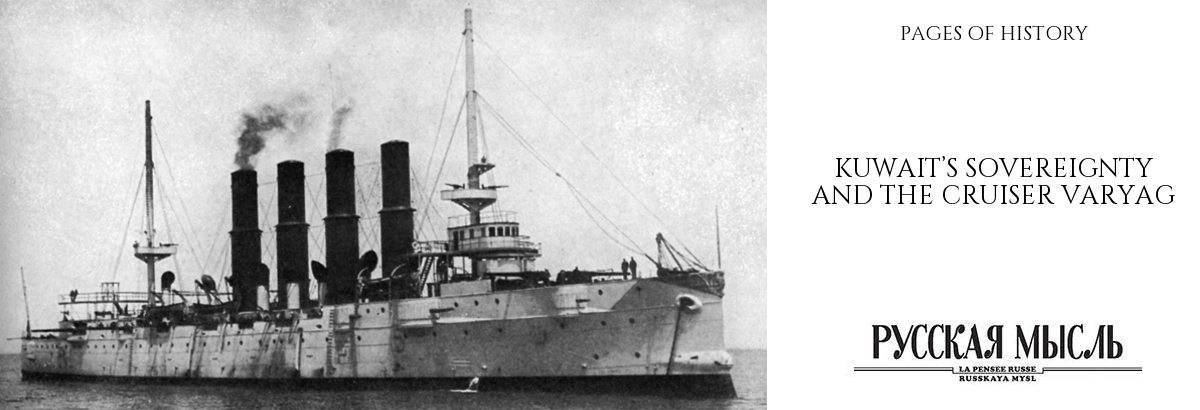
On reading the title of this article, our readers may be surprised. Indeed, it is hard to imagine that the legendary Russian cruiser, which fought with an entire squadron of Japanese cruisers and destroyers during the Russo-Japanese War of 1904–1905, helped a tiny Middle Eastern country gain its sovereignty. But it was really the case: The Russian cruiser contributed to Kuwait’s destiny in the early twentieth century.
But let me tell you everything in order. And let us first recall the heroic actions of the cruiser Varyag.
The 1st-rank armoured cruiser Varyag was laid down in 1898. It was built at the William Cramp & Sons shipyard in Philadelphia. In 1900 the ship was transferred to the Russian Imperial Navy and entered service in 1901.
By this time, the Russian Emperor and the country’s Government didn’t have the slightest doubt that war with Japan was inevitable, so almost all the newest battleships were sent from Kronstadt to the Far East.
In 1901–1904 Varyag was part of the 1st Pacific Squadron of the Russian Navy. The captain of the cruiser was Vsevolod Fyodorovich Rudnev, an experienced sailor (during the American Civil War he had commanded one of the ships of the Russian Atlantic Squadron sent by the Russian Government to support President Abraham Lincoln).
On arriving in the Far East, Varyag was based at Port Arthur. But from the very beginning of the Russo-Japanese War the cruiser and the gunboat Koreets were based in the neutral Korean port of Chemulpo to provide security for the Russian Embassy in Seoul. There were also warships of other countries in Chemulpo: of the UK, France and the USA.
On 26 January (8 February) 1904 a Japanese squadron (two protected cruisers, four armoured cruisers and eight torpedo boats) under the command of Rear Admiral Uryu Sotokichi blockaded the port of Chemulpo. The strategic task of the squadron was to ensure a land offensive of the Japanese troops and force the Russian ships to go to the outer harbour. The next day, Uryu sent an ultimatum to Captain Rudnev: to leave the port before 12 pm, otherwise the Russian ships would be attacked there. Rudnev resolved to break through to Port Arthur with fighting, and to blow up the ships in case of failure.
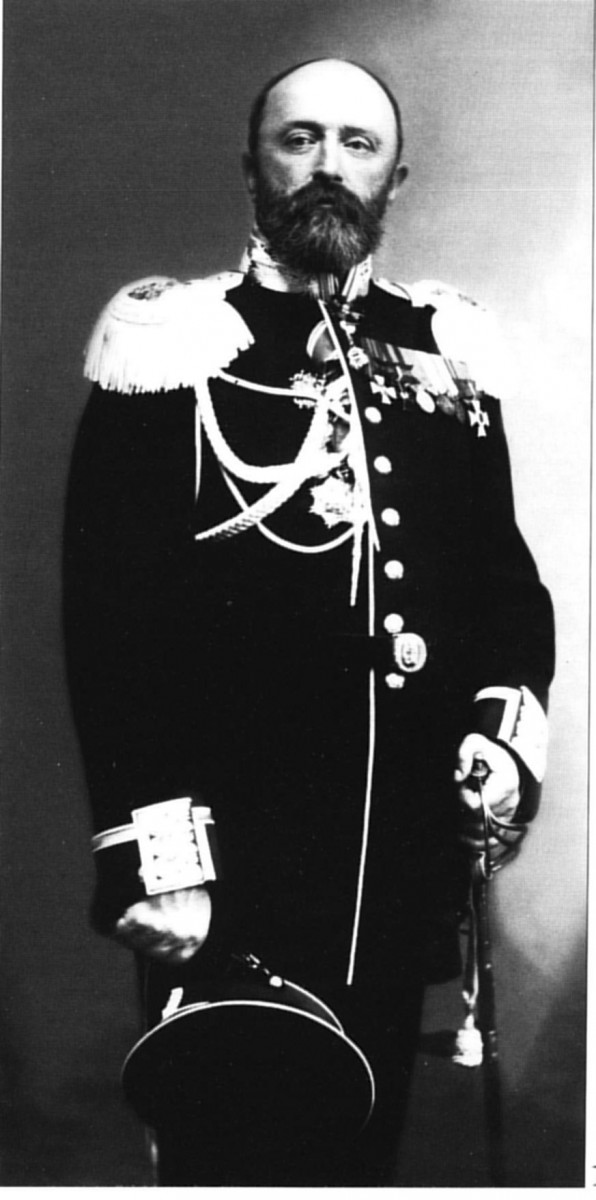
At noon Varyag and Koreets left Chemulpo. At a distance of ten miles from the port they encountered a Japanese squadron.
Before the naval battle Captain Rudnev ordered all the officers and sailors to put on their official dress uniforms: he knew what fate awaited the cruiser.
«This is our last parade,» he told the crew. “Let’s hold it with pride!”
The unequal battle lasted fifty minutes. Over that time Varyag fired 1,105 shells at the enemy: one Japanese torpedo boat was sunk, and four Japanese cruisers were damaged. The enemy’s human losses amounted to about thirty killed and about 200 wounded.
But the enemy’s superiority was too great: Varyag received five holes below the waterline and lost three six-inch guns. The crew’s losses were serious: one officer and thirty sailors were killed, six officers and eighty-five sailors were wounded or concussed, and about 100 more were slightly injured.
According to the captain, the cruiser could not continue the battle and returned to Chemulpo. There the remaining guns and equipment were destroyed, and the cruiser was scuttled. Koreets was blown up. The Russian steamer Sungari was scuttled as well.
Shortly after the death of the cruiser, materials appeared at the headquarters of the Russian Imperial Navy, which, based on reports from the ship’s captain and senior officers, showed that its scuttling had been largely influenced by the fact that its speed had been much lower than the declared specification. Rudnev reported it immediately after the campaign from Kronstadt to the Far East. Serious mistakes had been made at the American shipyard in the design and construction of the Nikloss boilers, and, as a result, the speed of the cruiser dropped from twenty-three knots to only thirteen knots (that is, from forty-three km/ h to twenty-five km/h). It is clear that the manoeuvrability of the ship decreased significantly.
The Russian Government awarded all the participants in the battle.
But let’s move on to the issue of Kuwait’s sovereignty. According to historical chronicles, the State of Kuwait was born at the very beginning of the seventeenth century. Its development began with a coastal village settled by fishermen, divers and pearl traders. In time, the village grew into the city of Al Kuwait, which became the capital of the emerging small state (1613 is widely accepted as the founding date of the city).
The local population had neither an army nor a guard, and in the eighteenth century invaders from Nejd (the future Saudi Arabia) captured Al Kuwait. These were Bedouin tribes.
Later, the tribal groups (clans) united and established the settlement of Bani Khalid south of the mouth of the Tigris.
Bani Khalid quickly became a major port and established trade links with many cities of the Ottoman Empire. For some time, pearls, spices, coffee, as well as horses of a special Arabian breed were exported from here. The most profitable was certainly the export of pearls, which were in the hands of several wealthy merchant families; one of them was the Al-Sabah family.
The influence of the settlement, which had a well-armed, albeit small, guard, became dominant in all parts of Kuwait. And in 1756 its head became the first Emir of Kuwait under the name Sabah I bin Jaber. His descendants rule Kuwait to this day.
In the early nineteenth century power over Kuwait was contested by two countries: the Ottoman Empire and Britain. Kuwait was formally part of the Ottoman Empire, and it even used its flag. But in fact, it had more significant ties with the neighbouring Arab emirates, both economically and politically. The Sublime Porte (the central Government of the Ottoman Empire) was not happy with it: it wanted to have more leverage over Kuwait, effectively ruling it with the help of its officials in its government structures. The Emirs of Kuwait strongly opposed this. In order to regain its total control over Kuwait, Ottoman military units invaded it in 1871.
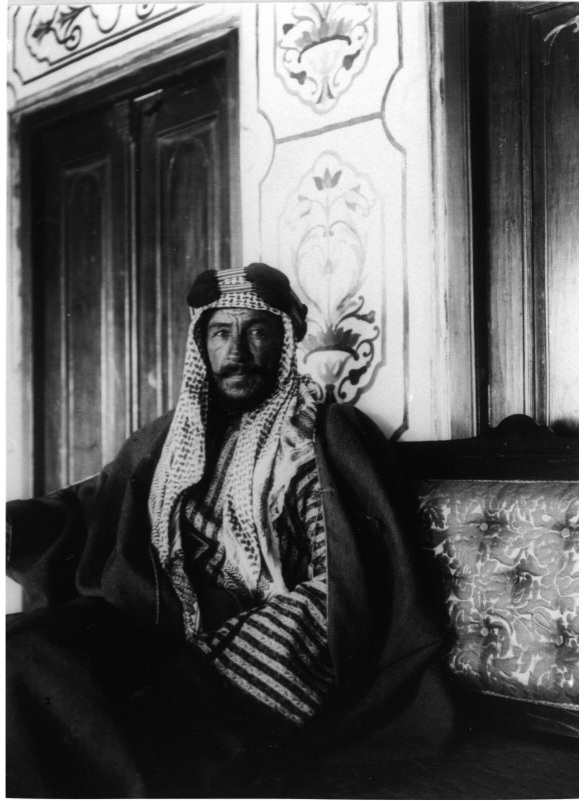
The Emir immediately turned to the UK for help, which was extremely interested in establishing its presence in this part of the Gulf. It was not about oil: at that time there was no oil production either in Kuwait or in Nejd. Surprisingly, at the turn of the nineteenth and twentieth centuries the Russian Empire became the world leader in oil production thanks to the activity of Russian scientists and entrepreneurs. At that time the UK heavily relied on its huge coal reserves needed for the steam boilers of the British dreadnoughts.
However, Kuwait was important to Britain: it was to become one of the bases of the British Navy on its way to India, the most important colony of the British Empire. The UK was creating them, endowing each with its own functions: on one of them British ships stocked up on water, on another they replenished their provisions, and on the third – replenished shells. Britain did not have a significant oil reserve, though the former UK miner William Knox D’Arcy, having become an entrepreneur, opened a rapidly developing oil company in Persia.
Britain’s flirtation with the Gulf emirates increasingly worried the Ottoman Empire. In 1875 the Sultan issued an edict, according to which Kuwait was included in the Ottoman vilayet of Basra. But Kuwait’s dependence on the Sublime Porte remained purely formal: Britain’s interest in Kuwait was growing thanks to its strategic proximity to India, and the Ottoman Empire did not want to quarrel with the UK, which had always backed it. But sooner or later their interests had to collide. It happened in the early 1890s, when the Baghdad Railway project was being discussed, with Kuwait as the final destination. Obviously, the project was supposed to return Kuwait to the «bosom of the Ottoman Empire”.
And then Britain delivered a blow: in May 1896 there was a coup d’etat in Kuwait. Emir Mohammad was assassinated, and Sheikh Mubarak ascended the throne.
A year later a British naval base appeared in Kuwait, followed by just a limited Turkish protest.
And a couple of years later, when passions around the British stocks subsided, the UK decided to bind Kuwait to itself completely.
At the very beginning of 1899, an agreement was concluded between Kuwait and the UK, according to which control over Kuwait’s foreign policy and security was transferred to Great Britain. The UK paid a very small price for it: it pledged to support the Emir’s family.
Thus, the issue of the British protectorate was resolved. But by that time clouds were gathering over Europe and the Middle East alike. The leaders of many countries understood that the contradictions between the great powers were escalating, and a decade later a terrible world war would break out. Neither European nor Asian leaders doubted that both the Ottoman Empire and Great Britain would become active participants in it.
Emir Mubarak, who was nicknamed “the Great”, was indeed a wise and far-sighted politician. He was aware that his small country could find itself between a rock and a hard place, turning into an arena of confrontation between the UK and the Ottoman Empire. He desperately needed to find a way to preserve his country’s sovereignty at any cost. What did he come up with?
Let’s turn to a historical document. The archives of the Ministry of Foreign Affairs and the Admiralty of the Russian Empire, as well as the Military Historical Archive, contain secret report no. 322 dated 20 June 1901. It was sent by the titular Adviser Ovseyenko, a resident of Russian intelligence in Basra, to the Russian Consul General in Baghdad. A copy of it is kept at Al-Seif Palace in Kuwait, and this document is quoted from this copy.
«When handing over the letter, Abbas Aliev [a Russian intelligence agent – V. K.]informed me confidentially that Sheikh Mubarak Al-Sabah of Kuwait, longing finally to get out of the alarming and troubling situation being created for him, on the one hand, by the treacherous Ottomans, who have recently conspired through Kâzım Pasha with his enemy Abdulaziz bin Al Rashid, Sheikh of Jabal Shammar, and on the other – by importunate offers of protection by the British, who have recently been acting in concert with his enemy, Yusuf Ibrahim, instructed him, Aliev, to convey to him, the Sheikh, a request for Russian protection, as well as his willingness to allow the Russians to take the necessary measures for the security of Kuwait, and, if needed, even to raise the Russian flag on the territory of Kuwait, from time immemorial belonging to the family of Mubarak Al-Sabah, independent and not bound by any treaties» [my italics – V.K.].
Of course, there are serious doubts that negotiations with Russian representatives on this issue could have led to real political steps in relations between Kuwait and Russia. Firstly, because Kuwait had already signed a special treaty of friendship and protection with the UK in 1899; and secondly, because the Sublime Porte, Russia’s worst enemy, would never have allowed Russia’s patronage over the Gulf country, which was also formally within one of the vilayets of the Ottoman Empire. And in this, it might even have allied with the UK! Consequently, the Emir’s letter to the Russian representatives was most likely intended to frighten both the Ottomans and the British by organising a leak.
But it is also possible that it was a clever move by Emir Mubarak, who aimed to preserve the sovereignty at all costs, which Kuwait could have lost under pressure from the Ottoman Empire or the British Government. If this letter had fallen into the hands of one of the parties, their rivalry would have intensified immeasurably, which would have saved Mubarak for some time, prolonging their confrontation.
And Mubarak al-Sabah was right! For three years, both the Ottomans and the British were scheming against each other, trying to trick the enemy, accusing each other of playing a dishonest political game, and the Emir of Kuwait – of political immaturity and inability to build relations with great powers properly. For three years, the UK constantly called on Kuwait to be faithful to the treaty signed in 1899, and the Ottomans appealed to the need for Kuwait to remain loyal to the Ottoman Empire as the main guardian of Islam in the region and in the Arab world in particular.
And then the cruiser Varyag arrived at the port of Kuwait on its way to Port Arthur!
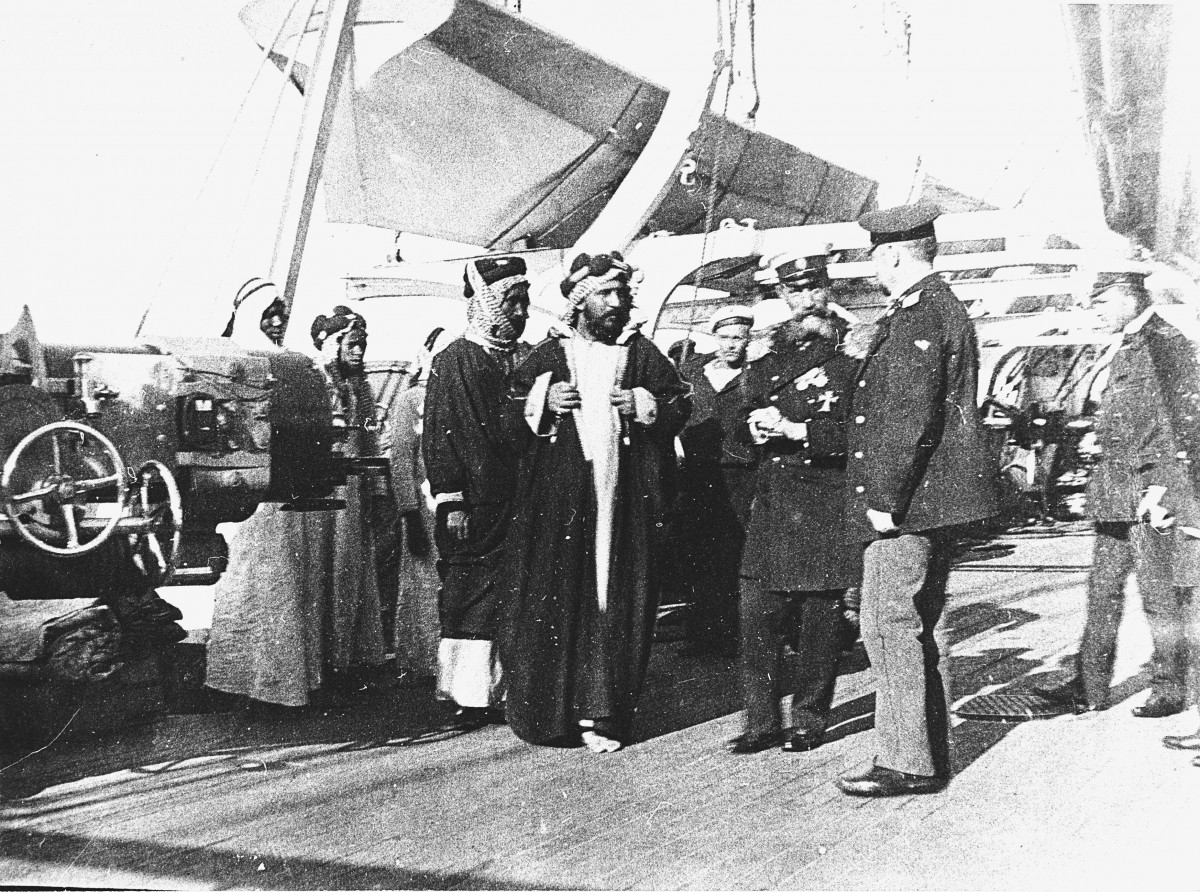
On learning about this, both the Ottomans and the British were quite naturally shocked. No wonder: they came to the conclusion that Russia had lured Kuwait to its side. Meanwhile, the visit of the Russian cruiser was just the beginning of the utilization of the port of Kuwait by the Russian Naval Forces.
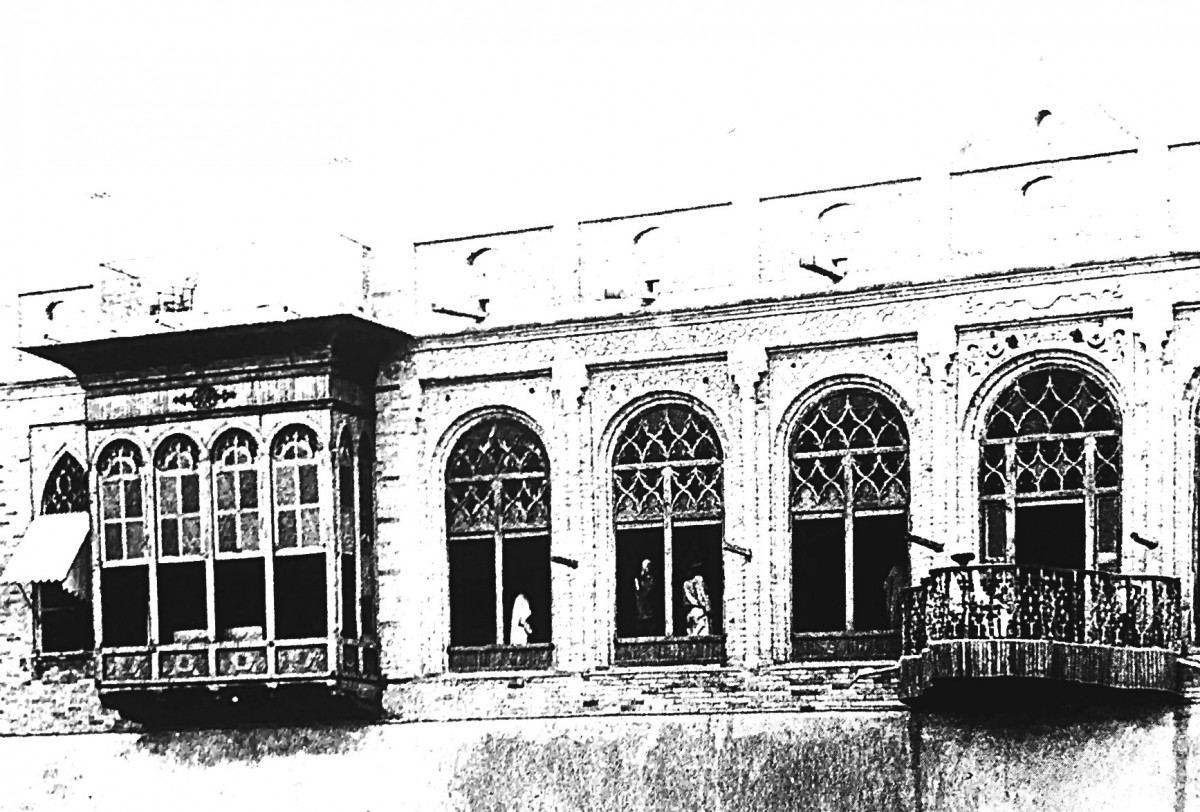
Rudnev, the captain of Varyag, was not only an excellent sailor, but also a good diplomat. During the Atlantic Squadron’s voyage to America, he often had conversations with US politicians and senior officers of the US Navy. There is no doubt that, while preparing to sail across three oceans, he received detailed instructions from the Russian Empire’s Minister of Foreign Affairs on how and what he ought to talk about during anchorages on the way to Port Arthur and, specifically, on relations between the Gulf countries and Russia. He visited Al-Seif Palace, the Emir’s residence, on several occasions and had a frank conversation with him.
Both Ottoman and British emissaries frequented Al-Seif Palace with presents for the Emir and his family. The British were preparing to establish a permanent army base in Kuwait, and the Ottomans were preparing to station their cavalry there. But neither side had the desire to experience the fire of the six-inch guns of the Russian cruiser.
The emissaries wondered what the Kuwaitis’ close friendship with Russia was driven by, and they heard the following answer: “Russia is not threatening us with the loss of our sovereignty.”
Now it was time for the Sultan’s viziers and the ministers of the «Mistress of the Seas» to deliberate. They held talks and decided: “Kuwait will remain sovereign, but only formally – a part of the Ottoman Empire. And legally, the UK will remain its guarantor of security.”
Almost ten years later Mubarak al-Sabah signed a commitment to give Britain the monopoly right to explore and develop oil in Kuwait.
When the First World War (during which the Ottoman Empire was completely defeated) was over, the UK easily established international recognition of its protectorate over Kuwait, which lasted till 1961. But Kuwait has never lost its real political sovereignty.