
Easter in 2026 will be celebrated on April 12
Dr. Augustine Sokolovski, Doctor of Theology, Priest
According to a very ancient tradition of the Orthodox Church dating back to the first generations of the Apostles’ disciples, the Great Lent has as its main purpose the preparation for the celebration of Christ’s Resurrection. Easter in 2026 will be celebrated on April 12. This is an early celebration. It is preceded by exactly forty-nine days of Great Lent and four preparatory Sundays.
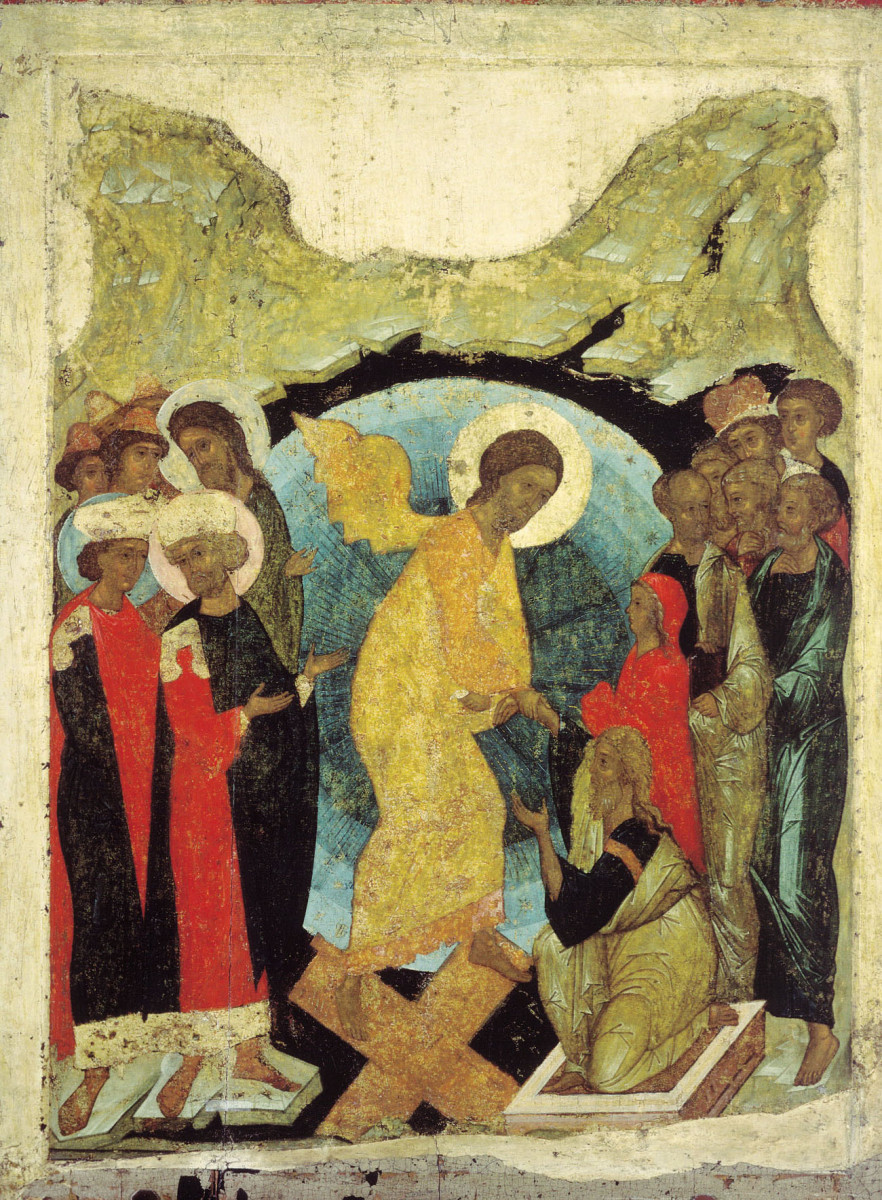
“Therefore, purge out the old leaven, that you may be a new lump, since you are unleavened. For Christ, our Passover lamb, has been sacrificed for us,” writes the Apostle Paul in his First Epistle to the Corinthians about preparing for Easter (1 Cor. 5:7).
By analogy with Paul’s words about Easter, “our Passover,” the Church, as a community of believers journeying through time, refers to the Easter season, the period of Lent, and the preparation for it with the festive phrase “our Easter Lent.”
Sunday of the Publican and the Pharisee
Sunday of the Publican and the Pharisee is the first preparatory Sunday for Great Lent in terms of the composition of the divine service. From this day onwards, a liturgical book called the Lenten Triodion begins to be used. Gradually, the Triodion will be used more and more, and with the beginning of Great Lent, it will completely replace the Octoechos, only to give way to it again at the end of Pentecost. Regular Orthodox worship throughout the year is based on the principle of a strictly regulated alternation of eight melodies, or tones. The texts of these hymns are contained in a special liturgical book called the Octoechos in Greek. In turn, the name “Triodion” comes from the Greek phrase “three songs.” This is the name given to the main part of Matins during Great Lent – the liturgical canon.
In fact, the entire liturgical year is a preparation for Great Lent, Great Lent is a preparation for Easter, and Easter is an encounter with Christ. For, as the Church Father St. Augustine (354–430) wrote, “Easter contains the Mystery.” The Mystery, or the sacrament is the reality of God’s real presence here and now, when in obvious and visible things, water, oil, bread, wine, and others, a person is attached to immortality. “For you were cut off from the wild olive tree by nature and grafted into the good olive tree by nature,” writes the Apostle Paul in his Epistle to the Romans about the supernatural nature of the election of believers in grace (Rom. 11:24).
During the liturgy of the first preparatory Sunday, the Gospel reading about the tax collector and the Pharisee is read.
According to Jesus in the Gospel of Luke, Chapter 18, verses 2–8, two men “went into the temple to pray.” The first, who was a Pharisee, praised himself before God, and the second, who was a tax collector, asked for forgiveness: “God, be merciful to me, a sinner!”
This is all described in just five verses of the Gospel. These are just five verses from the Gospel, in which everything is described, the foundations of the behavior of all future humanity for millennia and many centuries are laid, and magnificent works of culture and art are predetermined. They will inspire Orthodox believers at all times, especially those who live abroad and in the diaspora.
The parable of the Publican and the Pharisee can be interpreted in a personal moral sense. If we praise yourself, and even more so, humiliate others, we should expect condemnation. Moreover, such condemnation is not just a reproach or some feeling of inadequacy, but a profound metaphysical catastrophe experienced personally.
“A certain person, our acquaintance, friend, relative, or just someone, went to church, but then became disappointed and stopped going,” we often say. Such words show no awareness of the true tragedy and no humility. In fact, we should say: “A certain person went to church, but for reasons unknown to us, God became disappointed in him.” In this case, we should pray that God, through the Holy Spirit, will grant such a person grace so that he can return to the Church. After all, humility is not just some kind of applied virtue, formulated by the Church or priests for the sake of edification, but a property of God Himself, in whose imitation lies true human happiness. “My humble God” is how the greatest Orthodox prophet and spiritual teacher of Orthodox Christianity at the turn of the first and second millennia, St. Simeon of Constantinople (949–1022), referred to the Creator and Redeemer. His contemporaries called him “the New Theologian” because they considered him a holy fool.
Over time, this context was forgotten, and the nickname “New Theologian” became a glorious title of recognition. Indeed, in its nearly two-thousand-year history of holiness, Orthodoxy has honored only two saints with the title «Theologian.» These are the Apostle and Evangelist John, whose Gospel begins with a magnificent testimony to the Son of God, who is the Divine Word, who became man in Christ Jesus in history. The second Theologian of Orthodoxy is Bishop Gregory of Nazianzus (325–389), who preached the divinity of the Son of God in Constantinople against the Arian heretics.
A contemporary of St. Gregory was a great Syrian ascetic named Isaac. His hagiographers say that during the reign of the heretical emperor Valens (364–378), he went out to meet the latter when he was going to war with the Persians and predicted his imminent death for supporting heresy. In turn, Valens ordered Isaac to be imprisoned so that upon his return from battle he could execute him for what he was convinced was false prophecy. Valens died in battle and even his body was not found. This is an extremely rare occurrence and a sign of an extraordinary catastrophe.
After Valens, Emperor Theodosius the Great (379–395), who was a staunch Orthodox Christian, ascended to the throne, which enabled Gregory of Nazianzus to come to Constantinople and begin preaching Orthodoxy. It was in honor of Isaac that the most cherished place in the hearts of all Russian people, the pride of all those living in the diaspora, the greatest Orthodox Cathedral of St. Isaac of Dalmatia, was built in the northern capital of Russia, St. Petersburg. Historians claim that on the day of Isaac’s commemoration according to the Julian calendar, which was May 30 at that time, Peter the Great (1672–1725) was born. Since some researchers question this date, theology comes to the aid of historians. Isaac opposed the heretical ruler, thereby becoming the patron saint of Orthodox emperors, as Russian Tsar Peter considered himself to be.
The same parable of the tax collector and the Pharisee can be interpreted in a theological, ecclesial sense. Then, from a personal moral appeal, it becomes an appeal to all believers together. The Church is the Community of Believers. Therefore, the parable of the tax collector and the Pharisee is an appeal to the whole Church. “He who has an ear, let him hear what the Spirit says to the churches,” as it is written in the Book of Revelation (3:22).
The Publican and the Pharisee represent the entire Church. The Symbol of Faith calls the Church “Holy.” The Church is indeed holy and blameless; she is literally filled with righteousness and communicates virtue. At the same time, the Church is a community of people. As the Syrian Father of the Church Ephrem (306–370) said, whose prayer “Lord and Master of my life” believers read during Lent services: “The whole Church is a Church of penitents.” In turn, the Latin Father of the Church, St. Augustine (354–430), warned that “the Church is a complex two-part body, in which one part belongs to Christ and the other to the devil.” Until history ends, sinners, and we are all sinners, must repent; and evil, at the end of history, whether it hides within the Church or outside it, will be cast into the lake of fire.

Here is the full quote from the Apocalypse: “The sea gave up the dead that were in it, and death and Hades gave up the dead that were in them, and each person was judged according to what they had done. Then death and Hades were thrown into the lake of fire. The lake of fire is the second death. Anyone whose name was not found written in the book of life was thrown into the lake of fire” (Revelation 20:13–14).
These formidable words conceal a profound optimism. For they affirm that until the history of the world is complete, the place of eternal retribution remains empty. It is prepared for hell and death. Everyone has time to repent, so as not to end up there together with these realities doomed to eternal destruction.
When the Church forgets that it is “also a tax collector,” that we must always humble ourselves and repent, God subjects the Church to crises, prosperity is replaced by persecution. If the Church forgets its supernatural nature, ceases to praise God for the immeasurable gifts bestowed upon her, which are manifested in the virtues of believers and saints – this is the image of a Pharisee – then its everyday life becomes gray. It sinks into bureaucracy and ceases to attract people with its beauty, ceases to be missionary. During Lent, the Church, as a community of believers, will be inspired by the teachings of the Gospel.
Sunday of the Prodigal Son
The second preparatory Sunday before Lent is the Sunday of the Prodigal Son. During Sunday liturgy, the great parable of the Lord Jesus is read. This is more than a parable; it is a real event in world history. From the moment Jesus told the parable of the Prodigal Son, and the Evangelist Luke recorded these words, moved by the Holy Spirit, the course of history changed. The course of human history changed because from then on, repentance became its foundation. The principle of crime and punishment, which had previously dominated all religions and all relationships between man and God, was replaced by the expectation of forgiveness.
Like the story of the Publican and the Pharisee, the Parable of the Prodigal Son is found exclusively in the Gospel of Luke. It is chapter 15, verses 11–32. In theological terms, this attribution of important, unique material to a single literary monument is referred to by the German word Sondergut (literally: “special load,” “special burden”).
God the Father welcomes the prodigal son, opens his arms, and prepares a feast for him, saying: “Bring the best robe and put it on him, and put a ring on his hand and shoes on his feet; and bring the fattened calf and slaughter it; let us eat and rejoice!” – proclaims the Gospel.
The Church is a community of interpreters. In the Orthodox Christian understanding, the true feast of faith, the supper of forgiveness and thanksgiving, is the Holy Eucharist. This means that the Heavenly Father from the Parable had another Son, unique and irreplaceable, Who, like a slaughtered calf, or rather, like a Lamb, gave Himself for the sins of the world so that forgiveness might come.
The Parable of the Prodigal Son is read by the Church two weeks before the beginning of Great Lent. Thus, all believers are called to repentance and the Eucharist, two sacraments which, being the sacramental embrace of the Heavenly Father, open the doors of His house. To enter the Kingdom, one must forget one’s former self and return despite the magnitude of one’s sins and shame. One must also be cautious. The most important paradigm of biblical behavior for a believer is not to look around and not to condemn divine forgiveness towards others, as the older son mistakenly did. And one more thing. Repentance must be genuine. It is impossible to come to church or, for example, take monastic vows, which is a real-life version of the parable of the prodigal son, for career or convenience reasons. Fake repentance is a very grave sin; the parable of the prodigal son cannot simply be imitated, it must be fulfilled once and for all.
Presentation of the Lord
The Russian Church follows the old style in its worship. This allows it to preserve an amazing combination of fixed and movable feasts, which would inevitably be lost if it switched to the new modern calendar. Thus, in the Julian calendar, Easter may coincide with the Annunciation, and the Apostles’ Fast, which begins on the eighth day after Pentecost, is always preserved, even if Easter is extremely early, and in such a case, the fast itself lasts only a few days. In Greek churches, which follow the new style, such coincidences are impossible, which is extremely unfortunate. Such amazing coincidences of holidays are especially noticeable to Orthodox Christians living far from their homeland.
An example of such a coincidence or combination of movable or fixed holidays is the proximity of the Week of the Prodigal Son to the Feast of the Presentation of the Lord. The Feast of the Presentation concludes a special and very important cycle of celebrations. It began with Advent, forty days before Christmas; it continued for forty days and ends with the Presentation. The Presentation is the bringing of Jesus to the Temple. Since the firstborn sons of Egypt were destroyed in the Old Testament, God commanded that the firstborn sons of Israel be consecrated to Him. The Feast of the Presentation is the dedication of Jesus to God. Since Mary brings Jesus to the Temple, this feast is both in honor of the Lord and in honor of Mary. In this, it is similar to the Annunciation. This is a very important and rare feature.
In his essay entitled “What is an apparatus?”, the greatest philosopher of our time, Giorgio Agamben, describes his method. He begins his reflection with one philosopher or another on whom he is working, but then, at the most crucial moment, he breaks with the latter’s original idea. This is how a new philosophical construct is born. In our discussion of the times and the feasts of the Church, we will apply a similar method to theological reflection.
The main character of the Feast of the Presentation of the Lord is Simeon. The event of the Presentation is described in only one of the Gospels, the Gospel of Luke, and Luke is also the only one who describes the parable of the prodigal son. Candlemas is another name for the Feast of the Presentation of the Lord. As already mentioned, Candlemas according to the Julian calendar is almost always celebrated in close proximity to Prodigal Son Sunday, and in 2026 it coincides with it completely. This gives the Church – the community of interpreters – a reason for special theological reflections inspired by the grace of the Holy Spirit.
The Parable of the Prodigal Son describes a father who has two sons. One of these sons is righteous, and the other is prodigal. The father accepts both, but the older son condemns his younger brother, who was prodigal, and whom his father forgave. In response, he hears the bewilderment of his kind father. «He said to him, ‘My son! You are always with me, and everything I have is yours. But we had to celebrate and rejoice, because this brother of yours was dead and is alive again; he was lost and is found» (Luke 15:31–32). On the feast of the Presentation, Orthodox believers hear the continuation of this parable.
The father is not only the Heavenly Father, but also the image of every good parent who forgives here on earth and who is merciful. But mercy is not redemption. The father in the Parable of the Prodigal Son is Simeon. He grew old and outlived both of his children. He remained alone and lived near the temple. Mercy does not bring redemption. “After us there will be before. Youth turns into hardship. We keep dying until we live. We die alive to death. We are drifting toward the end. But the time knows no mercy. Time, please stop”, sings Till Lindemann in his ballad entitled ‘Time” (In the original German text: “Zeit”). Grieving that forgiveness does not overcome time, and that everything on earth is mortal, Simeon waited for the coming of the Messiah. It turned out that someone who was himself the epitome of genuine fatherhood also needed a real Father.
In one of the Paterikon, or sayings of the ancient desert fathers, someone from the city came to a monk to tell him about the sudden death of his father. “You are lying, my Father is immortal.” The Feast of the Presentation of the Lord is the joy of the Church over these words. It is a united solidarity in prayer of praise to God for the fact that in Christ He became our true Father. “Our Father who art in Heaven,” as we repeat again and again in the beloved prayer of the Lord Jesus.