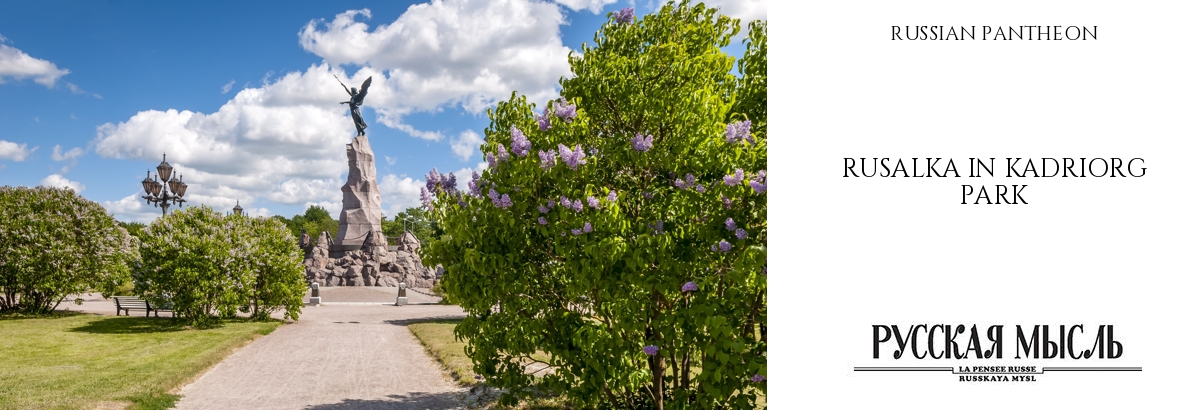
Monument to the fallen crew of the Russian Imperial Navy battleship
By Ekaterina Polyakova
On the shore of Tallinn Bay, in Kadriorg Park, stands one of Estonia’s most recognisable monuments – the memorial to the crew members of the Russian Imperial Navy battleship Rusalka (Mermaid) who lost their lives when the ship sank.
On 7 (19) September 1893, Rusalka set out from Reval (now Tallinn), bound for Helsingfors (modern-day Helsinki). In the Gulf of Finland, the ship was caught in a storm and sank. All 177 members of the crew perished.
Created by Amandus Adamson (1855–1929), one of the most renowned Estonian sculptors of his time, the memorial was unveiled in 1902, nine years after the ship was lost.
The monument stands at the end of Sea Avenue, which leads from Kadriorg Palace to the sea. Approximately 16 metres tall, it rises from a massive granite base and is crowned by a bronze figure of an angel holding a cross in its right hand. The angel’s gaze is directed towards the area where the ship is believed to have perished.
The names of the 12 fallen officers are carved in gold letters on the pedestal. The monument is surrounded by stone posts linked by chains, which bear the names of the 165 lower-ranking crew members of the Rusalka.
The exact location of the sunken Rusalka remained unknown for many years. It was only in July 2003 that Estonian specialists confirmed the discovery of the wreck on the seabed of the Gulf of Finland, approximately 25 kilometres south of Helsinki. The search was conducted using sonar and magnetometers, with the Estonian Maritime Museum’s research vessel Mare participating in the discovery.
More than 130 years after its creation, the Rusalka monument remains where it was originally intended to stand – by the sea in Kadriorg. During this time, the Russian Empire disappeared, the political map of the region changed, Tallinn became the capital of independent Estonia, and the location of the shipwreck ceased to be a mystery.
Yet the monument itself has been preserved at its historic site. Today, it is regarded not only as a memorial to those whom the sea never returned, but also as one of Tallinn’s most notable architectural and artistic landmarks.