Memory of the Saints of the North, the Baltic, and the Slavic World
By Augustin Sokolovski, Priest, Doctor of Theology
Holiness knows no modern borders and does not submit to the logic of imperial conquests. From Moravian fields to Ladoga bogs, from the prince’s sword to the monastic cowl, the Slavic and Baltic North was constructed not by the borders of empires, but by the invisible communication of grace, carefully guarding its spiritual home from external unification.
Origins and Methodology: The Local Principle and the Memory of the Enlighteners
In 1453, Constantinople fell. The statehood of Byzantium was abolished, but the Ottoman Empire in a certain sense became its successor. Unwilling – or perhaps unable – to govern Orthodox Christians directly, the sultans placed the Patriarch of Constantinople at the head of the empire’s Orthodox subjects. The Patriarch received significant real authority over his flock.
Paradoxically, what was meant to unite the Orthodox eventually became a source of centrifugal forces.
Non-Greek Orthodox peoples gradually felt dependent on the Greek ecclesiastical center and began to emancipate themselves. Thus began a long process of turning Orthodoxy into a kind of confederation of national Churches – a process that has not ended to this day.
There is something deeply authentic in this. Orthodoxy returns to the features of its ancient structure: a multiplicity of local Churches – large and small – bound together not by a single administrative system, but by a common faith and sacraments.
In modern times, this structure outwardly resembles the Anglican Communion or the UN: an association of independent entities united by a commonality that does not imply a single center of governance.
Theoretically, this process could have led to the number of Orthodox Churches approaching the number of nations in the world – more than two hundred. But this did not happen. It is precisely here that the boundary between the national principle of church organization and the very nature of Orthodoxy is revealed.
The 19th century became an era of nationalisms, and in the Slavic world, an era of Pan-Slavism. Pan-Slavism proceeded from the premise that Russians, Bulgarians, Serbs, Czechs, Slovaks, Croats, Poles, and other Slavic peoples belonged to a single historical and cultural family despite state borders.
In Prague, this idea manifested in the Slavic Congress of 1848, where representatives of various Slavic nations attempted to present themselves as a unified political and cultural entity. In Russia, Pan-Slavism took on a geopolitical tone: Russia was perceived as the natural center and protector of Orthodox Slavs.
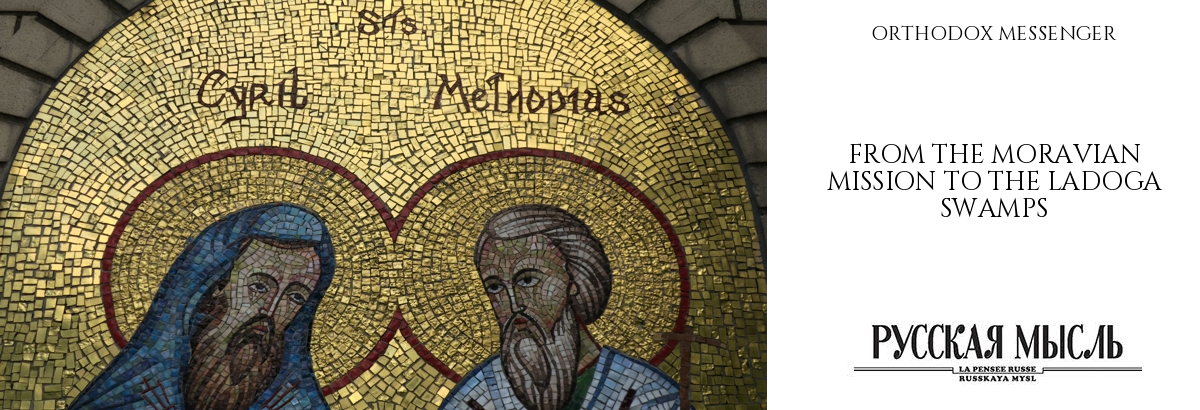
Against this backdrop, the memory of Cyril and Methodius acquired a significance far greater than a mere church feast. The two saints became symbols of the shared origin of Slavic Christian culture – figures around whom nations separated by political interests and ecclesiastical history could unite. Over time, this cultural impulse transcended narrow ethnic boundaries, reaching out to the Baltic realm historically linked to Slavic lands by ancient roots, creating space for deep dialogue and neighborly friendship.
It was during this era that the Bulgarian community in Constantinople established a shared feast day for Cyril and Methodius on May 24 (11), the founding day of Constantinople itself. In close proximity to the Ecumenical Patriarchate, the Bulgarian community asserted its own Slavic ecclesiastical memory and, with it, the independent development of the Orthodox Slavic tradition.
The Sacrificial Archetype: Czech Lands and the Mystery of Meekness
Here, however, a historical paradox arises. Cyril and Methodius did not manifest their mission in Bulgaria, but in Moravia. It was there that their great attempt to create a Slavic Christian culture, translate liturgy into the language of the Slavs, and give them their own written tradition took place. Yet in Moravia itself, their heritage eventually vanished from living memory, displaced by other historical and ecclesiastical traditions.
One can approach this lost heritage not only through texts, but through the memory of saints from the lands where the Cyrillo-Methodian tradition took root.
When speaking of 9th-century Moravia and Bohemia, one should not project the modern political map onto that world. Back then, Moravia, Bohemia, and other Slavic lands existed in close connection through political alliances, dynastic marriages, and a shared cultural environment.
The lands of Bohemia were closely intertwined with Great Moravia – the center of the Solunian brothers’ mission. It was from there that the dynastic line emerged to which Prince Borivoj, his wife Ludmila, and their grandson Wenceslaus (Vaclav) belonged. According to church tradition, Borivoj and Ludmila received baptism directly from Saint Methodius, the first Slavic archbishop of Moravia.
Through this event, the Moravian mission became directly linked to the early history of Christianity in Bohemia. Ludmila is not a random Czech saint who appeared on the periphery of the Slavic world. In her fate and spiritual image, the living, unbroken continuity of the tradition laid down by the Equal-to-the-Apostles enlightenments is preserved.
The Orthodox Church commemorates Saint Princess Ludmila of Bohemia (c. 860–921) on September 29 (16), the eve of the last day of September. Her life is one of those precious links through which the typology of all Slavic and neighboring Baltic sanctity is revealed.
Comparing Czech history with the subsequent destinies of Eastern Slavs reveals deep parallels. Saint Olga of Kiev was roughly half a century younger than Ludmila. Olga’s grandson would become the Baptizer of Rus, Saint Prince Vladimir, and her great-grandsons – Boris and Gleb.
Yet despite similar missions, the difference between the two princesses is clear: Olga ended her days peacefully and was glorified as Equal-to-the-Apostles, while Ludmila fell at the hands of pagans and entered the ranks of martyrs.
This sacrificial line found continuation in her grandson, Saint Prince Wenceslaus of Bohemia. Raised in the Christian faith by his grandmother, he faced a difficult reign despite being genuinely loved by the people. Learning of a plot against him and his inevitable death, Wenceslaus neither raised his sword nor fled. He voluntarily went out to meet the conspirators at the church doors – to his personal Golgotha.
Decades later, this same spiritual experience would repeat itself in Rus: the holy brothers Boris and Gleb would choose to be «killed voluntarily» rather than resort to violence. Over time, the Vilnius Martyrs – Anthony, John, and Eustathius, who gave their lives in the 14th century in the lands of Lithuania – would join this same prayerful chorus of martyrdom. All of them – the Czech prince, the Kievan passion-bearers, the Lithuanian martyrs – demonstrated a single spiritual intuition: fidelity to Christ and meek rejection of violence stand higher than any political expediency.
The existential depth of this meek sacrifice left an indelible mark on European culture. Centuries later, this tragic archetype echoed in the work of Prague native Franz Kafka (1883-1924) – at the end of his novel The Trial, where the executioners thrust a knife into the main character like a sacrificial lamb.
In the destinies of Saint Ludmila, Prince Wenceslaus, and the passion-bearers Boris and Gleb, Slavic sanctity revealed itself through a meek refusal of violence. However, on the far northwestern border of the Slavo-Baltic world, history posed a different question: how to safeguard this spiritual root from total destruction? In the 13th century, Germanic and Scandinavian expansion pushed eastward under the banner of rigid unification. The defense of these borders by Prince Alexander Nevsky was not an imperial conquest – the independent principality of Novgorod had no imperial ambitions. It was a shield protecting the selfsame Slavic home whose prayerful foundations were laid in Moravia and Bohemia. Yet the way this image of the defender was subsequently interpreted became a unique page in history…
From Home Defense to Imperial Apotheosis: The Transfiguration of Alexander Nevsky
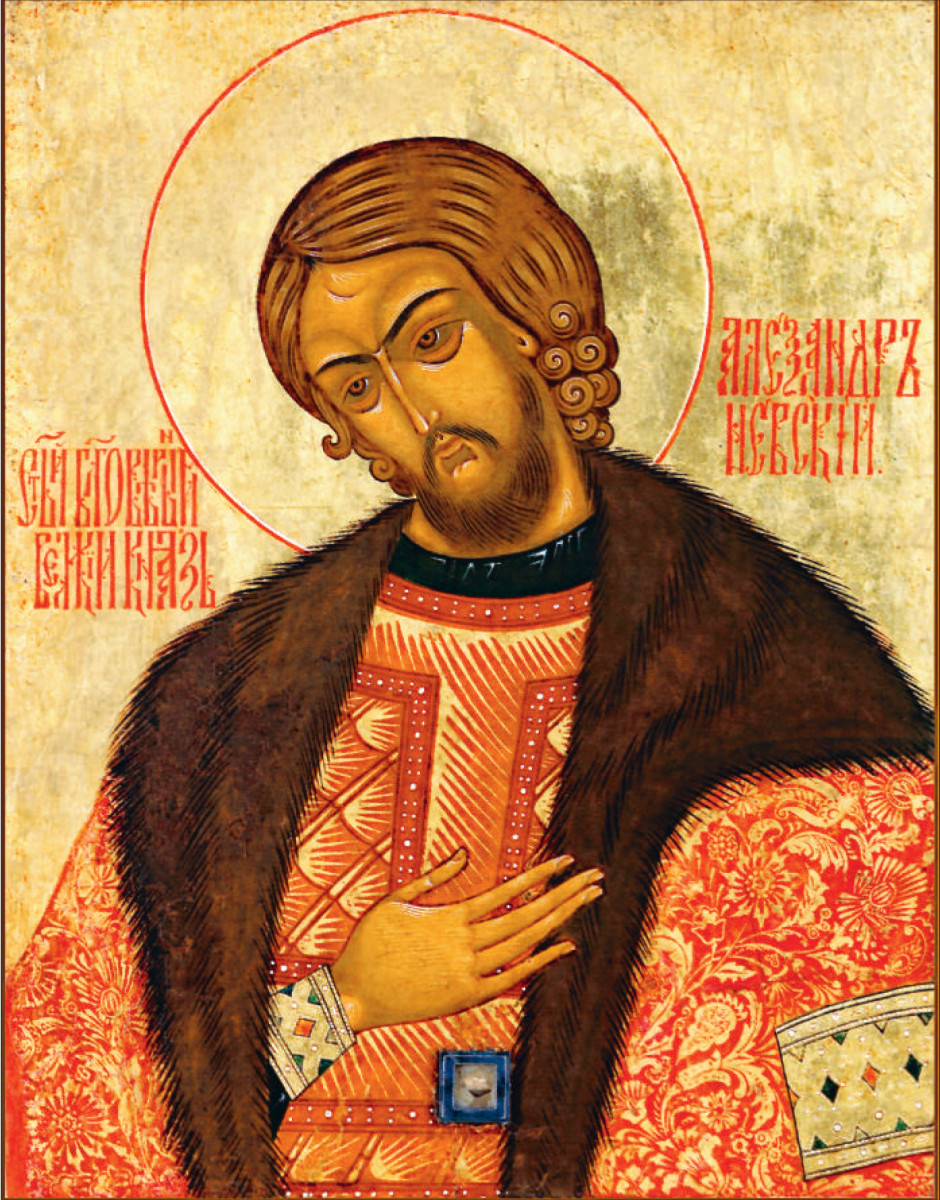
On September 12, the Russian Church celebrates the translation of the relics of Saint Alexander Nevsky (1221–1263) from Vladimir to Saint Petersburg. This event was drawn out over time.
On August 30, 1721 (September 12, New Style), Peter I finally defeated Sweden in a long and exhausting war, concluding the Treaty of Nystad. Two years later, the translation of the relics began, concluding in 1724 when they were placed in the Trinity Cathedral of the Alexander Nevsky Lavra.
Like Saint Petersburg itself, this monastery was newly founded and built, destined to become a culture-shaping center of enlightenment and evangelization for the future imperial capital.
The translation of the relics was preceded by cardinal transformations: at the very beginning of the year, on February 14 (25), 1721, the Patriarchate was abolished and replaced by collective governance – the Most Holy Synod. By this step, Peter I sought to secure church administration from the interference of Greek patriarchs and avoid a repeat of the deep crisis that followed the deposition of Patriarch Nikon in 1666.
Shortly after concluding peace, on November 2, 1721, Peter proclaimed himself Emperor and «Father of the Fatherland.» Thus, the proclamation of Russia as an Empire, the church reform, and the «grand pilgrimage» of Saint Alexander’s relics across the earthly fatherland became closely intertwined. Choosing Prince Alexander Nevsky as the heavenly patron, defender, and confessor of Rus, Peter destined him to become the spiritual patriarch of the Russian Church for two centuries – until the Empire he founded was crushed by militant atheistic Bolsheviks.
Those who have been to Vladimir and visited its famous Dormition Cathedral have seen firsthand that many holy princes rest there. But it was Alexander who was destined to become the titular patron of a new state formed through civilizational expansion and military victories. The history of the Christian Church and the history of sanctity had never known such a radical and grandiose example of a posthumous transfiguration of an original image of holiness.
From a ruler who reigned for a fairly long time (serving as Grand Prince of Kiev and Vladimir from 1249 to 1263) but lived very little – only 42 years – Alexander was turned into a symbol of political success and the patron of a mighty state.
From a diplomat and consistent proponent of peace with the Mongol Empire at the cost of compromise, he was made into an image of an unyielding ruler with an iron will; from a passion-bearer (as one version holds that the prince was poisoned with slow-acting poison on his return from the Horde) – that is, a «Boris and Gleb» of his time – he became a conqueror; from a church-obedient «prince-monk» (whose first miracle was stretching out his hand from the coffin for a prayer of absolution from the metropolitan), he was made the abbot of the main monastery of the imperial capital and the spiritual father of the Russian Empire.
This came to pass, and no one ever felt any clash or discrepancy between the original image and the achieved apotheosis of his glorification in holiness. This organic overcoming of the striking asymmetry between the historical prince and his imperial face is, without a doubt, the great miracle of Saint Alexander.
The paradox of Northern Slavic sanctity lies in the fact that it never stays long on the peaks of state triumph. The sword of Alexander Nevsky, laid by Peter I at the foundation of imperial symbolism, was actually forged not in grand palaces, but on those same lake-and-forest borders where the spiritual cultivation of the land required quiet monastic labor rather than military triumph. A direct continuation of this line in the North was the 16th century – an era when the boundaries between the royal font and the swampy mire were separated by merely a few steps…
At the Edge of Worlds: The Feat and Vulnerability of Adrian of Ondrusov
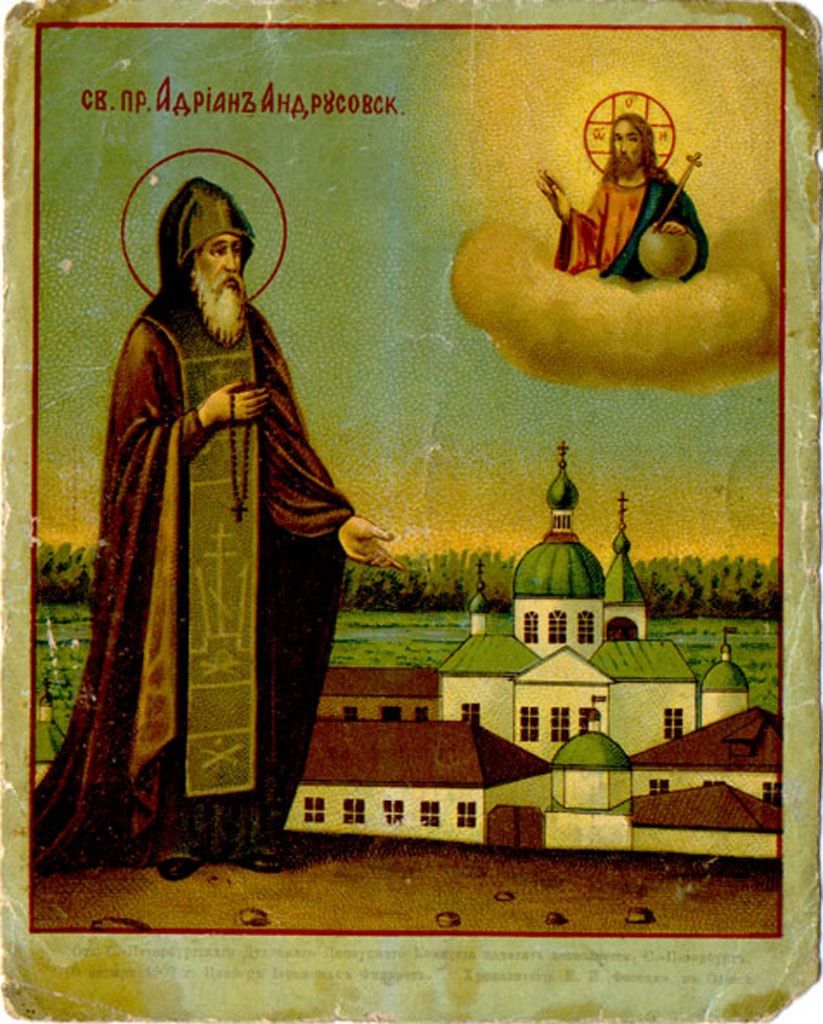
In the second week of September, the Russian Church commemorates Hieromartyr Adrian of Ondrusov – a saint whose life path ended in a tragedy typical for many Russian ascetics: he became a martyr «at the hands of his own.»
Venerable Adrian of Ondrusov (secular name Andrey Zavalishin; † 1550) was the founder of the Ondrusov St. Nicholas Hermitage on the eastern shore of Lake Ladoga. His memory is celebrated on May 30 (June 12) – the day of the translation of his incorrupt relics, and on August 26 (September 8) – the day of his heavenly patron, Martyr Adrian of Nicomedia.
Our knowledge of Saint Adrian comes from two components: his hagiography, which, like an icon or a poem, not only allows but requires interpretation, and historical – in this case, even local history – data.
The era in which Adrian of Ondrusov lived (the first half of the 16th century) was a time of global shifts. He was a contemporary of Martin Luther (1483–1546), Ignatius of Loyola (1491–1556), and the Council of Trent (1545–1563), when Europe was rethinking the foundations of faith and church institutions. In Russia, it was the era of Ivan IV the Terrible (1530–1584, tsar from 1547) – a time of rigid state centralization, the turmoil of boyar rule, and the beginning of territorial expansion.
At the same time, Adrian lived and labored in the North, at the intersection of lake and sea routes, meaning spiritually and geographically he was not as far from the West and its historical pulse as it might seem from Moscow.
According to his hagiography, Andrey Zavalishin came from Moscow boyars and owned an estate in the North. While hunting, he accidentally stumbled upon the secluded cell of Venerable Alexander of Svir (1448–1533). This meeting changed his life.
Today, one might call him a «sponsor» of the saint, though the Church has more precise concepts – benefactor or ktetor. But unlike modern patrons who help church projects hoping to buy a kind of «indulgence» (an idea universal to human nature), Andrey experienced this charity merely as a first step toward his own repentance.
Soon he distributed all his property, freed his servants, and took monastic vows at Valaam under the name Adrian. Later, the saint founded his own monastery on the secluded Ondrusov peninsula. Here, the spiritual-symbolic layer of the hagiography intertwines with documented history.
In 1549, Abbot Adrian was invited to Moscow to become the godfather of the newborn Tsarevna Anna – the firstborn of Ivan the Terrible. However, approaching the royal throne became the beginning of his path to Golgotha.
On his return journey from the capital to the monastery, near the village of Yandeba, local peasants ambushed the saint. Driven by rumors, they were convinced the abbot was carrying rich royal gifts.
This tragedy turns back time, recalling the story of Saint Seraphim of Sarov (1754–1833), who centuries later was also attacked by robbers searching for non-existent money. But while Seraphim of Sarov was saved from death by Divine Providence, Saint Adrian received a martyr’s crown, and his killers hid his body in a swamp. The brethren of the monastery did not know what had happened to him.
Two years later, on May 30, 1551, his relics were miraculously found. The words «incorrupt relics» here are not merely a pious formula; a swamp can serve as a powerful natural preservative. Yet the sign lies in the fact that the local peasants, well aware of these natural properties, did not bury him or leave him to wild beasts, but hid him in the swamp – as if against their own evil intent, led from above to preserve the relics. Two years later, according to the hagiography, Adrian appeared in a dream to several monastic elders and indicated the spot where his body lay «in a foul swamp.» The next day, the monks found him beneath a layer of moss. This spring day became the feast of the finding of his relics, while his autumn memory (September 8) was later linked to his heavenly patron’s day.
Another dramatic story is associated with Adrian’s name. The monastery stood in dense forests frequented by a band of robbers. The robbers captured the abbot and intended to sack the monastery.
From the outside, the saint’s entire life might seem like a chain of fatal misfortune. To an ordinary observer, such a person could easily appear a catastrophic «loser» who constantly attracts trouble.
However, a critical lesson lies behind this: the commandment «Blessed are the meek» works also through the ability to accept the status of the defeated. Adrian’s meekness so astounded the robber chief that he retreated and repented. Later, when the chief himself was captured by rivals, Adrian appeared to him in a prayerful vision – just as Jesus Himself acted beyond spatial barriers after the Resurrection (John 20:19–26) – and delivered him.
Here a profound paradox is exposed: the peasants who killed Adrian out of greed also considered themselves believers and went to church. But social environments and formal religiosity often despise «losers» and thirst for gain. Adrian’s true sanctity manifested in how he conquered the world’s cruel logic through his vulnerability.
Grace as Communication
The story of Venerable Adrian of Ondrusov is a sobering reminder of how true holiness works. It has nothing to do with comfortable prosperity, popularity, or guaranteed protection from human cruelty.
A former boyar’s son who became a monk, traveling a path from solitary prayer to the royal font, ended his life in the eyes of contemporaries as a victim of a foolish and senseless crime.
But precisely here, at the point of absolute vulnerability and apparent worldly ruin, the Gospel triumphs over the logic of force. The memory of Saint Adrian, preserved in the traditions and local history of the Olonets region, bears witness that the status of the «defeated» in this world can turn out to be the only real victory before God.
The hagiography of Saint Ludmila of Bohemia, the transfiguration of Alexander Nevsky’s image, and the quiet martyric path of Adrian of Ondrusov bring us to an important theological truth: sanctity is neither invented by man nor constructed by the state. No one can build or «devise» holiness for themselves.
From the Moravian-Bohemian mission of the 9th century through the Novgorod-Vladimir borders of the 13th century to the Olonets forests of the 16th century, a single spiritual space unfolded. In it, modern rigid confessional and national boundaries did not yet exist.
The struggle against external pressure – be it Frankish-Germanic pressure on the heirs of Cyril and Methodius, knightly crusades on the Neva, or Swedish-Baltic presence around Ladoga – was never a defense of imperial ambitions. It was the defense of one’s spiritual home, the right to one’s own language of prayer and authentic culture.
Vivid and integral witnesses to this same Baltic sanctity are the Vilnius Martyrs – Anthony, John, and Eustathius, who suffered in the 14th century in the lands of Lithuania for their uncompromising confession of faith, as well as Holy Prince Daumantas-Timothy of Pskov (c. 1240–1299). A native of Lithuania who fled feud-ridden lands to Pskov and became its valiant defender, he united Baltic roots with Pskovian sanctity, becoming a living embodiment of a single spiritual realm.
Remarkably, an icon of Holy Prince Daumantas-Timothy is venerated today even in the far-off Russian Orthodox Church of Saints Peter and Paul in Hong Kong. This striking testimony reveals a fundamental law of the Church: even local, seemingly regional sanctity – Slavic, Baltic, Northern – knows no geographical, cultural, or state borders in God.
Like the faith from which it springs, this sanctity is an inexplicable, absolute, unoriginated – that is, literally anarchic (not subject to human arche rules) – gift of divine grace. Grace in its essence is communication – a binding thread between God and man, between eras and lands: from Moravia and Bohemia through Kiev, Vilnius, Pskov, Novgorod, and Ladoga with their chorus of locally venerated saints to our memory today.
Sanctity is the Crucifixion and Resurrection of Jesus Christ imparted to the faithful, whom the Heavenly Father adopted and the Son of God called His friends and brothers (John 15:15). The memories of Saints Ludmila, Alexander, Adrian, the Vilnius Martyrs, and Prince Daumantas-Timothy are clear testimonies of this unbroken divine bond.