The history of Palmyra is a unique example of interaction between the East and West cultures, as well as the dynamics of political and economic processes in the ancient Middle East.
By Karina Enfenjyan
Situated in the Syrian Desert between the Mediterranean Sea and the Euphrates Valley, Palmyra originated as an oasis settlement that played an important role in caravan trade. As early as the first millennium BC it was a trade hub and intermediary connecting Mesopotamia, Persia, and the Roman Empire. The city’s geographical position was the primary driver of its economic prosperity and cultural diversity.
The earliest references to Palmyra (then known as Tadmor) appear in cuneiform texts of the eighteenth century BC discovered in the surviving archives of the ancient city of Mari. These documents confirm that this oasis was a crucial staging point on caravan routes in the era of the ancient Near Eastern states. The Bible also mentions Tadmor as a city fortified under King Solomon (1 Kings 9:18), indicating its strategic importance.
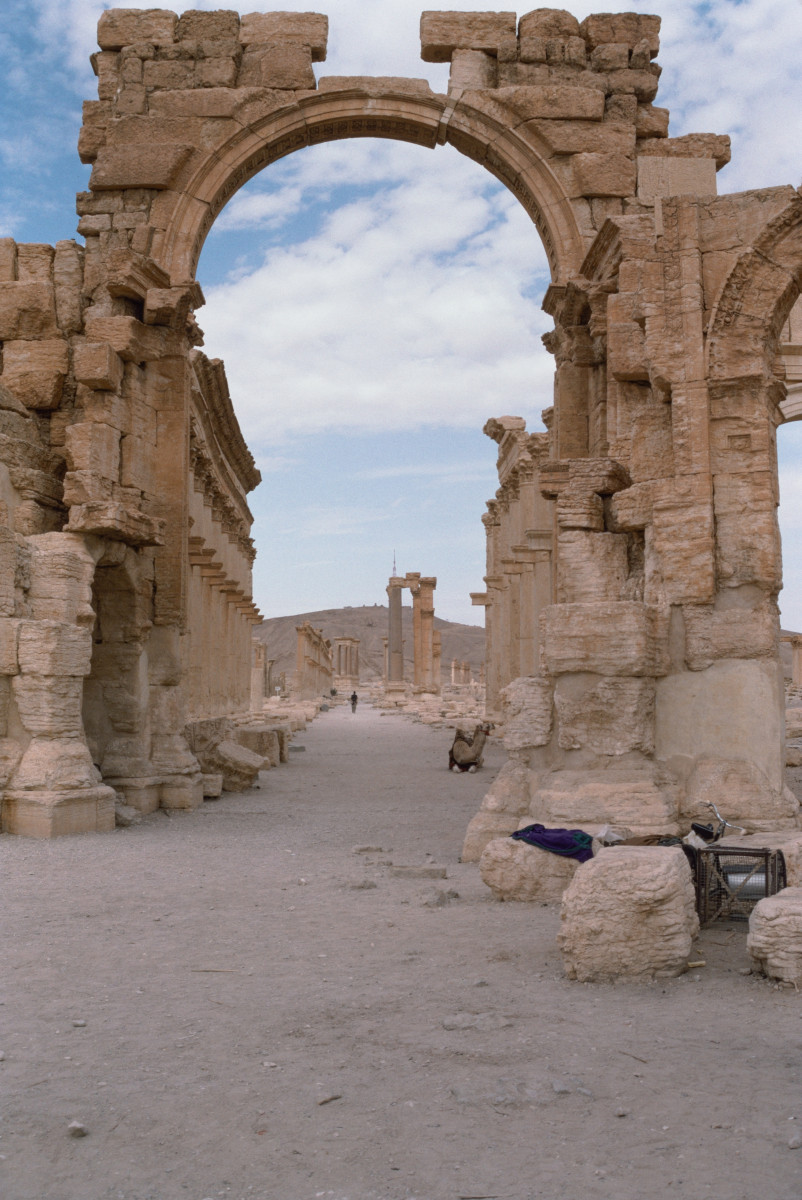
Palmyra reached its greatest flourishing during the period of Roman rule (the first–third centuries AD), when it received the status of a “free city” within the Roman Empire. The city became a major commercial and cultural centre where elements of Greco-Roman, Semitic, and Persian traditions coexisted. The architectural appearance of Palmyra, including its colonnades, temples, and triumphal arches, reflects a synthesis of these cultural influences.
The history of Palmyra demonstrates the complex interweaving of economic, political, and cultural factors that shaped the development of ancient cities at the crossroads of civilisations. As an important object of scholarly study, thanks to numerous archaeological discoveries Palmyra allows its development to be reconstructed with a high degree of reliability.
Epigraphic sources over 2,000 inscriptions in the Palmyrene Aramaic dialect – provide detailed information about the city’s social structure. It is known that Palmyrene society was structured around a tribal and clan-based system that played a key role in trade and politics. Alongside Aramaic, the Palmyrenes widely used Greek and Latin (the language of the Roman administration).
Palmyra’s economic power was based on control of caravan trade, particularly the supply of silk, spices, and aromatics from the East to the Roman Empire. Archaeological finds, including customs tariff tables (the so-called “Palmyra Tariff”, dated to 137 AD), testify to a clearly regulated system of trade taxation and confirm a high level of administrative organisation.
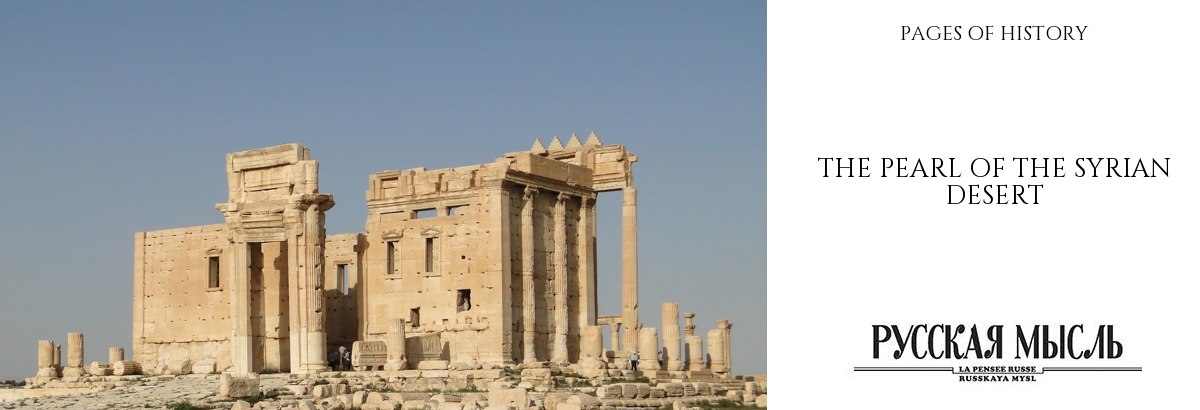
The religious life of Palmyra was characterised by syncretism. The principal deity was Baal (Bel), whose cult combined Mesopotamian influence with West Semitic traditions. The Temple of Baal (32 AD) was one of the largest cult structures in the region. There were also other local deities, such as Baalshamin and Atargatis, as confirmed by archaeological and epigraphic evidence.
The reign of Zenobia in the second half of the third century AD was a critical period in Palmyra’s history. According to ancient sources, she was a highly educated woman who knew several languages (including Ancient Greek and Egyptian) and considered herself an heir to the Hellenistic monarchs and even claimed descent from Cleopatra. She was the second wife of Odaenathus II, King of Palmyra, who recognised himself as a vassal of the Roman Empire in 258. Appointed commander-in-chief in the East, he assumed the title of Augustus, defeated the Persians, and annexed vast territories in Syria to the Palmyrene Kingdom.
Following Odaenathus’ assassination in 267, the leadership of Palmyra passed to his young son Vaballathus, but Zenobia became the de facto ruler.
Amid the crisis of the Roman Empire, Zenobia attempted to create an independent state, extending her authority over significant territories in the East. In 270–271 her troops established control over Egypt and part of Asia Minor. However, her ambitions led to a conflict with the Roman emperor Aurelian.
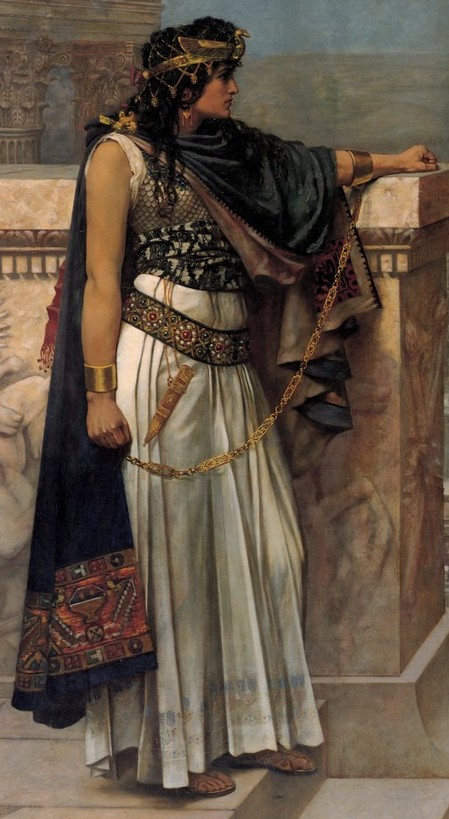
In 272 the Roman army besieged Palmyra. Aurelian offered Zenobia peace, but the queen was confident that the Romans would not be able to take the city. Nevertheless, Palmyra’s defenders had to lay down their arms before the Roman legions.
After defeating the Palmyrene Kingdom and restoring Roman control over the region, Aurelian received the titles “the Restorer of the East” and “the Greatest Conqueror of Palmyra”.
According to the Historia Augusta, “Defeated, Zenobia attempted to flee on camels to the Persians, but was captured by cavalry sent in pursuit and handed over to Aurelian”. During his triumphal procession in Rome, Aurelian paraded Queen Zenobia through the city in golden chains.
After its defeat, Palmyra gradually lost its importance as a trading centre. Political instability and economic decline caused the decay of the once-thriving city. Nevertheless, in Late Antiquity Palmyra continued to exist as a fortified outpost. Under the Byzantine Emperor St Justinian I in the sixth century its defensive structures were reconstructed.
In the modern era, Palmyra has gained immense significance as an important archaeological site. Its ruins, including the Temple of Baal and the Great Colonnade, have become a vital source for studying ancient architecture and the history of trade. Systematic excavations conducted by international expeditions have significantly expanded knowledge of the city. In 1980 Palmyra became a UNESCO World Heritage Site. However, in the twenty-first century its preservation has been threatened by the Syrian Civil War.
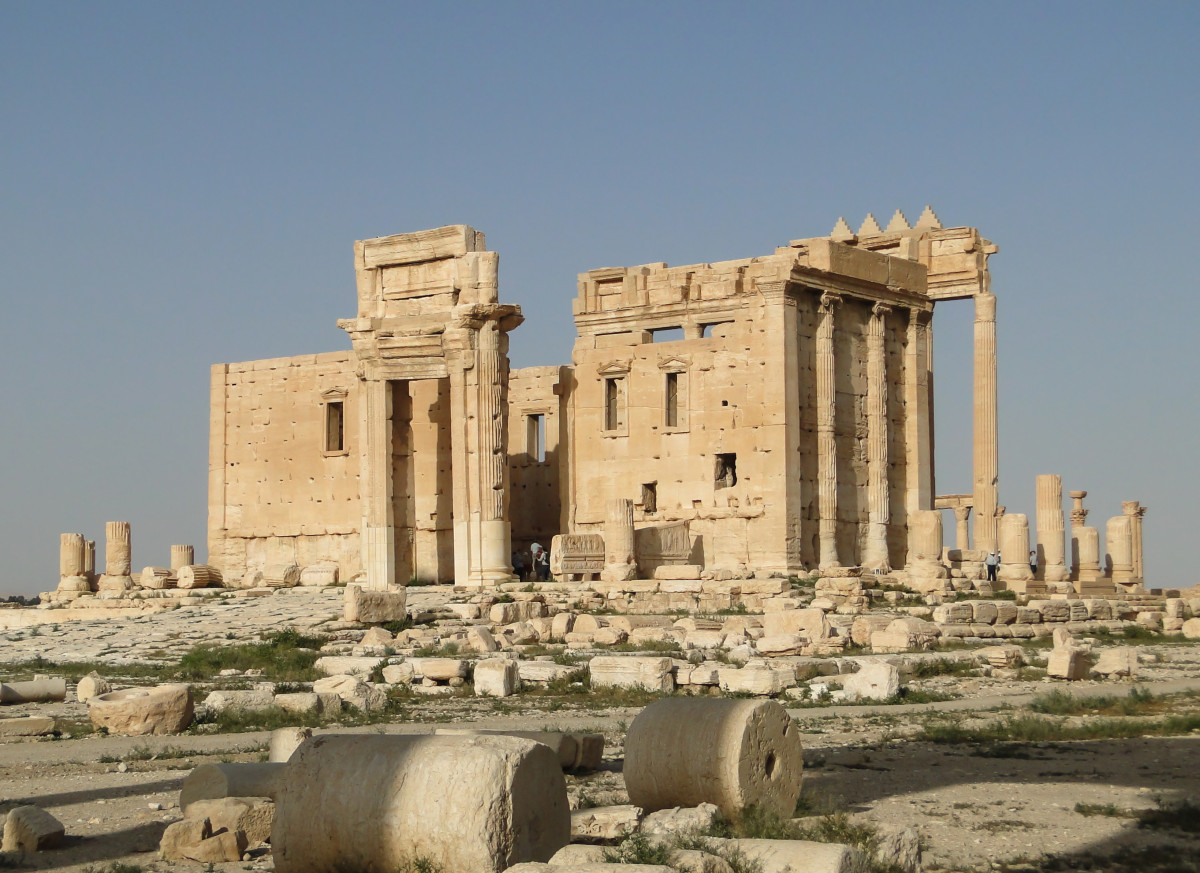
In late May 2015 Palmyra was seized by the Islamic State (ISIS) terrorist group. The destruction of its monuments became an example of barbaric devastation of cultural heritage in the twenty-first century. In summer 2015 the deliberate destruction of monuments began: on 27 June 2015 the statue Lion of Al-Lat was destroyed; on 23 August the Temple of Baalshamin was blown up; on 30 August the premier Temple of Baal (one of Palmyra’s most important religious complexes) was destroyed; on 4 September three funerary towers in the Valley of the Tombs were demolished; and on 5 October the famous Monumental Arch was blown up.
The National Museum of Palmyra was looted, and the illegal sale of artefacts on the black market became widespread. In August 2015 the renowned Syrian archaeologist Khaled al-Asaad was executed by terrorists after refusing to reveal the location of the hidden ancient treasures.
UNESCO and the UN Security Council condemned the destruction of the monuments as a war crime, an act of cultural terrorism, and an attempt to eradicate the region’s history, memory and identity.
In March 2016 the Syrian army liberated the city. Russia provided essential support to Syrian government forces. Russian aviation conducted several hundred combat sorties, destroying terrorist positions.
However, in December 2016 jihadists recaptured Palmyra. The barbaric destruction continued: in January 2017 the tetrapylon and the façade of the Roman theatre were blown up, and the ancient amphitheatre sustained severe damage. Satellite imagery confirmed the scale of destruction: only four of the original sixteen columns of the tetrapylon survived.
On 2 March 2017, with Russian support, Palmyra was finally liberated by Syrian forces, but by that time a significant part of the unique architectural complex had been destroyed or heavily damaged.
Together with Syrian and international experts, Russian specialists also participated in the initial assessment of damage to the monuments and in the creation of digital models of the destroyed structures and the possible reconstruction of unique monuments.