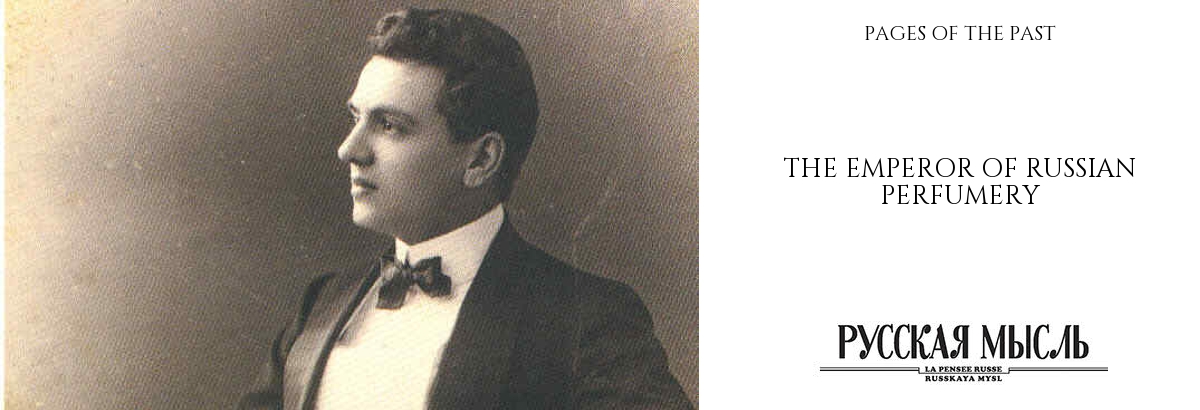
For the 145th anniversary of the birth of the “main alchemist of the twentieth century”, a creator whose fate reflected that of Russia and perhaps the whole of Europe at the time of great change
By Konstantin Legendre
Chanel greedily inhaled the scent offered to her by Ernest Beaux.
– Master, what kind of miracle is this?..
– Under number five is the so-called “winter perfume”, a melting northern note… Russian perfume, mademoiselle.
– This is what I’ll call it: Chanel Nº 5…
When France celebrated the centenary of Chanel Nº 5 a few years ago, Gabrielle Chanel was credited with creating the perfume of the century. Practically none of the leading French media mentioned Ernest Beaux. Nevertheless, perfumers and flavourists (fragrance engineers) from all over the world refer to this native of Russia as to the “Napoleon of perfumery”. A descendant of Moscow Frenchmen, he lived a hectic and long life. No other perfumer has created as many new scents as Beaux. And his chief masterpiece is Chanel Nº 5. Beaux was the first to equate perfumery with chemical “creativity”, and he “composed” the “scores” of his perfumes like a composer.
The “French Wave”
A genius sometimes remains anonymous in History. I remembered this maxim when I started collecting materials for my essay. Indeed, Chanel Nº 5 has been the most famous perfume brand in the world for a century and is reckoned by most people as one of the symbols of France, but in reality this gentle elixir, a few drops of which (thanks for Marilyn Monroe’s revelation!) are the only “clothes” the beauties of the universe sleep in, was an image of… frosty Russia! And this unique perfume was created by a deeply Russian man. True, he is French by blood and by the last name, but by his very nature he was sincerely Russian.
“There are many various stories and legends about Ernest Beaux, but his real life is much more interesting,” says Natalia Timoshenkova, Executive Director of the International Confederation of Perfumers and Flavourists. “His grandmother came to Russia with a young illegitimate son. Though this woman was a modest milliner, she managed to give her son a decent education in Russia. Ernest Beaux’s father became a top-level entrepreneur who headed the Margarine Russian-French Society with factories in Moscow, St Petersburg, Odessa, Warsaw…”
The first immigrants from France settled in Russia back under Tsar Ivan IV the Terrible. These were military men, doctors, and artisans, primarily tapestry makers. A particularly strong “French wave” invaded Russia at the turn of the eighteenth and nineteenth centuries. These were merchants and nobles who fled to the banks of the Neva and Moskva Rivers to fight the Jacobins and then Napoleon. Not to mention many tens of thousands of prisoners left after the collapse of Bonaparte’s Grand Army.
In the mid-nineteenth century the industrial revolution commenced in the country. Along with metallurgical works and railways, perfume factories also developed in Russia: the well-being of those who had moved to live in the cities grew, and they wanted a more beautiful life, accompanied by pleasing aromas and exquisite make-up.
“In the register of births we see that Ernest Beaux was born on 25 November 1881, and on 5 December 1882 he was baptised,” Natalia Timoshenkova points at the lines in yellowed archive folios. “It says that on 5 December 1882, at the Moscow Roman Catholic Church of St Louis, Vicar Mederic De Cosnac recorded the baptism of the son of the merchant Edouard Hyppolite Beaux, and Maria Wilgemina, nee Misfeld, legal spouses. The infant named Ernest Henry was baptised…”
Russia was his homeland, and Moscow was his beloved city, where his large family lived: three generations who had achieved very significant success. Like many other French people who settled in Russia and became Russians.
“I will return to France to die, but I can only live and work in Russia,” Henri Brocard, who became Genrikh Afanasyevich in Russia (the rival of Alphonse Rallet & Co where Beaux worked), once said. Nicknamed “Fragrant Henri”, he was among the brilliant galaxy of virtuosos of the sense of smell who laid the foundations of Russian perfumery, which at the turn of the century was rightly considered – without exaggeration, believe me! – one of the best in the world.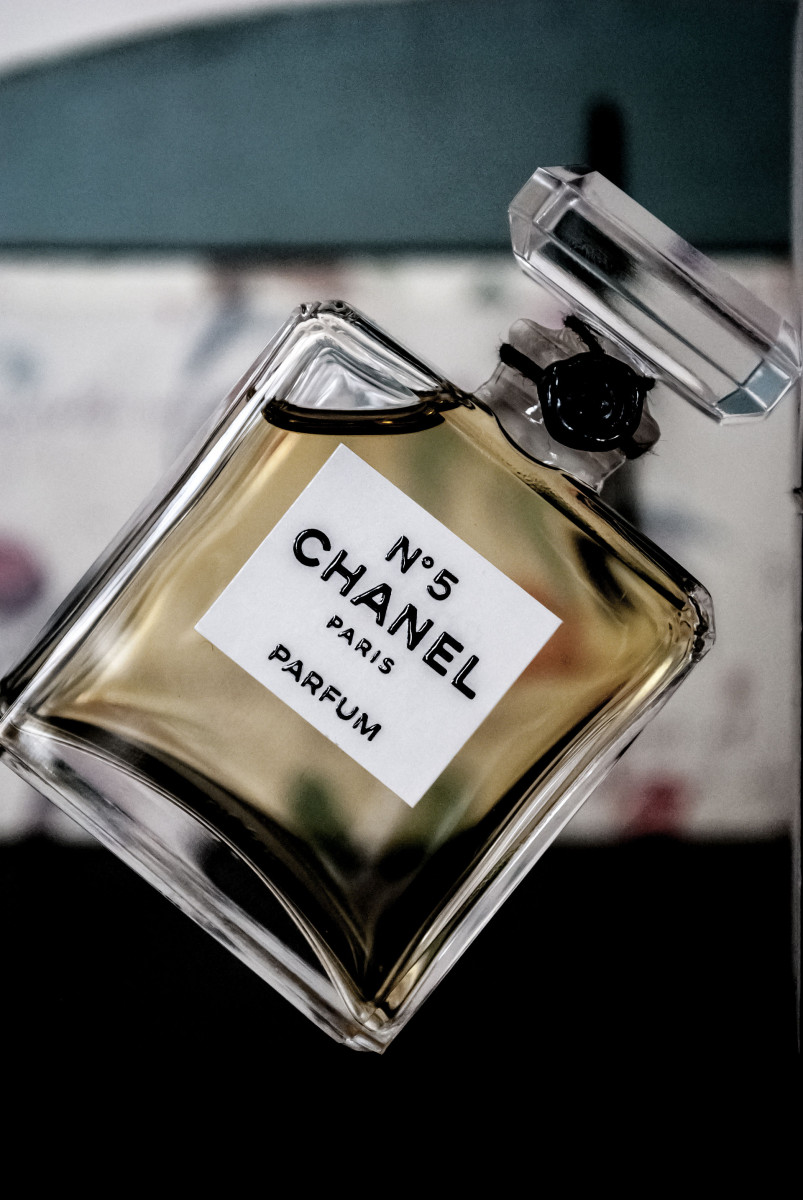
Alphonse Rallet, Adolphe Sioux, Alexander Ostroumov, Samuel Chepelevetsky… their names are unknown to the general public today, but their “fragrant feat” is truly immortal. At the 1900 World Fair in Paris, Russian perfumers did not bring the spirit of kvass and cabbage soup to the banks of the Seine, but exquisite perfumes that won the most prestigious awards and Grand Prix of the first Expo of the millennium. It was the World Fair where the Russian exposition blew up stereotypes and was called by the then French Minister of commerce, Industry, Posts and Telegraphs Alexandre Millerand “the most interesting seduction at Paris Labor Day.” And our hero, the grandson of an emigrant who had found a new homeland in Russia, had a hand (or, rather, his “nose”) in this miracle.
“Nose” is the nickname for a master perfumer in the professional community. From childhood Ernest had an excellent sense of smell and the ability to analyse scents. He was not yet seventeen when he joined the Alphonse Rallet & Co perfume factory, founded by Alphonse Rallet, a Frenchman who came to Russia in 1843. At the end of that century, it was situated in Teply Lane, in the Khamovniki district and the former estate of Prince Nikolai Stepanovich Vsevolozhsky. I walked along Moscow’s Timur Frunze Street many times without suspecting that one of the largest Russian perfume and cosmetics manufacturers, a supplier to the Imperial Court, as well as the King of Montenegro and the Shah of Iran, used to be where the offices of internet giants dominate today.
Ernest’s older brother Edouard Beaux had already been working at Alphonse Rallet & Co (in the early twentieth century this outstanding businessman initiated the establishment of the Russo-French Chamber of Commerce), and no wonder that Ernest joined it.
“Alphonse Rallet & Co was regarded as the foremost perfume company in Russia. Its scale of production was huge, with half of it (over 600 names!) being not about soap, powder or make-up, but perfumes. A stunning amount! Thus, in 1913, they produced for the sum of 2.9 million roubles. If I’m not mistaken, it’s equal to about 6 billion roubles in our days… Everything was under the direction of Edouard Edouardovich Beaux. Ernest Beaux joined the company in August 1898, and its cash register contains the first records of his salaries,” Natalia Timoshenkova holds miraculously surviving documents in her hands. “On 31 August 1898 he received 7.5 roubles. The next month we see a full salary – fifteen roubles… Ernest Beaux was barely sixteen years old.”
The Great Brand of Alphonse Rallet & Co
“I started working in Moscow in 1898. My older brother was the administrator of Alphonse Rallet & Co at that time,” Ernest Beaux wrote in his Memoirs of a Perfumer. “This large company had 1,500 workers. Factory equipment and social organisation were perfect for that era. We had to adapt to an extremely broad market (180 million people in Russia, plus China, Persia, the Balkans, etc) and take into account the tastes of Russian women in the use of perfumes and luxury items. Full trains would take toilet soap, rice powder, cologne and perfumes to all directions…”
It remains to add that by the early twentieth century the company’s products had accounted for thirty-seven percent of the total cosmetic production in Russia. So as not to depend on supplies from abroad, through the efforts of Alphonse Rallet & Co plantations for the cultivation of essential oil crops appeared in the south of Russia to produce substances for perfumery. The company was awarded the seal of the Russian Empire four times – the highest quality mark in the country. No other Russian company received this award so many times.
Alphonse Rallet & Co was also a pioneer of advertising. Postcards with views of Moscow, calendars, pencils, and even a periodical – A Complete Encyclopaedia of Ladies’ Needlework – were produced and published. The word “logo” did not exist yet, but the brand name “Rallet” could be seen everywhere in Russia. A bold marketing ploy that was reflected in urban folklore and ditties:
Spring is bringing gifts again
To the awakened earth.
The skies are clear and bright,
Like the counters of Rallet.
At the turn of the century, the company’s board of directors underwent significant changes. As it says in Rallet’s annals, “Edouard Edouardovich Beaux, Ernest’s older brother, assumed the post of the company’s managing director (the brothers had different mothers and were twenty years apart). On 7 May 1898 at a board meeting chaired by Edouard Beaux it was decided to move the factory to a new location – the Butyrki area. It was a calculated and far-seeing move. There was a crystal factory owned by another Russian Frenchman, Dutfoy, which produced perfume bottles, in Panskaya Street next door. And close to it was the Typolithography (printing house) of E.I. Patriarki, the brother of Edouard Beaux’s first wife and a long-term partner of Alphonse Rallet & Co, which produced labels, advertising posters and packages. We should also mention the proximity of the Savyolovskaya railway station, from which the company built its own separate line. From that time on, according to Moscow guidebooks of the late nineteenth century, “this area, very low, marshy and absolutely uninhabitable, especially with constant rains”, began to turn into a developed industrial area. Soon a city tram line was built there, and in the early 1910s Butyrki became part of Moscow.
…The First World War destroyed everything. Ernest Beaux transferred his savings to the Support Fund for the Wounded and rushed as a volunteer to the French Army, because he was a French citizen. He fought against the Germans conscientiously, was wounded and awarded French and British orders. In the final months of the war he was seconded to the Russian Expeditionary Force sent to help the French near Verdun… And most importantly, he served till the very victory! However, it turned out to be bitter for the Russian Frenchman. Yesterday’s employees sent him a wire from Moscow: “Do not return. The company has been nationalised and your property has been confiscated.”
Where are you, O dear epoch?!.. The poet Sergei Solovyov, Alexander Blok’s second cousin, wrote about it in 1913:
I am full of a childhood fairy-tale again,
And, having forsaken the royal Caucasus,
The dream flies to the Kuznetsky Bridge,
Once the fifth hour has struck.
There is the king of maidens’ ideals –
The actor Kachalov in high overshoes –
Passes by the doors of Rallet
And is reflected in the window
Of the luxury shop,
From where fragrance drifts out.
Your charming cousin
Checkmated me here,
And even though my mortal dust may rot in the ground –
My soul will fly to the doors of Rallet.
Five years passed after the publication of these lines, and the company with 600 names in its catalogue, which had produced, as the advertisement said, “over 200 scents of excellent flower extracts”, was turned by the Bolsheviks into the “State Soap Factory No. 4 of the Zhirkost Trust”. And it produced only one thing: cheap soap that smelled of wet rags.
The Russian Smell of Snow
In Ernest Beaux’s judgement, it was a brazen challenge to civilisation. A thirty-seven-year-old officer with combat experience and a man with an ebullient temperament, he could not stay away from struggle. In his eyes, with absolute evil – with Bolshevism. In the summer of 1918 a perfumer in military uniform disembarked at the Soborny Pier in Arkhangelsk as part of a contingent of Franco-British troops. And he immediately rushed into battle, leading a detachment of volunteers that dislodged the Red Army soldiers who had occupied the town of Onega. Beaux received the Order of the holy Grand Prince Vladimir Equal-to-the-Apostles, 4th Degree, with swords and a bow for bravery from the Provisional Government of the Northern Region. The lieutenant who spoke Russian was involved in the activities of the intelligence department of the headquarters of the General Command of the Allied Armed Forces. That’s when strange things began!
«…Lieutenant Beaux, a former major Moscow businessman, is of medium height, fat, with a round, flabby, shaven mug resembling a bulldog. With considerable initiative in committing atrocities, Beaux was a typical gendarme and security guard. It was under his ‘paternal care’ that the camp of prisoner of war on Mudyug Island was.”
So wrote the revolutionary Pavel Rasskazov in his Notes of a Prisoner. Who was it about? Was it really about Ernest Edouardovich, a handsome bon viveur, a keeper of impeccable style, a collector of paintings and a well-groomed theatre-lover? Moreover, no evidence of atrocities on the part of Beaux has survived: the memoirs, apparently, smack of propaganda. However, Rasskazov (he became a prominent figure among the Bolsheviks till his death of Spanish flu) claimed that when the prisoners of the camp demanded respect for their rights, Beaux cut off the dissatisfied: “You are not humans, but Bolsheviks! Bandits and traitors to the motherland.”
“Rasskazov describes him as a ‘bulldog with a round mug’. But there’s a different person in these photos,” says Vladislav Goldin, a historian and professor at the Northern (Arctic) Federal University named after M. V. Lomonosov, showing Beaux’s portraits. “In the above-quoted notes about him there is obvious hostility, bias, and, frankly, hatred… For Beaux as a French officer the leitmotif of the Allied landings in Arkhangelsk was to implement the strategic military goals of the Entente, to protect warehouses. And in his eyes the Bolsheviks were Germanophiles. The Alies arrived to defend the North from a possible invasion by the Germans and the White Finns. It meant that those who allied with the Bolsheviks were enemies and supporters of the Germans. It was probably Beaux’s simplistic perception…. The Bolsheviks concluded the peace treaty with the Germans in Brest-Litovsk, which meant they were ‘traitors to Russia’.”
Given the specifics of the time, this is understandable. A monarchist for many generations, Beaux was convinced of the criminal nature of the Bolshevik coup. For him the old Russia was beautiful, but the new one was ignorant, dirty, and smelly… Returning to France, Ernest Edouardovich started his life anew: again at the Rallet factory, but in Grasse – one of the capitals of world perfumery. Nice, full of White emigres, was just a stone’s throw away. All the faces were familiar! Grand Duke Dmitry Pavlovich (he had been exiled from Russia for the murder of Rasputin and thus escaped execution by the Bolsheviks) introduces the perfumer to his bohemian passion: “Gabrielle is embarking on a thorny path to haute couture. If she launches her first-rate fragrance, it will help her career…”
Beaux liked the slender Mademoiselle Chanel who wore skillful make-up and had a boyish hairstyle.
Coco had no idea that the aldehyde cocktail Nº 5 (perfume compositions based on synthetic organic compounds) was a tribute to Ernest Edouardovich’s former life. After all, it was a “winter perfume” that is revealed in the frosty air. It was also called a “fur perfume” at Alphonse Rallet & Co. In the 1900s the fashion to perfume furs spread from Moscow and St Petersburg to Europe… A melting winter note is the revelation of Beaux, who wrote down perfume formulas the way a composer creates the scores of his works. The “perfume composer” answered the question of what inspired him to create Chanel Nº 5:
“I created this perfume in 1920, when I returned from the war. Part of my military campaign took place in the North and beyond the Arctic Circle, during the midnight solstice, when lakes and rivers exude a special freshness. I have kept this characteristic smell in my memory…”
“Ernest Beaux is a key figure in perfumery: not just in Russia, but globally,” says Matvey Yudov, an expert perfumer. “He is a man who largely predetermined the future development of perfumery. The scent that Beaux created over 100 years ago can be called innovative, unique and avant-garde. It was a big step forward from perfumery as a craft (when experts of the sense of smell simply took fragrant substances that smelled good and mixed them in various proportions) to perfumery as a refined art and a subtle way of self-expression.”
Ernest Beaux was the first to equate perfumery with art: “Since for me perfumery is an art, a genuine perfumer should be an artist… Just as an artist will keep his palette even if he changes his style, a perfumer can recognise his style by the range of substances that he usually uses… If our thoughts are just a fantasy, then thanks to the perfumer’s talent this fantasy finds a way to be embodied; by the way, these thoughts are certainly influenced by the environment we live in, the books we have read, and the artists we prefer. For me these were French poets and writers, as well as the poetry of Pushkin, the works by Turgenev and Dostoevsky, the music of Beethoven, Debussy, Borodin and Mussorgsky. The Imperial Theatre with its ballet and the Moscow Art Theatre, artists of the French school and the great Russian artists Serov, Levitan, Repin and many others, and especially the artistic environment that I so loved to be in” (from an article written by Ernest Beaux for the Industrie de la Parfumerie French magazine, 1946, No. 7).
Beaux enjoyed reciting in a sing-song voice the poetry of his fellow Russian emigre, Don Aminado, a famous Parisian man of letters:
There is only one smell in the world,
And there is only one bliss in the world,
It’s a Russian winter afternoon,
It’s the Russian smell of snow.
Whatever Ernest Edouardovich did, a particle of Russia was felt everywhere. It was in the “Free Russia” Russian Masonic lodge, which he set up together with the writer Mark Aldanov, the historian Constantin de Grunwald and the last Ambassador of the Russian Empire to France Vasily Maklakov; in his flat in Boulevard Delessert, which was converted into a museum of Russian antiques; and in the laboratories of cosmetics companies (including Chanel and Bourgeois), where he worked and where dozens of Russian emigres worked with him…
“Sometimes, feeling that he had managed to convey what he had been looking for, and being in a particularly good mood, Ernest would assume a victorious look and, laughing, announce that he felt like the Napoleon of French perfumery, “ his pupil Konstantin Verigin recalled (he would later be repeatedly elected chairman of the French Perfumers’ Society). “Then we would bow to him in a courtly manner, and the whole atmosphere of the laboratory would be charged with creative energy that facilitated new discoveries in the field of fragrances.”
One can’t even list them all. Having yielded his fame to Chanel, Beaux gave rise to the dictate of couturiers in the world of perfumery, which continues to this day. Not to mention that aldehyde fragrances were a revolutionary invention that determined the development of the industry for centuries to come. Only a year before his demise in 1961 did Ernest Edouardovich reluctantly give up the title of the leader of the art of perfumery to young masters.
He passed away at the age of seventy-nine. The funeral service for him was celebrated at Notre-Dame-de-Grace de Passy Church in Paris. The church floor was entirely covered with rose petals. The emperor of perfumery reposed in the summer. The white flower petals on the tiles were supposed to represent snow – his Russian snow…